MULTIPLE PLANES DIVERTED AS BOMB THREATS TO COMMERCIAL FLIGHTS REPORTED ACROSS EUROPE

By Guardian-Jakub Krupa - Thu 5 Nov 2026 12.53 GMT
EU transport commissioner says ‘too early’ to say if bomb threats to 15 flights are linked.
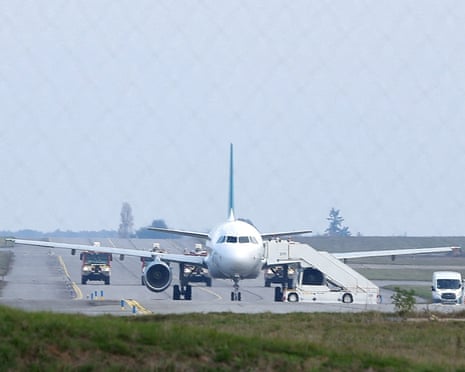
All planes affected by bomb threats this morning
Here is a summary of all planes reportedly affected by bomb threats this morning – with the tally currently at 18:
- EI-DEH Aer Lingus flight from Dublin to Rome, diverted to Evreux, France (9:55, 10:07, 10:25)
- FR6410 Ryanair flight from Madrid to Sofia (10:45)
- FR3606 Ryanair flight from Copenhagen to Sofia (10:45)
- FR1730 Ryanair flight from London Stansted to Sofia, diverted to Plovdiv, Bulgaria (10:45)
- LO235 LOT Polish Airlines flight from Warsaw to Brussels (10:48)
- W46387 WizzAir flight from Milan Malpensa to Warsaw-Okęcie, diverted to Vienna, Austria (10:52)
- AY1761 FinnAir flight from Helsinki to Rome Fiumicino (10:52).
- AY 1471 FinnAir flight from Helsinki to Vienna (11:06).
- Four currently unidentified flights at Prague airport (11:16)
- W43064 WizzAir flight from Milan-Malpensa to Bucharest (11:50).
- A3552 Aegean Airlines flight from Thessaloniki to Milan-Malpensa (12:17).
- FR8953 Ryanair flight from Porto to Milan-Malpensa (12:17).
- Three currently unidentified flights at Madrid airport (13:37).
Post last updated at 13:28 CET with the latest tally
Updated at 12.38 GMT
Experts say multiplicity of hoax alerts point to coordinated action - snap analysis
Gwyn Topham - Transport correspondent
Aviation experts say fake threats occur daily but the multiplicity of threats adjudged to be more credible, even if malicious hoaxes, appears to point to coordinated action.
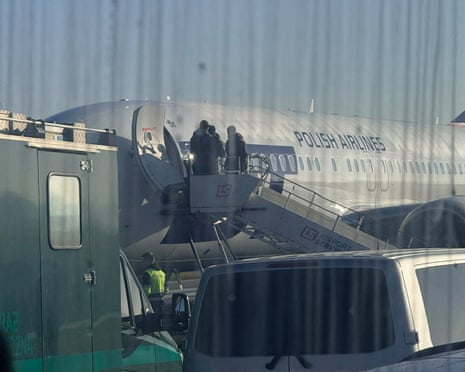
Former airline pilot Captain Martin Drake, a technical advisor to the Balpa union, said airlines have security teams who assess each threat on a traffic light scale: green to keep going or red to be grounded, with an amber option only for flights yet to take off, allowing tighter checks and searches of the plane before clearing it to fly.
“If you want to deliberately disrupt a flight, then you need to do so once it’s airborne,” said Drake. A pilot will have a QRH – a quick response handbook – whose instructions will likely include to descend quickly as well as divert to the nearest airport on receipt of a red alert. At cruising altitude, “aircraft pressurisation would do a lot of the work of any improvised explosive device.”
Diversions are expensive as well as highly disruptive, but airlines have little choice in the face of any remotely credible threat.
Captain Helen Askew, a former airline head of flight safety now at the Travel Statistics Bureau, said:
“99% of threats don’t come anywhere near a cockpit. Typically, the threats come through calls to the airline’s reservations or customer support, or emailing the generic public mailboxes.”
She said the airline security department would analyse “how specific and credible the input is. Do they refer to some non-public information, for example?”
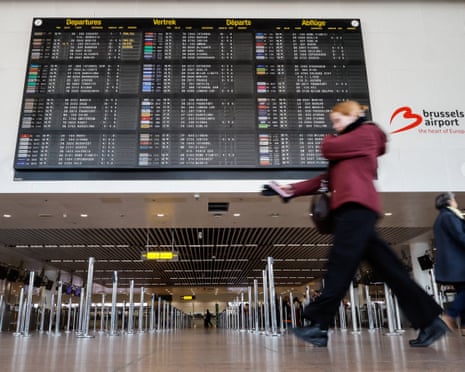
The ready availability of airline operations information on the internet means that any hoaxer now has a level of detail about the schedules, the type of plane and its technical specifications that would have eluded all but insiders decades ago.
Rhys Jones, an analyst at Osprey Flight Solutions, an aviation intelligence firm, said the confidence of airlines in European airport security should not mean any change to normal protocols after the hoaxes, but “one of the natural responses will be to see double-downed security, media coverage and public concern about travelling”. All treaths received by the airlines company offices by email.
He said the threats seemed linked but “a reasonably chaotic campaign with no particular region targeted”, and while it could weaken future security responses through the normalisation of threats, simply creating disruption could be regarded as a success by those hoaxing airlines.