THE WINTER ELLIÐAEY WENT SILENT

By AI Chat-Human Synthesis-07 October 2026
In the autumn of 1883, the people of Elliðaey began preparing for winter as they had done for generations. There were only a handful of families on the island. Their houses were low and partly built into the earth, with thick turf walls intended to keep out the Atlantic wind.
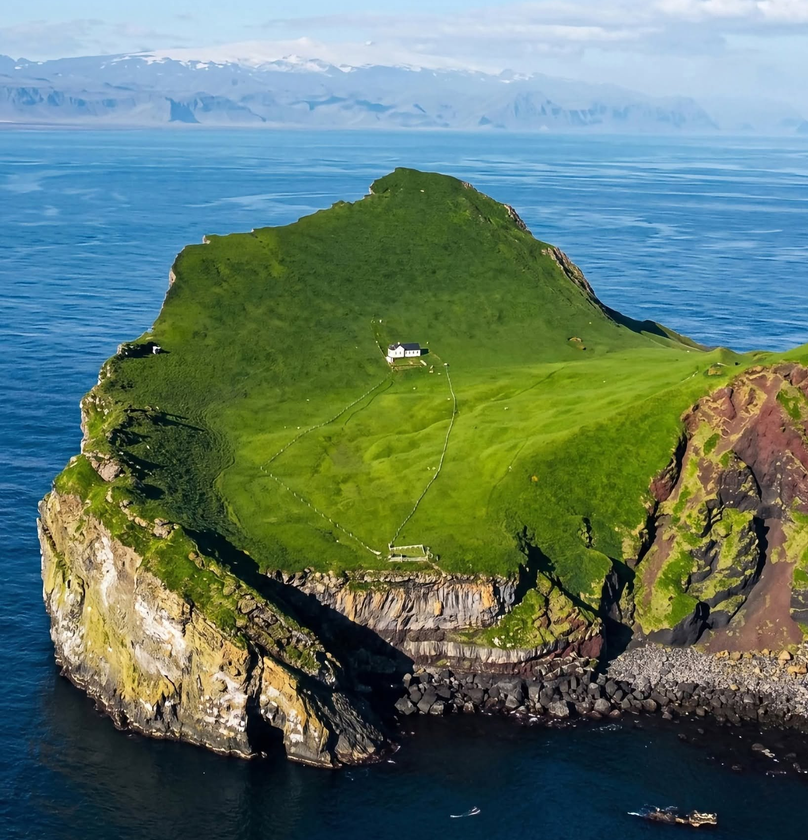
A fictional story set on Elliðaey, Iceland, in the late 19th century.
There was little comfort inside.
A small fire, a few oil lamps, dried fish, salted meat and whatever grain could be stored before winter were the difference between hardship and hunger. The men depended on the sea. The women tended the sheep, prepared food and clothing, and gathered eggs during the warmer months. Everyone worked. There was no room for idleness on Elliðaey, and no room for mistakes. The cliffs were particularly dangerous. The islanders collected seabirds and eggs from ledges that seemed impossible to reach. A man could lower himself over the edge with a rope around his waist while another held the line above. One mistake could mean death. Everyone knew someone who had fallen.
That was why the disappearance of young Einar Jónsson in October caused little surprise at first.
Einar was twenty-three, an experienced fisherman and cliff worker, but on the morning of the accident the weather had deteriorated rapidly. He had gone to inspect a rope used for gathering birds. He never returned. His companions searched the cliffs until darkness. They found his knife and one boot, but nothing else. There was no funeral. Without a body, the family could only wait. Einar's mother kept his bed untouched and continued to put his boots beneath it.
Winter came early that year.
The sea became dangerous by November, and for weeks the islanders were effectively cut off from the mainland. The isolation was not merely inconvenient; it could be deadly. A woman in labour could not simply be taken to a doctor. A broken bone could not be treated properly. If someone became seriously ill, the family could do little more than wait. The islanders understood this. They had always understood it. But that winter, something else began to trouble them. The birds were behaving strangely. The great colonies that normally filled the cliffs with noise seemed to have moved away. The older people regarded this as a warning. Young men laughed at them.
Then the first storm came.
It lasted two days. The wind was so strong that nobody dared leave the houses. When it finally passed, Jón Einarsson went outside to inspect the damage. One of the turf walls had partly collapsed, several sheep had escaped and a fishing boat had broken from its mooring. Near the northern cliff he found something that stopped him: a line of footprints. They belonged to a man. Jón followed them. They continued toward the cliff and disappeared at the edge. He crouched and examined the ground. There was no sign of a fall, no disturbed earth, no broken grass. Nothing. He returned home and said nothing.
Three days later, another fisherman disappeared.
This time there was no storm. The man had gone down toward the shore to check a boat. He never came back. The search lasted until sunset. They found his cap near the water. The sea was calm. Nobody could understand what had happened. That night the families gathered together. Someone suggested that perhaps the two men had decided to leave the island. Nobody believed it. There was nowhere for them to go. No boat was missing. The next morning the islanders searched again. They found nothing.
By December, fear had settled over Elliðaey.
Not panic, but something quieter—the sort of fear that grows when people have too much time to think. At night they began telling stories. Some remembered old tales of drowned sailors appearing before storms. Others spoke of people who had died without proper burial. The younger men dismissed such stories, but even they stopped laughing when, one evening, someone knocked on the door of the largest house. Three times. Nobody moved. The knock came again. Three times. Finally, Jón opened the door. There was nobody outside, only darkness. He stepped into the wind and raised his lamp. Nothing. Then he looked down. There was fresh snow on the ground. No footprints.
The missing man's boat had returned.
The next morning the islanders discovered something far more disturbing. It was floating offshore. Nobody had brought it back. They watched it for nearly an hour before two men rowed out. Inside the boat they found the man's coat, his knife and a small quantity of fish. Nothing else. The boat showed no sign of damage. There was no explanation.
That winter, the families began discussing leaving Elliðaey.
It was not the stories that persuaded them. It was economics. The fishing was poor, the weather was increasingly unpredictable, the island was isolated, and the younger generation increasingly wanted a different life. One by one, families began moving to larger settlements. By the following spring, only a few people remained. Then, one morning, they too left. They did not leave because of ghosts. They left because life on Elliðaey had become too difficult. That was the explanation accepted by everyone—and probably the correct one.
But the island kept its secrets.
Years afterward, fishermen occasionally found objects washed ashore on Elliðaey: a wooden bowl, a child's shoe, a piece of fishing net. Nothing remarkable. Nothing that could prove anything. Except for one object found by an elderly fisherman in the summer of 1891. It was a man's boot, old and worn, half buried in the grass above the northern cliff. Inside it was a small bone-handled knife. The fisherman recognised the knife immediately. It had belonged to Einar Jónsson, the young man who had disappeared eight years earlier.
The fisherman carried the boot back to the settlement.
Nobody ever discovered how it had returned to the island. Nobody explained why the boot was almost perfectly preserved. The sensible explanation is the simplest one: Einar fell into the sea, the currents carried his body away, and the boot was trapped among the rocks until it eventually returned. There is nothing mysterious about that. Except that the boot was found above the cliff, and there was no path from the sea to that place. Perhaps someone had carried it there. Perhaps the fisherman remembered incorrectly. Perhaps the islanders themselves had moved it years before. There are always explanations.
But on remote islands, explanations sometimes arrive long after the people who knew the truth have disappeared.
And Elliðaey has always been very good at keeping its silence.