AI CHAT WORLD NEWS 27/09/2026

By AI Chat-T.Chr.-27 September 2026
🌍 MOST IMPORTANT WORLD EXTENSIVE NEWS TODAY
🇧🇷 1. BRAZIL — PRESIDENTIAL ELECTION ENTERS ITS FINAL WEEK
Brazil's election is now one of the most important political stories in the world. The first round of the presidential election is only seven days away, on 4 October, with a possible second round on 25 October. Brazil's Superior Electoral Court (TSE) has confirmed 12 presidential tickets for the election.
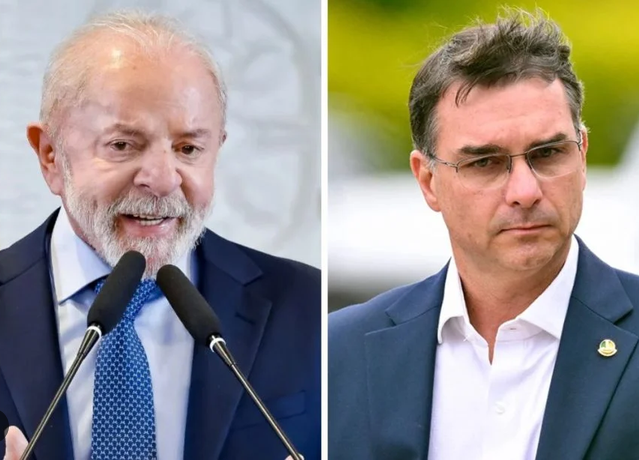
The principal national contest is between incumbent President Luiz Inácio Lula da Silva (PT) and Senator Flávio Bolsonaro (PL), son of former president Jair Bolsonaro. Other registered candidates include Ronaldo Caiado, Romeu Zema, Renan Santos, Augusto Cury, Rui Costa Pimenta, Samara Martins, Hertz Dias, Edmilson Costa, Wilson Grassi and Clariana Barão.
The polls
Recent polling demonstrates just how closely watched the election has become.
A Datafolha survey conducted on 22–23 September, with 2,002 voters, put Lula at 47% and Flávio Bolsonaro at 45% in a simulated second round. The poll's margin of error was two percentage points.
A Reuters report on other recent surveys found Lula and Flávio statistically tied in possible runoff scenarios: one survey gave Flávio a one-point advantage and another gave Lula a one-point advantage, with both results inside the respective margins of error.
These polls describe public opinion at the time of interviewing; they do not determine the election result.
A campaign with international attention
The election has become more than a domestic Brazilian matter. Brazil is the largest country in Latin America, a major agricultural and commodities exporter, a member of BRICS, and an important voice among developing countries.
At the United Nations this week, Lula warned against domestic and foreign interference in Brazil's election and emphasized the integrity of the country's electronic voting system.
The campaign is also taking place in an increasingly digital environment. Brazilian authorities are trying to address the use of AI-generated political material and deepfakes before voting day.
What Brazilians are deciding
The election involves competing positions on subjects including:
- economic growth and inflation
- public security and organized crime
- social programmes
- taxation
- environmental policy and the Amazon
- relations with the United States, China and BRICS
- Brazil's role in international diplomacy
- government spending and public debt
- democracy and the country's institutions.
The TSE has published the official government programmes submitted by the presidential candidates, providing voters with a direct source for comparing their proposals.
Brazil therefore enters the final week with an exceptionally consequential and closely watched election, while the eventual result remains unknown.
🔴 2. MIDDLE EAST — STRAIT OF HORMUZ REMAINS THE CRITICAL FLASHPOINT
The confrontation between the United States, Israel and Iran remains the world's most immediate international crisis.
Iran has proposed conditions under which the Strait of Hormuz could be reopened, linking reopening of the waterway to an end to the conflict and other conditions. The Iranian foreign minister said Sunday that Tehran still considers diplomacy the way out of the confrontation.
But President Donald Trump has rejected the Iranian proposal, saying Iran was demanding too much up front. The US ambassador to the UN subsequently said Washington did not believe Tehran had been negotiating in good faith.
The dispute has enormous consequences beyond the Middle East.
The Strait of Hormuz is one of the world's most important energy corridors. Prolonged disruption threatens:
oil → fuel → transportation → manufacturing → food prices → inflation
The longer the confrontation continues, the greater the possibility that energy and shipping costs will affect economies far outside the region.
🛢️ 3. WORLD ECONOMY — ENERGY HAS BECOME A GLOBAL SECURITY ISSUE
The Middle East conflict has transformed the Strait of Hormuz from a geographical feature into one of the central economic questions facing the world.
Asian economies are particularly exposed because large quantities of oil and gas normally pass through the Gulf toward Asian markets.
Higher energy costs can also affect Europe, the Americas and Africa indirectly through transportation, industrial production and food distribution.
This means that developments in the Middle East during the coming days could have consequences for inflation and economic growth worldwide.
🇺🇸🇨🇳 4. UNITED STATES AND CHINA — DIALOGUE CONTINUES
President Donald Trump and Chinese President Xi Jinping have maintained high-level dialogue while their countries continue competing over trade, technology, strategic influence and Taiwan.
The recent Trump-Xi meeting produced a more cooperative atmosphere in public statements, but major disagreements remain.
Washington and Beijing remain economically interconnected while simultaneously competing for influence in:
- artificial intelligence
- semiconductors
- advanced manufacturing
- military technology
- global trade
- strategic resources.
The relationship between the two countries remains one of the central factors shaping the 21st-century world economy.
🇺🇦 5. UKRAINE — WAR CONTINUES
The Russia-Ukraine war remains unresolved.
Russian attacks continue against Ukrainian cities and infrastructure, while Ukraine continues military operations against Russian positions and strategic targets.
Diplomatic language continues to include references to a possible settlement, but the military conflict has not stopped.
Europe is simultaneously preparing for another difficult winter and examining its long-term security arrangements.
European governments have also expressed concern about Russian cyber operations, sabotage and other forms of so-called hybrid activity.
The war therefore remains both a Ukrainian conflict and a major European security issue.
🇪🇺 6. EUROPE — SECURITY BECOMES A LONG-TERM PRIORITY
European governments are increasingly discussing defence spending, military preparedness and protection of critical infrastructure.
The Ukraine war has changed European thinking about security.
Countries that previously concentrated heavily on economic integration are now also considering:
- ammunition production
- air defence
- military technology
- energy independence
- cyber security
- protection against sabotage.
The question facing Europe is increasingly not simply how the Ukraine war ends, but what European security should look like afterward.
🇺🇳 7. UNITED NATIONS — DIPLOMACY UNDER EXTREME PRESSURE
The UN General Assembly in New York has brought together leaders from around the world.
The principal subjects have included:
Middle East war — Ukraine — international security — economic development — climate change — artificial intelligence.
The UN remains one of the few places where countries with fundamentally opposing interests can meet directly.
However, the week's discussions also demonstrate the limitations of international diplomacy: major powers can communicate even while fighting or supporting opposing sides.
🇮🇱🇵🇸 8. GAZA AND THE WIDER MIDDLE EAST
The Gaza conflict remains part of the larger regional confrontation.
The humanitarian situation continues to attract international concern, while Israel maintains that its military operations are necessary for its security.
The conflict has become increasingly connected with the confrontation involving Iran and its regional allies.
Consequently, any diplomatic development involving Iran, Israel or the United States could affect the wider Middle Eastern situation.
🇸🇩 9. SUDAN — A WAR THE WORLD MUST NOT FORGET
Sudan remains one of the world's largest humanitarian crises.
The war between the Sudanese Armed Forces and the Rapid Support Forces has displaced enormous numbers of people and created severe food and humanitarian problems.
Sudan receives considerably less daily international attention than Ukraine or Gaza, despite the scale of its humanitarian consequences.
The continuing crisis demonstrates that the world's attention is heavily concentrated on a relatively small number of conflicts while other wars continue with devastating consequences.
🌍 10. AFRICA — CONFLICTS AND POLITICAL INSTABILITY
Several African countries continue to face serious security and humanitarian challenges.
Sudan remains the most severe humanitarian emergency, while instability also persists in parts of the Sahel and Horn of Africa.
Africa is increasingly important internationally because of its:
- rapidly growing population
- natural resources
- agricultural potential
- strategic location
- expanding trade with China and other emerging powers.
The continent is consequently becoming an increasingly important part of the changing global balance.
🌡️ 11. EL NIÑO — ONE OF THE BIGGEST STORIES FOR THE NEXT YEAR
Away from the immediate headlines of war, an enormous climate story is developing in the Pacific Ocean.
The World Meteorological Organization says El Niño is firmly established and expected to strengthen to a very strong event, with potentially significant effects on global weather through 2027.
A very strong El Niño can alter rainfall and temperature patterns around the world.
That can mean:
flooding in some regions + drought in others + extreme heat + agricultural disruption.
The consequences can eventually reach food prices and international commodity markets.
🇧🇷 12. EL NIÑO AND BRAZIL
Brazil is particularly important in the coming months.
Brazil's INPE, working with INMET and other national agencies, reports a greater than 90% probability of a very strong El Niño during September–November, with the phenomenon expected to persist into early 2027.
The Brazilian forecast indicates a general tendency toward:
- above-average rainfall in parts of southern Brazil
- below-average rainfall across parts of central and northern Brazil.
However, El Niño does not produce identical conditions everywhere in Brazil. Local weather depends on the interaction of the Pacific event with atmospheric circulation and regional systems.
For agriculture, water supplies, electricity generation and disaster preparedness, the coming months therefore deserve close monitoring.
🌊 13. WEATHER AROUND THE WORLD
Extreme weather is continuing to demonstrate how interconnected climate, oceans and human societies have become.
The powerful El Niño is developing at the same time that tropical storms and hurricanes are affecting parts of the Pacific and Atlantic regions.
Hurricane Polo, for example, has intensified dramatically in the Pacific, illustrating the unusual weather environment developing this season.
The coming months could therefore bring major weather stories alongside the political and military headlines.
🇧🇷 14. BRAZIL — ECONOMY, TRADE AND THE WORLD
Brazil enters the final election week with an economy that remains closely connected to international markets.
The country is one of the world's major exporters of:
- soybeans
- coffee
- sugar
- beef
- iron ore
- orange juice
- other agricultural commodities.
Its economic relationship with China is particularly important, while the United States and European Union remain major commercial partners.
Brazil's position in BRICS also gives the country a prominent role in discussions about the changing international economic system.
Whatever happens in the election, Brazil will continue to be an important country in the emerging relationship between the traditional Western economic powers and the expanding group of emerging economies.
🤖 15. ARTIFICIAL INTELLIGENCE — THE NEW GLOBAL POWER STRUGGLE
AI is rapidly becoming more than a technological story.
Governments increasingly regard advanced AI as important to:
- national security
- military systems
- intelligence
- economic competitiveness
- scientific research
- education
- employment
- communications.
The United States and China are competing particularly intensely in this area.
Brazil's election also demonstrates another side of the AI question: how governments can distinguish legitimate political communication from manipulated or artificially generated material.
Brazilian authorities are therefore paying particular attention to AI-generated election content and deepfakes.
💰 16. GLOBAL TRADE — THE WORLD ECONOMY IS CHANGING
The international economic system is becoming more fragmented.
The United States remains the world's dominant financial and technological power, while China has become the largest trading partner for numerous countries.
India is expanding rapidly.
Brazil and other emerging economies are seeking greater influence through BRICS and other international organisations.
The result is not simply a choice between two economic systems. Instead, the world is becoming increasingly multipolar, with several major centres of economic and political influence.
🇮🇳 17. INDIA — AN INCREASINGLY IMPORTANT GLOBAL POWER
India continues to expand its economic and geopolitical importance.
Its enormous population, rapidly developing technology sector, growing manufacturing base and strategic position between the Middle East and Asia make it increasingly important to both Western and non-Western powers.
India also maintains relationships with Russia, the United States, Europe and other Asian powers.
New Delhi's diplomatic balancing therefore remains an important part of the changing international system.
🌎 18. LATIN AMERICA — BRAZIL AT THE CENTRE
The Brazilian election is being watched throughout Latin America.
Brazil's size means that changes in its domestic policy can influence:
- regional trade
- Amazon policy
- environmental negotiations
- relations with China
- relations with the United States
- South American diplomacy.
The election therefore has significance beyond Brazil's borders.
🇧🇷 19. THE FINAL WEEK — WHAT BRAZILIANS WILL BE WATCHING
With only seven days remaining before the first round, attention will increasingly concentrate on:
The economy: inflation, employment, wages and government spending.
Security: organized crime, policing and public safety.
International relations: China, United States, BRICS and Brazil's diplomatic independence.
Environment: Amazon protection, agriculture and climate policy.
Social programmes: poverty reduction, healthcare, education and housing.
Democratic institutions: the electoral system, political campaigning and the role of Brazil's courts.
Digital information: AI-generated material, misinformation and social-media campaigning.
The final days may therefore be particularly intense.
🌍 THE WORLD ON SUNDAY, 27 SEPTEMBER 2026
The most important stories can be brought together into one picture:
🔴 WAR
The Middle East remains extremely dangerous, with the Strait of Hormuz at the centre of the confrontation.
🇺🇦 UKRAINE
The Russia-Ukraine war continues despite continuing diplomatic discussions.
🇺🇸🇨🇳 GREAT-POWER RELATIONS
Washington and Beijing continue dialogue while competing for technological and strategic influence.
🇧🇷 BRAZIL
The presidential election has entered its decisive final week, with voting on 4 October and a possible second round on 25 October.
🌡️ CLIMATE
A very strong El Niño is developing and could influence weather and agriculture around the world well into 2027.
🌎 GLOBAL ECONOMY
Energy, food, shipping and trade are increasingly influenced by geopolitical tensions.
🤖 TECHNOLOGY
Artificial intelligence is becoming a central issue in international competition and domestic politics.
📰 FINAL WORLD VIEW
Sunday, 27 September 2026, finds the world at an important crossroads.
Wars continue, but diplomacy has not stopped. The United States and China are talking while competing. Europe is strengthening its security. The Middle East remains dangerously unstable. Ukraine remains at war. Africa continues to face enormous humanitarian challenges.
And in Brazil, more than 150 million voters are approaching an election that will help determine the country's direction for the coming years.
At the same time, nature is preparing another major challenge: El Niño is strengthening and could produce significant weather and agricultural consequences worldwide.
The coming weeks will therefore be shaped by two very different forces:
The decisions made by governments and voters — and the forces of nature that no government controls.