THE SECRET OF THE GREY TIDE
BY AI Chat-T.Chr.-Human Synthesis-26 September 2026
 Article origin displayed at the top of the page
At four o'clock that afternoon Captain William Rourke had seen it clearly: a long, low strip of sand and coarse grass beneath a pale northern sky. There was no harbour, no village and no landmark of importance. Only an abandoned lighthouse at the western end and the broken remains of an old sea wall.
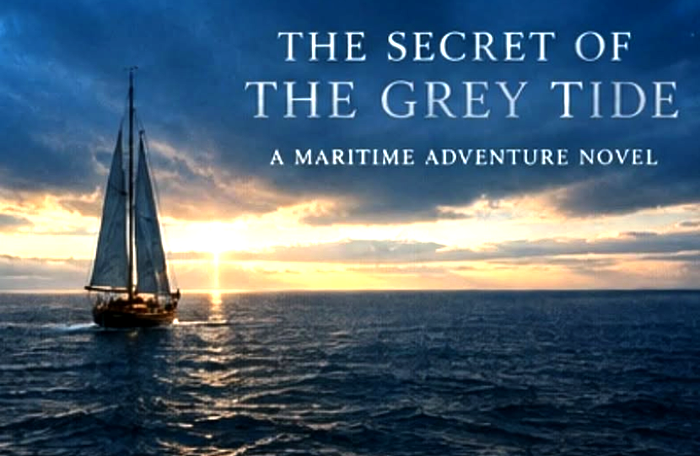
A Maritime Adventure Novel
PROLOGUE — THE CHART
The first thing that disappeared was the island.
Half an hour later it had vanished.
Rourke stood at the chart table of the Marauder, studying the position while the mate watched the sea through the wheelhouse window.
The fog had come from astern.
That was the first strange thing.
The second was that the tide was running in the wrong direction.
Rourke unfolded the sealed instructions given to him before leaving harbour.
WAIT FOR THE GREY LIGHT. DO NOT LAND.
A pale light appeared somewhere inside the fog. It was low on the horizon and moved slowly across the water.
Then it vanished.
A motor started behind them.
Rourke looked towards the stern. Nothing could be seen.
He ordered the schooner about.
As the Marauder turned, a pencil mark became visible on the chart beneath the fold. A circle had been drawn around a position far beyond the island.
Inside it were two words:
THE FLEET.
The motor behind them grew louder.
Rourke ordered full sail.
The Marauder disappeared into the fog.
She was never officially seen again.
CHAPTER ONE — THE UNWANTED INVITATION
Six months passed.
Daniel Vane had almost forgotten the northern coast when the letter arrived.
It was waiting on his desk in Whitehall on a wet November morning. The envelope contained no official seal.
Inside was a short invitation from a man named Edward Vale, asking Vane to meet him aboard a sailing yacht at Harwich.
There was something about the letter that made Vane uncomfortable.
Perhaps it was the absence of explanation.
Perhaps it was the final sentence:
Come alone.
Two days later he stood on the harbour quay beneath a cold rain.
The yacht was tied among fishing boats and small coastal craft.
She was an old wooden vessel named Asterion.
She was perhaps forty feet long, with a narrow hull, a deep keel and graceful overhanging bow and stern. Her dark green paint was worn almost grey in places. Salt had whitened the seams of her planking. The brass fittings were dulled, though carefully maintained.
She looked old.
But she looked strong.
The hull had the quiet, solid appearance of a boat that had spent most of her life at sea.
Vane stepped aboard.
The deck flexed slightly beneath his feet. There was a smell of tar, wet rope, oak, canvas and old oil.
He liked her immediately.
Below deck was a small cabin containing a narrow bunk, a stove, a folding table and a chart locker. The compass was mounted in a brass binnacle beside the wheel.
Nothing aboard the Asterion was modern.
Everything aboard her had been designed to survive.
Edward Vale was waiting below. Tall, lean and weather-beaten, he had the unmistakable appearance of a man accustomed to long periods alone at sea.
On the table lay a chart.
Vane bent over it.
The northern coast had been marked in pencil. Several sandbanks were circled. One channel had been crossed out. Another had been drawn where no channel appeared on the printed chart.
Vale placed a photograph beside it.
It showed a bleak coastline. In the distance were a dozen long, flat vessels, almost invisible against the sand.
Another photograph showed the same vessels at night.
There were more of them.
Much more.
Vale produced a water-stained sheet covered with numbers: depths, distances and tidal calculations.
At the bottom was a sentence written in red pencil:
WHEN THE GREY TIDE COMES, THE CHANNEL WILL OPEN.
That evening the Asterion left harbour.
Her old engine coughed reluctantly before being shut down. Then the sails rose.
The wooden yacht leaned gently to the wind.
Vane stood beside the wheel.
For the first time he wondered whether the letter had been a mistake.
By midnight he knew it had not.
CHAPTER TWO — THE OLD YACHT
The Asterion was not a fast boat.
Her strength lay elsewhere.
She had been built for northern waters, with heavy oak frames, thick planking and a deep centreboard that could be raised when necessary.
Her previous owners had used her for coastal surveying. Her present condition showed years of careful maintenance rather than luxury.
The wheel was worn smooth by generations of hands.
The deck planks had been repaired many times.
The mast carried scars from old storms.
Inside the cabin, the shelves were crowded with tide tables, charts and notebooks whose pages smelled of damp salt.
Yet the old yacht moved beautifully.
Her timbers creaked. Her rigging hummed. Water hissed along the hull.
At night, when the sails were drawing well, the sound became a steady rhythm beneath the feet.
Vane discovered that the Asterion could sail into water shallower than most modern vessels.
That made her useful.
It also made her dangerous.
The northern coast was a maze of mud flats, sandbanks and channels that changed with every season. A channel which existed in spring could disappear by autumn. A sandbank marked on an official chart could shift hundreds of yards.
The locals knew the water.
Charts did not.
Vale trusted neither completely.
He trusted the lead line.
Every hour, Vane or Vale went forward and measured the depth.
Four fathoms.
Three.
Two and a half.
Two.
The sea became a different colour.
The water was no longer deep blue but a greenish grey.
Sand was rising beneath them.
The Asterion continued.
CHAPTER THREE — THE SHADOW
On the third evening they saw the vessel.
It appeared briefly through rain to the north.
It was broad and low, with almost no superstructure.
It drew surprisingly little water.
Vane watched it through binoculars.
No flag was visible.
The vessel altered course and disappeared behind the rain.
The Asterion followed.
By midnight the weather had deteriorated.
The wind rose.
The wooden yacht climbed heavily over the waves. Her bow plunged into white water. Rain struck the deck. The old timbers groaned beneath the strain.
Vane had sailed modern boats.
None had ever felt like this.
The Asterion seemed to fight the sea rather than merely travel through it.
Near dawn the wind suddenly dropped.
The sea became strangely smooth.
Mist formed around them.
The vessel they had followed was gone.
Then a light appeared.
Three flashes.
A pause.
Three more.
Vale extinguished the yacht's lantern.
The Asterion drifted silently.
From somewhere inside the fog came the sound of an engine.
It passed close enough for Vane to hear water breaking against the other vessel's hull.
Then silence.
When the fog lifted, there was nothing.
Only sand.
CHAPTER FOUR — THE ISLAND THAT WAS NOT THERE
The island appeared again the following afternoon.
It was in exactly the wrong position.
Vane checked the compass.
Then the chart.
Then the compass again.
The island lay nearly two miles from the position shown on the chart.
They approached carefully.
The Asterion entered shallow water.
Her centreboard was raised.
The lead line was used continuously.
At last they reached the island.
There was an old lighthouse.
Its windows were broken.
A narrow stone path led inland.
The remains of a building stood behind the dunes.
Inside they found rusted machinery, an empty oil room and a wooden staircase leading beneath the floor.
The basement had been filled with sand.
Vale noticed that some of the sand was fresh.
They dug.
After nearly an hour the spade struck wood.
It was a trapdoor.
Beneath it was a narrow chamber.
There were no people.
But there were signs of recent occupation: a lamp, food tins, a radio battery and a chart.
The chart showed the coastline as it had been thirty years earlier.
Across it, someone had drawn a network of channels.
The largest channel led directly beneath the island.
It continued inland.
Vane understood.
The island was not merely an island.
It was the entrance to an old tidal waterway.
At high tide the sea entered it.
At low tide it disappeared beneath the mud.
The channel was almost impossible to find unless one knew precisely when to look.
The words on the mysterious paper suddenly made sense.
WHEN THE GREY TIDE COMES, THE CHANNEL WILL OPEN.
CHAPTER FIVE — BENEATH THE DUNES
The following morning they entered the channel.
The tide had begun to rise.
The Asterion floated over mud that had been dry an hour before.
The channel narrowed until the branches of reeds brushed both sides of the yacht.
The sails were lowered.
The old engine pushed them forward at slow speed.
There was no room to turn.
The water twisted between banks of mud and sand.
Several times the depth fell to less than three feet.
The Asterion touched bottom.
Her keel scraped.
She stopped.
For several minutes nothing happened.
Then the rising tide lifted her free.
They continued.
After two hours the channel widened.
Ahead stood a hidden harbour.
Vane saw warehouses first.
Then cranes.
Then railway tracks disappearing beneath the dunes.
There were vessels everywhere.
Flat-bottomed barges.
Fuel carriers.
Small tugs.
Long transports.
Most were hidden beneath camouflage netting.
The harbour was enormous.
And completely absent from every modern chart.
The mystery had become something much larger than smuggling.
CHAPTER SIX — THE HIDDEN FLEET
They entered the harbour after darkness.
The old Asterion moved like a shadow.
Her wooden hull made almost no sound.
They tied her beneath an abandoned jetty.
From there they watched.
All night the hidden fleet came alive.
Lights appeared.
Engines started.
Men moved silently between the vessels.
Crates were transferred from warehouses.
Fuel was pumped into tanks.
The operation was organised with military precision.
Yet no national markings appeared anywhere.
The vessels seemed deliberately anonymous.
At dawn a convoy left the harbour.
One by one the shallow-draft ships passed through the secret channel.
The Asterion followed at a distance.
From a concealed position among the dunes, Vane watched the fleet disappear towards open water.
Then he saw something that changed everything.
The vessels were not heading towards Britain.
They were sailing south.
The supposed invasion fleet was only a diversion.
The real objective lay elsewhere.
CHAPTER SEVEN — CAPTAIN ROURKE
That afternoon they found the man from the Marauder.
He had been living alone in a ruined coastguard station.
William Rourke was thinner than Vane expected. His clothes were worn. His beard was grey.
But his eyes were alert.
He had survived.
Rourke showed them his records: months of observations, photographs, ship movements, names of companies and maps.
The hidden fleet had been assembled by a network of private companies operating through several countries.
The vessels were intended to control coastal supply routes during a future political crisis.
No invasion had been planned.
The threat of invasion was the weapon.
Fear would force governments to move ships, troops and money.
Meanwhile the real operation would take place elsewhere.
Rourke had discovered the plan.
That was why the Marauder had disappeared.
That was why he had disappeared with her.
And that was why the hidden harbour had remained secret.
CHAPTER EIGHT — THE ESCAPE
They left before sunset.
The Asterion had to reach the open sea before the tide fell.
The wind had freshened.
That helped.
The old yacht ran before it, her sails pulling hard.
Behind them engines started.
The pursuit had begun.
The channel was already narrowing.
Sand appeared on both sides.
The Asterion struck the bottom.
Her timbers shuddered.
She stopped.
For several seconds Vane thought they were trapped.
Then another wave of incoming water lifted the yacht.
She moved again.
Behind them came the roar of the pursuing launches.
The channel twisted.
A sandbank appeared ahead.
Vale turned sharply.
The Asterion heeled until her rail nearly touched the water.
Her keel scraped the sand.
Then she burst into deeper water.
The sea opened before them.
Behind, the pursuing boats grounded on the falling tide.
The old wooden yacht escaped.
CHAPTER NINE — THE GREY LIGHT
Two days later the Asterion lay far out at sea.
The weather had cleared.
The northern sky was pale blue.
White clouds moved slowly across it.
The sea had returned to its deep winter blue.
Vane stood at the bow.
The old wooden hull rose and fell gently beneath him.
The mystery that had brought them north was now in official hands.
The evidence had been delivered.
The hidden harbour would soon be abandoned.
But the sea remained unchanged.
At sunset a strange grey light appeared across the horizon.
For a moment Vane remembered the island, the hidden channel, the silent vessels, Captain Rourke and the old chart.
The grey light faded.
The Asterion sailed on.
EPILOGUE — THE LAST ENTRY
Months later, the investigation became public.
Several companies were exposed.
The hidden harbour was dismantled.
The vessels were dispersed.
The secret channel was eventually marked on official charts.
But Captain William Rourke disappeared once more.
No reliable account of his later life was ever established.
Daniel Vane kept one thing from the expedition.
It was not the notebook.
Not the photographs.
Not the secret chart.
It was a small piece of timber removed from the Asterion after their return.
A piece from the old keel.
He kept it on his desk for many years.
It reminded him of a simple truth he had learned in the northern waters:
The sea does not reveal its secrets easily.
It hides them beneath fog, sand and changing tides.
A channel may disappear for years and then open for an hour.
A ship may vanish beyond a bank of mist and return months later.
And a seemingly insignificant old wooden yacht may sometimes carry a greater secret than the largest vessel afloat.
The Asterion was eventually sold.
Her new owner renamed her.
But Vane never forgot the sound of her timbers working beneath his feet on those long northern nights.
Years afterwards, he would sometimes unfold an old chart and find the pencil marks still visible.
There was the island.
There was the hidden channel.
And there, far beyond the sandbanks, was the little circle marked: THE FLEET.
The pencil had faded. The secret had not.
And somewhere beyond the horizon, beneath the endless northern sky, the tide was still moving through the sands.
THE END