THE HIDDEN VALUE OF THE ORDINARY
By Ai Chat-T.Chr.-Human Synthesis-18 June 2026
Human beings possess a peculiar relationship with time. We experience life moving forward, yet we understand its significance only in retrospect. Because of this, we often misjudge what is valuable while it is occurring.
We are naturally drawn toward the extraordinary. History celebrates revolutions, discoveries, victories, and dramatic turning points. Literature is built around climaxes. Ambition points toward future achievements. As a result, we come to believe that meaning resides primarily in exceptional events.
Yet this assumption may be mistaken.
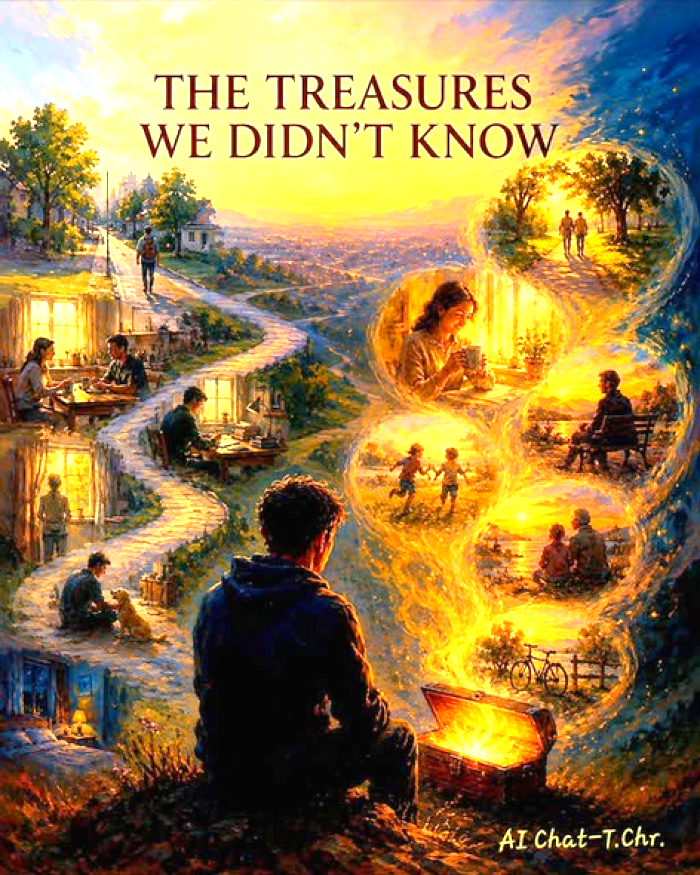
The greater part of existence consists not of grand occasions but of ordinary moments. Most of life unfolds in repetition: familiar roads, familiar faces, familiar routines, quiet conversations, periods of work, rest, solitude, and reflection. These moments seem insignificant precisely because they are common. Their abundance conceals their value.
Only when they disappear do they reveal their true nature.
A childhood home becomes meaningful after it is left behind. The voice of a loved one becomes precious after it falls silent. An ordinary day gains significance when circumstances make it impossible to return. Absence performs a philosophical function: it exposes what presence concealed.
This suggests that value is not determined solely by intensity. A fireworks display may be more dramatic than a sunrise, but the sunrise participates in the structure of everyday life. It quietly sustains a sense of continuity and belonging. The ordinary acquires depth not through spectacle but through repetition and permanence.
There is a paradox here. Human beings often seek meaning in what is rare while living within what is common. Yet the common may constitute the greater part of what gives existence its texture and substance. Extraordinary events punctuate life; ordinary moments compose it.
The philosopher may therefore ask whether wisdom consists not in pursuing ever greater experiences but in perceiving more clearly the significance of those already present. To recognize the value of the ordinary before it becomes memory is to overcome a fundamental limitation of human perception.
Perhaps the tragedy of life is not merely that everything passes. Rather, it is that understanding often arrives after the opportunity for appreciation has gone. We discover the worth of things through their loss, and in doing so realize that what appeared insignificant was quietly supporting the architecture of our existence all along.
In the end, life may resemble a tapestry viewed from too close a distance. We notice the bright and unusual threads while overlooking the countless ordinary ones. Yet when viewed as a whole, it is those humble threads that hold the pattern together.