MAKO NISHIMURA: THE DEVIL’S CHILD.

By AI Chat-T.Chr-Guardian/Shawn Williams-Human Synthesis-21 May 2026
The Rise and Fall of Japan’s Only Female Yakuza
Chapter 1 — A Childhood of Fear
In the suburbs of Gifu, Japan, a young girl grew up under the shadow of discipline and violence. That girl was Mako Nishimura.
Her father was a strict civil servant who believed hardship built character. Mistakes were punished with beatings. Poor grades, slouching, or rebellion could trigger his rage. Winter nights sometimes ended with the children thrown outside half-dressed into the freezing cold.
But inside Mako, something fierce was growing.
By the age of 14, she had become a delinquent — smoking cigarettes, skipping school, and roaming the streets with other troubled teenagers. She dyed her hair blond in defiance. Her father shaved her head in punishment.
The next day she walked into school with a towel wrapped around her scalp.
That humiliation changed everything.
Soon she stopped going home altogether. She slept in parked cars, temples, and abandoned spaces. She renamed herself Mako, meaning “the devil’s child.”
And once she chose that name, she never looked back.
Chapter 2 — The Girl Who Could Fight
Mako was tiny — barely over five feet tall — but violence came naturally to her.
At 17, after time in juvenile detention for drug possession, she joined a notorious biker gang known as the Worst, one of Japan’s violent bōsōzoku street gangs. Members dressed like wartime kamikaze pilots, raced motorcycles recklessly through cities, robbed people, and fought rival gangs.
Mako earned respect quickly.
One night in 1986, a pregnant friend called her in panic. Mako grabbed a baseball bat and ran into the streets of Gifu. She found five men surrounding her friend. When one kicked the pregnant woman in the stomach, Mako attacked.
By the time police arrived, the men were bloodied on the ground.
Mako disappeared into hiding.
But someone had noticed her.
The yakuza.
Chapter 3 — Becoming Japan’s Only Female Yakuza
Not long after the fight, Mako was approached by members of the Inagawa-kai, one of Japan’s largest yakuza syndicates. She initially refused.
Then she met a gangster named Ryochi Sugino.
Sugino was dangerous — a convicted murderer — yet calm, charismatic, and strangely fatherly. Mako admired him immediately.
At age 20, she performed the sakazuki ritual, sharing sake with yakuza leaders to formally join the gang. In that moment, her loyalty belonged to the underworld forever.
Mako became what few women ever had:
A fully initiated yakuza member.
Many men mocked her because she was female. But they respected one thing more than gender — money and violence.
And Mako excelled at both.
Chapter 4 — Crime, Power, and Tattoos
The yakuza of the 1980s were not merely criminals. They were institutions.
They owned businesses, controlled gambling, manipulated corporations, and influenced politicians. Their offices operated openly. They had logos, headquarters, and rigid hierarchies.
Inside this world, Mako thrived.
She managed sex workers, sold methamphetamine, extorted businesses, and collected debts. She built a reputation for fearlessness. Rivals nicknamed her “the little man.”
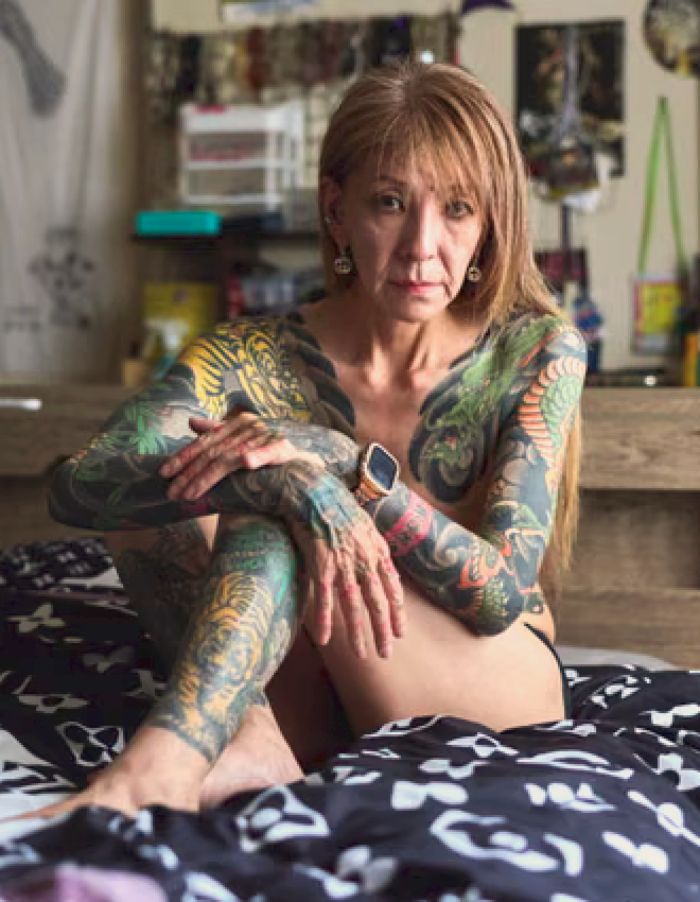
Her body became covered in elaborate tattoos. She lifted weights, trained in karate, and embraced every symbol of yakuza culture.
She wanted to become stronger than anyone who had ever hurt her.
But power came with darkness.
Chapter 5 — The Finger
Methamphetamine flooded Mako’s life.
Although her gang officially banned drug use, addicts and dealers gathered constantly in her apartment. Eventually her boss discovered what was happening.
Punishment was unavoidable.
To apologize in traditional yakuza fashion, Mako had to cut off part of her little finger.
Without hesitation, she placed her finger against a blade and severed it herself.
Even hardened gangsters were horrified by how calmly she endured the pain.
Afterward, some members paid Mako to cut off their fingers for them because they could not bear to do it themselves.
Her reputation became legendary.
But internally, she was falling apart.
Chapter 6 — Prison and the Collapse of the Yakuza
Police eventually raided Mako’s apartment and arrested her for meth possession. She was sentenced to prison.
When she was released, yakuza members greeted her with ceremony, money, and respect. Prison had not destroyed her status.
But outside prison walls, Japan itself was changing.
The country’s economic bubble had burst. Public anger toward organized crime grew stronger. New anti-yakuza laws targeted gang finances and influence.
The glamorous image of the yakuza began to rot.
At the same time, meth addiction consumed Mako’s mind. She suffered paranoia, hallucinations, and emotional collapse.
The empire she had devoted her life to was beginning to die.
Chapter 7 — A Mother’s Love
At 29, Mako fell in love with a gangster from another clan.
Soon she became pregnant.
For the first time in her life, she felt something stronger than loyalty to the yakuza.
Motherhood changed her completely.
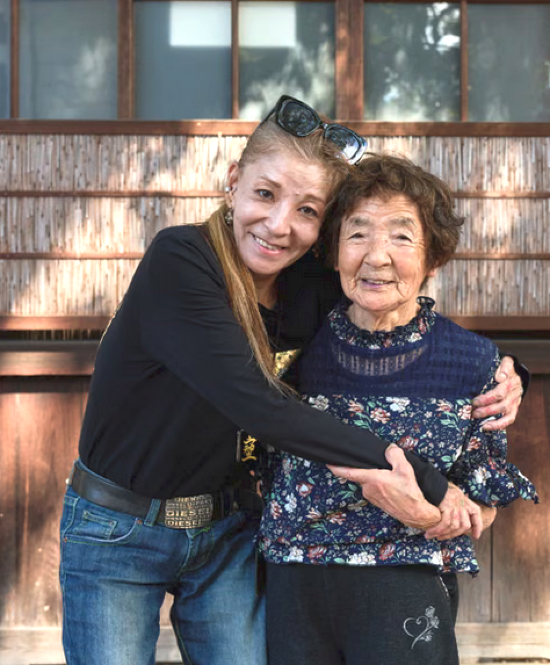
She quit meth. She distanced herself from gang life. Her mother, Hiroko, returned to help care for the baby, and the two slowly rebuilt their damaged relationship.
Mako believed her son could save her.
For a short while, she lived something close to a normal life.
But normal life did not come easily to someone marked by tattoos, addiction, and organized crime.
Employers rejected her. Society refused to forget her past.
Eventually, crime pulled her back in.
Chapter 8 — The Fall
Mako returned to dealing drugs.
She ran massage parlors, sold methamphetamine, and struggled with addiction to prescription tranquilizers. Her relationship with her partner became violent and unstable.
By her late 40s, she overdosed and was hospitalized.
When she looked around afterward, she saw that the yakuza world had changed beyond recognition.
The old codes were gone.
Gangsters now ran online scams targeting elderly victims. Younger criminals cared little for loyalty or honor. Foreign syndicates and internet-based gangs replaced the traditional yakuza structure.
The brotherhood Mako once worshipped no longer existed.
So she walked away.
For good.
Chapter 9 — Redemption
Years later, Mako met former yakuza enforcer Satoru Takegaki, who had created a charity called Gojinkai to help ex-gangsters rebuild their lives.
Inspired by him, Mako began helping former yakuza find jobs, housing, and rehabilitation.
She opened a branch near her old gang headquarters in Gifu.
The woman who once trafficked drugs and exploited vulnerable people now cleaned streets, supported recovering addicts, and tried to help others escape organized crime.
She also wrote a memoir about her life.
Not to glorify it.
But to warn others.
Chapter 10 — Coming Home
The deepest wound in Mako’s life was not prison, violence, or addiction.
It was family.
For years she barely saw her sons. Her mother secretly worried about her every day. Her brother had not spoken to her for decades.
Then, slowly, the family began to reunite.
They met quietly in cafés and shrines around Gifu. Tears were shed for lost years and painful memories.
Mako, once known as “the devil’s child,” finally understood what mattered most.
Not power.
Not fear.
Not the yakuza.
Family.
And when reflecting on how she survived a world that destroyed so many men, she gave one final answer:
“If I was a man,” she said, “I’d have been killed already.”
By Shawn Williams - Guardian 21 May 2026