OUR CAPACITY FOR TRANSFORMATION
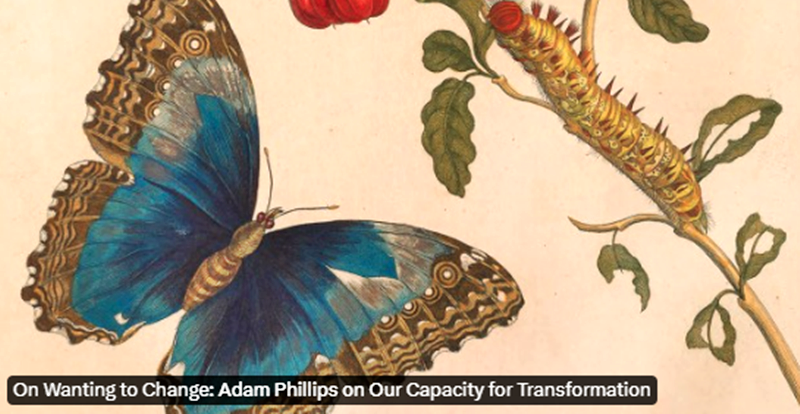
By ChatGPT4o - Human Synthesis - 06 June 2024. Source The Marginalian.
This essay by Maria Popova explores the complex and multifaceted nature of personal transformation, drawing on the insights of various thinkers, including Allen Wheelis, Rebecca Solnit, and Adam Phillips. The central question posed — "Are you the same person you were as a child?" — invites a philosophical investigation into the nature of change, identity, and self-knowledge.
Change, in this context, is depicted as both inevitable and paradoxical. The essay argues that while we live in bodies that constantly renew themselves and inhabit environments that shift over time, the core aspects of our joy and suffering often seem resistant to alteration. This tension highlights the philosophical conundrum of identity: if we change, who is the 'we' that is changing?
Allen Wheelis offers a framework for understanding change as a sequence: suffering, insight, will, action, and finally change. This sequence suggests that transformation is a process that begins with a recognition of suffering and culminates in deliberate action. However, Popova, through Rebecca Solnit’s reflections, emphasizes the unpredictability of this process. The transformative things we desire are shrouded in mystery; we cannot fully anticipate the self that will emerge on the other side of profound change because the self imagining the change is the one that must dissolve.
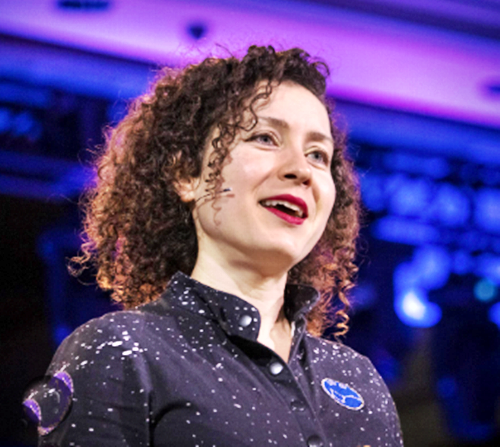
Maria Popova
Adam Phillips further complicates this understanding by exploring the idea that our desires for change are intricately tied to how we articulate them. To want change is not just about wanting different circumstances but also involves a deep inquiry into what we truly desire and what constitutes improvement. This suggests that our narratives about our lives play a crucial role in shaping our experiences and possibilities for change. Describing our lives as either progress or decay, Phillips notes, provides a framework that influences our perception of what is possible.
Phillips introduces the notion of the self as inherently divided and conflicted, following William James and Donald Winnicott. This divided self constantly grapples with competing desires and representations, complicating any straightforward understanding of personal transformation. The idea of conversion, particularly in the Judeo-Christian tradition, highlights the dramatic and often crisis-driven nature of profound change. Conversion implies a radical shift prompted by an unbearable situation, yet even these experiences reveal underlying conflicts rather than resolving them.
The essay underscores the constraints on our capacity for change, shaped by unchosen variables such as genetics and cultural influences. This limitation raises fundamental questions about free will and the extent to which we can genuinely choose our transformations. Moreover, the question of what transformation to pursue is deeply entwined with self-knowledge, a domain where we are often opaque to ourselves.
Phillips posits that genuine change in relationships requires mutual transformation, drawing on Winnicott’s insights into the foundational role of the mother-child relationship. This dynamic suggests that change is deeply relational, and our capacity to depend on others despite their inherent unreliability is crucial for personal growth. The willingness to embrace surprise and uncertainty, rather than seeking rigid consistency, opens up the possibility for true and enlivening transformation.
Ultimately, the essay argues that the desire for change reflects a deeper desire for life itself. Virginia Woolf’s assertion that a self which continually changes is one that truly lives encapsulates this idea. Change is not merely a response to external circumstances but a fundamental aspect of being alive, a continual process of becoming that resists ossification. This philosophical exploration invites us to embrace the uncertainties of transformation as integral to the vitality of our existence.
The essay, in its rich tapestry of philosophical insights, weaves together the theme of transformation with the fabric of human existence, urging us to embrace change as an essential part of living. It suggests that to truly live is to remain open to the flux of existence, to continually evolve and redefine ourselves in response to the world around us.
Adam Phillips's reflection on the divided self points to the inherent complexity and fluidity of our identities. The notion that we are constantly negotiating between different versions of ourselves implies that change is not a linear process but rather a dynamic interplay of internal conflicts and reconciliations. This perspective challenges the simplistic view of personal transformation as a straightforward path from one state to another and instead presents it as an ongoing, often tumultuous journey.
The idea of conversion, particularly in its religious context, underscores the dramatic nature of some transformations. However, Phillips’s observation that such conversions often expose rather than resolve internal conflicts suggests that change is a continuous process of grappling with our contradictions. This aligns with the existential view that human life is defined by its inherent tensions and uncertainties, and that authentic existence involves confronting and embracing these complexities.
Phillips also touches on the role of relationships in personal transformation. Drawing from Winnicott's work, he emphasizes that our capacity to depend on others, despite their unreliability, is crucial for our growth. This insight highlights the interdependence of human beings and the idea that personal change often occurs within the context of our relationships with others. It suggests that transformation is not an isolated endeavor but a relational one, deeply influenced by our interactions and connections with those around us.
The concept of surprise as an alternative to rigid consistency points to the importance of openness and adaptability in the process of change. By embracing uncertainty and remaining open to new experiences, we allow ourselves to be transformed in ways that rigid adherence to predetermined paths cannot achieve. This aligns with the existential notion of embracing the unknown and the unpredictable as a way of fully engaging with life.
Virginia Woolf’s assertion that "a self that goes on changing is a self that goes on living" encapsulates the central message of the essay. It suggests that change is not just a response to external circumstances but a fundamental aspect of being alive. To live authentically is to remain open to continual transformation, to resist the temptation to become fixed or static in our identities.
In summary, the essay invites us to view change as an integral part of the human experience. It challenges us to embrace the complexities and uncertainties of transformation, recognizing that our identities are fluid and ever-evolving. It suggests that personal growth involves a continuous process of negotiating internal conflicts, remaining open to surprise, and engaging deeply with our relationships. By doing so, we can achieve a more authentic and fulfilling existence, constantly redefining and recreating ourselves in response to the ever-changing world around us.
In conclusion, the exploration of personal transformation in Maria Popova’s reflection on Adam Phillips's On Wanting to Change delves into the intricate and often paradoxical nature of change. It reveals that change is an inescapable part of the human experience, intricately linked to our desires, our relationships, and our fundamental nature as beings in flux.
We see that transformation is not merely about altering external circumstances or achieving specific goals, but about a deeper process of self-discovery and continual becoming. Allen Wheelis's sequence of suffering, insight, will, action, and change underscores that profound transformation often begins in moments of despair and evolves through a complex interplay of internal realizations and deliberate actions. Rebecca Solnit's insight further complicates this by highlighting our limited ability to envision the transformed self, emphasizing that the very act of imagining change is bounded by the current self that seeks to change.
Phillips enriches this discussion by focusing on the linguistic and narrative dimensions of our desires for change. He argues that how we articulate our wants and plot our lives shapes the trajectory of our transformation. This perspective invites us to reconsider the stories we tell about ourselves and recognize the power these narratives hold in shaping our realities.
Moreover, the essay touches on the inherent contradictions within the self, drawing on William James and Donald Winnicott's ideas about the divided self. This division suggests that personal transformation is a continual negotiation of conflicting desires and identities, highlighting the dynamic and ongoing nature of change.
Relationships emerge as a crucial context for transformation, with Phillips noting that genuine change often occurs within the relational dynamics we navigate. The capacity for surprise, openness to new experiences, and reliance on others despite their unreliability are all presented as essential components of meaningful change.
Ultimately, the essay culminates in the recognition that a life fully lived is one that embraces continuous transformation. Virginia Woolf’s assertion that "a self that goes on changing is a self that goes on living" serves as a poignant reminder that the essence of life is found in its perpetual motion and evolution. To resist change is to resist life itself, while to embrace change is to engage deeply with the process of becoming, acknowledging that our identities are not fixed but fluid, shaped by the myriad experiences and relationships that define our existence.
This exploration encourages us to view change not as a series of isolated events but as an ongoing journey of self-creation and discovery. By embracing the uncertainties and complexities of transformation, we open ourselves to a richer, more authentic experience of life, continually redefining who we are and what we can become.