CRIMINALIZING SUPPORT FOR PALESTINE
By Scheerpost-Fergie Chambers-27 November 2026
Fergie Chambers speaks out about being targeted by the United States for supporting humanitarian organizations in Palestine and the high cost of fulfilling our obligation to oppose genocide.
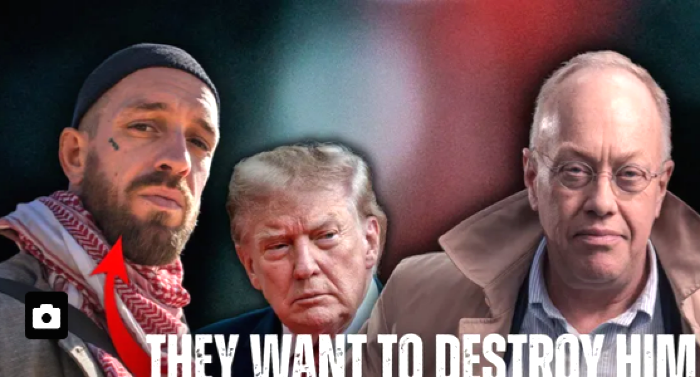
VIDEO CRIS & FERGIE
Transcript
Chris Hedges:
Fergie Chambers was imprisoned in Spain for the past four months because the Trump administration seeks his extradition on allegations of money laundering riot and conspiracy to riot. The Trump administration claims that $7.5 million in financial transfers to Tunisia by Chambers was intended to benefit Hamas, although Chambers has not been charged with terrorism offenses and he denies the accusation.
Chambers was arrested in Spain on July 10, 2026, after the U.S. Department of Justice submitted the extradition request to Spanish authorities. The extradition request is the first known case of the U.S. seeking a citizen’s extradition over alleged support for Hamas. Like the arrest of the leaders of the Holy Land Foundation, which supported humanitarian groups in Palestine, Chambers’ case appears designed to criminalize support for Palestinian organizations and charities. Chambers also supports bail funds for activists, including those in Palestine Action US, who carried out protests against Elbit Systems, the Israeli weapons manufacturer, which has facilities in the United States as well as Britain. The British government declared Palestine Action UK, a proscribed terrorist group. Chambers financially supported the Occupy Wall Street movement in 2011 and the Stop Cop City movement, including paying bail and lawyers’ fees for those arrested during the protests of the construction of the Atlantic Public Safety Training Center. He participated in the 2016 Standing Rock protests. He founded a revolutionary Marxist-Leninist collective in Massachusetts and took part in the protests in Cambridge, Massachusetts at the offices of Elbit Systems. He provided bail funds as well as for Palestine Action activists who targeted Elbit’s office in Merrimack, New Hampshire.
Former British Ambassador Craig Murray, who attended the Spanish extradition hearing, described the U.S. case as extraordinarily weak. He noted that the request rests on a single FBI agent’s criminal complaint rather than a grand jury indictment raising questions about the U.S. Spanish treaty requirements governing extradition. Spanish authorities are also accused of improperly handing Chambers’ phone to the FBI in violation of the U.S. Spanish Extradition Treaty. U.S. authorities submitted Spanish translations that differed in the language of the original extradition documents. Words were inserted in Spanish suggesting violence, fire, and explosives. The investigation even extended to Ireland. On November 18th, armed Irish police raided Chambers Dublin home at Washington’s request. Two days later a Spanish court granted Chambers conditional bail, acknowledging that the translation errors could undermine the extradition request.
There are disturbing precedents that could be set if Chambers is extradited. It could see the international legal cooperation become an instrument for pursuing political opponents, even if they are U.S. citizens, across borders. Secondly, it could effectively criminalize individuals and groups that provide humanitarian support to the Palestinians and other persecuted populations.
Joining me to discuss the case is Fergie Chambers. I want to begin, you inherited a lot of money, which has allow allowed you to support these groups, all of which I support as well. I suspect that you were on the radar of Sebastian Gorka and these figures, and that’s why I mentioned your past involvements in these opposition groups for a long time and this just became the trigger. But let’s talk about what you did and what they’re attempting to accuse you of. I mean they’re centering it around this transfer of money to Tunisia, if I have that correct.
Fergie Chambers:
Right. When I was originally arrested in Spain, I was surrounded by unmarked police cars on the driveway of a school that I was going to do an interview for my five-year-old for the fall. We’ve been wanting to move to Spain for basically a couple of years. We’ve been trying to do that legally. And the first thing they said was just money laundering, international money laundering. And I was stumped by it. I was thinking, gosh, I opened a bank account in Spain last week. Maybe my accountant from the US sent the wire the wrong way and it broke some Spanish law and now they’re freaking out. The last thing I ever considered was that if they came after me politically, that was the label that they would slap on it. It just didn’t occur to me because I’ve been so careful about what I do with money, because I understand that US laws are incredibly strict and that I have a responsibility to the money, the project of the foundation, the really good things that we support, that like getting it into any kind of dicey corners would never be worth the risk that would take away our capacity to send $200,000 to a children’s hospital overnight, which we have done when it’s needed.
I was accused of intent, as I understand it, because again in most countries, money laundering means that you got money from an illegal source. In this case, no, I sold out of my family’s 125-year-old company and was the first member of my family to do it because we have political disagreements and I’m not part of that world, but I had a right as a blood member of the family to a share of the pie. And I wanted to use as much of the liquid that I could get my hands on while I remain in this incarnation on earth in this world to redistribute that, to make some sort of amends for, maybe that’s a bad word, but to take responsibility for the position that I was born into because I would like to imagine a world where people aren’t really born into that position. It doesn’t mean that I’m not kind of spoiled, but once I did that, my life changed qualitatively. I mean, I was an activist before, an organizer. I did a little bit of writing around my political work and I’ve kind of always had that going on with like sports jobs, like teaching, coaching, running a gym, this and that. Those are like the two lanes of my existence.
Chris Hedges:
Okay, Fergie, I’ve got to interrupt you. Didn’t you hire Marjorie Taylor Green? Wasn’t she in your gym? Do I have that right?
Fergie Chambers:
Well, what happened was I bought a gym in Atlanta that had a previous owner and because I was going to kind of redo this space more near downtown Atlanta where I lived and he owned another gym in the suburbs that I had to take as part of the deal. And there was a lady who was very wealthy and for free was teaching some classes there to get the experience to one day have her gym. And that turned out to be Marjorie. So, it just so happened that she was in this kind of satellite gym that I technically owned for a few months and then sold to a manager. And I knew her like a little bit, not as somebody that made any kind of political statements, but somebody that liked pool parties and liked hanging out with other managers of my gym and other staff and seemed to maybe have kind of like an identity crisis. But I didn’t really know her very well. And I love when they try to suggest that like actually I was grooming her the whole time. And now everything she’s doing was part of the master plan all along.
Chris Hedges:
Okay. All right, that’s an aside, but it’s just one of those trivia moments that’s pretty funny.
Fergie Chambers:
No, it’s very strange. So, then I made this deal and look, I’m not allowed to say exactly what the terms of the deal are. A lot of people report that I’d sold out for 250 million. That’s not true. I’m not allowed to say exactly what the terms and conditions were. It’s hundreds over an extended period of time. It’s complicated. I had to sign non-disclosure agreements to do it, but suffice it to say, it very dramatically changed the material circumstances of my life and my capacity to give to projects that I felt mattered, the people that I’ve worked with for many years in political movements felt mattered and that maybe other people weren’t looking at. I understand there are a lot of political donors in the world that have a lot more money than I do. They just kind of all donate to the same things, or like one or two sides of that aisle, plus pet projects. And I’ve been more interested in other kinds of things.
So that’s when like philanthropists became, which people have to say that for lack of a better term. I mean, it’s a horrifically bourgeois term that I almost am against in principle, the notion of a philanthropist as an identity, but whatever, giving money away became a much bigger part of my identity. Before that, I had a lot of money by normal standards, and I gave a lot of money away to things. I was running a bail fund in Atlanta for a little while that collected a lot of different people’s money that I was contributing to. And I brought a lot of resources to Standing Rock, but that was in a period of time when I had a certain capacity and it was very different after that deal was made. And I imagined that the amount of attention from different state apparatus, law enforcement authorities, whatever, probably grew considerably after I made that deal. I don’t think that’s a big surprise.
Chris Hedges:
Well, Fergie, unlike 99.9 percent of philanthropists, you’re a traitor to your class.
Fergie Chambers:
Yeah, I mean, I certainly aspire to be. I almost feel like it’s presumptuous to even take on that moniker on my own because it requires a great amount of humility and it requires a great amount of walking the walk. And it’s not really up to me to decide whether I’ve successfully been a traitor to my class, but I’m certainly viewed as such by my class. And there are consequences for that.
Chris Hedges:
So, let’s talk about the arrest. They surround your car at the school. Go from there.
Fergie Chambers:
Yeah, I’m taken in. I’m charged with money laundering. I think over the course of that day, it becomes clear that there’s some sort of like claim about Hamas therein. And then Tunisia comes up and I’m like, what, what, what, what? The money to Tunisia? Because a couple of things, I mean, for one thing that’s really strange actually is that not only is the Tunisian economy a closed economy, so actually when you move money into Tunisia, you’re not allowed to move it out of Tunisia, very specifically. But secondly, even the current government in Tunisia particularly has a bone to pick with the Muslim Brotherhood, which had overseen the previous government in Tunisia. It’s kind of logistically completely implausible to move money through a major Tunisian center, through the Tunisian central bank, which these big transfers went through and into a major bank account there, and then somehow secretly liquidize all of it and get it to the Levant. It’s just, it couldn’t be done. But what I did was I had moved there and I had gotten involved in this sort of sponsorship and support deal with one of the biggest football clubs in North Africa, which is called Club Africa. Because again, like I really like sports and that’s like the other thing I’m into. This was a team with a working-class identity that was founded as an anti-colonial sporting organization in 1920. Their ultras were like super pro Palestine, made like globally viral Tifo art about Gaza when things were going on.
And so, when I got there, I was like super into this club. And then somebody heard through the grapevine through somebody that this super wealthy American that was interested in sports businesses was a fan of the club. And that club happened to be a few million euros in debt to FIFA or unpaid salaries, discrepancies in the balance. And they came to me and asked me if I wanted to get involved. And I was like, yeah. And I think a lot of guys that would be like me would like go buy a sports team. But to me,having what’s technically a public association, which they are in Tunisia, that was like represented by millions of people who love the club in a country in the broader Global South and just being able to support it was a great idea.And I was like super down and excited about it. But this is why that money went there, other than some cars I bought, a house I rented for five years all at once because I thought I might buy it eventually. It was like maybe a lease to buy scenario. So, but all that didn’t account for very much of the money. It was mostly that.
And I had been developing a sports business partially to have residence. I was opening a gym, and we were maybe going to do some like martial arts equipment with it. I’ve also taught a little jujitsu. I still practice it a lot. I used to teach weightlifting. I’m into all that stuff. So, we were getting something going there like on the side of my political life. And then it merged. So, we had some expenses going into building out this really kind of fun nice gym we built. And then we had a ton of expenses going into, I mean, this is a club that’s like won the African Champions League before. Like, this is a club that has millions of supporters all over the world and you might see them wearing their kit on the street in a major city in Europe anytime. So, we were talking about millions of dollars that went into this process and a four year sponsorship deal. And every time they wanted extra money for anything, they called me up and I was like, a major public figure in Tunis for this because 15 million people love this club and I was this tattooed guy who supported Palestine too. And it was kind of a spectacle to the point where I couldn’t even really live in Tunisia comfortably anymore because I couldn’t walk down the street without having like a selfie parade.
Whatever, I was excited by being involved with the club. We actually won the championship for the first time in like 12 years the year after I got involved, so just this last year. And I didn’t make any money off of that. I wasn’t trying to make money off of it. We had my companies be the sponsor on the kit and whether one day that like yields some big, I don’t know. I’m not in this stuff to make a profit. I just liked doing it, but that’s where the money went.
Chris Hedges:
But why do you think that the United States, of all the things because you’ve done a lot of things that…
Fergie Chambers:
Because they can’t prove, like we did check with OFAC every time we made any donation anywhere politically. Everything related to Palestine is like literally hospitals or like people building a bakery to feed people and they’re going through like US fiscal sponsors or like everything’s regularized. If it was black communist farmers in the South, they had their things in order. So, I’m sure they tried really, really hard to go through those things, but like, no, I’m sorry, that’s all really clean. And where did he get his money? From a major American corporation. Okay, that’s all clean too. You know, is he setting fire to things? No. Is he committing violent actions? No. Is he planning violent actions? No. You know, they couldn’t find any of that. So, they’re just like, well, he sent a bunch of money to an Arab country. Ooh, like this is the only thing I can think of.
And so, the idea is because look, the US law is again that you intended to funnel money to an illegal source. That’s the law you need to break. It’s like the crime is not waking up and thinking I would like to fund something illegal. It’s trying to do it. You don’t have to succeed, but if you try, you’ve broken a law. So, the claim is that the money I sent to Tunisia, I wanted to send it somewhere illegal and that was the stopgap. But all of that money actually went to a football club, and nowhere did I ever express at all that I wanted to do something like that. In fact, I’ve been asked about it before and said, no, I wouldn’t, because it would jeopardize my, yeah.
Chris Hedges:
You know, Fergie, I have to, as I did in the introduction, draw the analogy to the Holy Land Foundation. I know some of the leaders of the Holy Land Foundation. This was a very reputable organization based in Texas that provided humanitarian support and again was very scrupulous and careful, supporting Palestinian nonprofits, charities, etc. And immediately after 9-11, I’m sure at the behest of Israel, they went in and shut it down and imprisoned the leaders of the Holy Land Foundation.
Fergie Chambers:
Yeah, I have talked about that a number of times in the past before all this happened. And I said in the past, this scares me and they might come after me in this kind of way. And I’m always afraid of that. And I’ve also said that that had to do with my choosing to not live in the United States because I was afraid of that kind of political repression developing. And they’ve used that in part of their accusations against me, that I’ve spoken about the Holy Land Foundation.
Chris Hedges:
Oh, I didn’t know that.
Fergie Chambers:
They’re terrorists and so he must be too, because he likes them. So, no, that case exactly is a perfect example of how those things go. Look, I don’t know all the specifics of it, and I can’t really speak about the proceedings in my case per se, but I just saw that as a major miscarriage of justice that was motivated by some political divergence and people happening to have resources and becoming targets because of it. So, yeah.
Chris Hedges:
Well, I think Fergie, the assumption is that Israel after 9-11 just said, “Okay, you go after Sami Al-Arian, you go after Holy Land,” you know.
Fergie Chambers:
Yeah. Yeah. Yeah.
Chris Hedges:
There was this activist from Brooklyn College, I forget his name, I think Elsayed was his name. I mean, there was just a list. This is what we’re working from. I covered this stuff. Israel presented a list. Do you have any, you know, is it just speculation? I mean I’ve got to think that Israel put you on that list.
Fergie Chambers:
I don’t know. No, I came up in that era like I mean, well, I was 16 in 9-11, right? So, and I was arrested at the anti-Iraq protests like the first time I got arrested at a protest so that like that was the environment I grew up in. And I think actually some people who came around even like Ferguson and the George Floyd movements more recently but hadn’t been around that sort of Patriot Act climate, maybe have been more surprised by the more recent waves of repression because that was when the trend was set and they’re just elaborating on it. I don’t know. I assumed I’d been on lists. I think when I lived in Atlanta and I was involved in racial justice work, housing work, and said things that were controversial. That’s probably the first time they opened a file on me. And I don’t know how it developed or what pushed the issue so far.
I know that this administration is like particularly going after left-wing activists and left-wing institutions across the board and is sort of making efforts to criminalize people en masse. That whatever this case is, has gotten a little more prominence or a little more publicity, but I think there are other ones probably like it. I think it’s just part of an overall trend. So, I don’t know which list it was and who started it, yeah.
Chris Hedges:
Let’s go back to Spain. So, you’re arrested. Now do I have this correct? You’re not actually charged with a crime, but they hold you for four months in jail. Is that correct?
Fergie Chambers:
Yeah, correct. I haven’t been indicted in the U S. There’s a criminal complaint, I believe, and we had to check with my attorneys, but I believe that actually the real criminal complaint that was issued was not even issued at the time of my arrest but issued a bit later. And I’m certainly not charged with any crime in Spain, but under the argument that I had the resources to flee and that they have this extradition agreement with the US, which they have to go through their legal process to determine whether I fit into that extradition agreement and our legal team believes I don’t. They held me in provisional prison for about four and a half months or just over four months. I did apply for bail a number of times in that process and I was denied bail because of being cited as a flight risk, despite actually, I mean, most of my bank accounts have been frozen, especially since I was arrested.
Chris Hedges:
This was by the US? Fergie, was this by the US who froze your bank accounts?
Fergie Chambers:
The banks themselves were just like political exposure insurance risk. Sorry. No, money laundering.
Chris Hedges:
I see.
Fergie Chambers:
Yeah, a couple banks had debanked me before that for political exposure. No, again, my assets aren’t frozen because everybody knows that they don’t come from anywhere illegal, so you can’t really freeze them if they aren’t ill begotten, but the banks can say we don’t want to deal with you. And that’s pretty much what’s happened almost across the board. There are like ways that I can pay my lawyers and like get the things that really need to be handled in life handled, but it’s not easy.
Chris Hedges:
Fergie, when you were arrested, I think I certainly was one who asked the question why the Spanish government, which has been one of the few governments to decry the genocide, why they agreed.
Fergie Chambers:
Because my perception is that they, again, there is a treaty and that they have to go through the motions of their process and that involves determining whether I fit into that extradition treaty. And there is an option for the government to actually intervene and say, “No, we blocked this extradition.” But generally, they allow it to go through that legal process before they even considered doing that. And then I have applied for asylum and that operates kind of independently of the legal process, but it’s a lengthy process, asylum, and I think not as a legal rule, but as a rule of thumb, it would generally not conflict with the judicial process either, or maybe wait out the judicial process. So, I think it was kind of that was really it. And look, it doesn’t mean that Spain doesn’t have a relationship with the US that in many ways is close, economically, diplomatically. So, I think for Spain, the Spanish government to just jump the gun and say, “Nope” was too much of a risk for them to take.
I believe there are a lot of people in the Spanish government and the Spanish judicial system who see this super fairly and can and will do what I consider to be the right thing. So, I can’t really complain about that at this moment because they’re going through the motions that they have to go through. And this most recent development is an indication that there’s, I think, a path toward justice and a real degree of rationality and objectivity. And I’ve gotten a lot of popular support. Yeah.
Chris Hedges:
Yeah, you do. I mean a lot of people have signed letters decrying this whole process, but the most recent development is the United States Department of Justice submitting documents in Spanish that are different from the actual extradition request.
Fergie Chambers:
That’s right. What happened was, and we didn’t know about this until much more recently, because the documents that we were sent with the extradition were different from the documents that were sent to the court.
Chris Hedges:
Oh Wow.
Fergie Chambers:
The translation that we received was verbatim from the English report, basically the FBI agent’s report, because it’s kind of based on a criminal complaint of one FBI agent. The court’s version and the prosecutor’s version, upon which he based his briefing for the court, took a number of liberties. I think that our translation expert who looked through it or who was an independent translator found like 30 some discrepancies, but there were three or four major ones, including the claim that at this Elbit action in Merrimack, New Hampshire, which they’re accusing me of kind of conspiring or supporting, not doing, but supporting or whatever, that there were fires set on the roof there, that there might’ve been explosives, that violent actions were committed. And the English doesn’t even say that because, I mean, everybody knows, like there’s video of that. There are people who had to answer for that in US court. And they served 40 days for those actions, which involved absolutely no fires, no explosives, no detonations and absolutely no violence whatsoever.
So, once this became clear, because even the US can’t deny those discrepancies, basically, we had filed a motion right after my hearing a week and a half ago, which was the original extradition hearing. And the judges here said, “Yeah, this is a problem. We have to review this case in light of this, and we can’t keep somebody in prison for an extended period of days based on really an error that’s not his fault. So, on those grounds, we’re granting him provisional release.” And so, I think that that was fair and correct.
I don’t really want to comment on the judicial process outside of that, because I’m respecting the judicial process here. I’m having a great amount of hope and faith in it, and/or in the possibility of the government to intervene in asylum. Because I think we have a very strong case on both fronts. I think there’s a multitude of reasons for it. But I do think that this is a place where there’s much more sort of rule of law and certainly respect for freedom of speech and just kind of a right to exist than we now have in the United States
Chris Hedges:
When do they make a ruling?
Fergie Chambers:
The next ruling should come, I’m not clear on that, maybe it seems like this week.
Chris Hedges:
Well, let me ask what you’re facing. Suppose you are extradited, what are you facing in the United States?
Fergie Chambers:
I have three charges. Well, I’m not charged. I’m accused of three things, which have associated charges that number in many, many years, more than 10 years, could be multiple decades worth of associated charges. Numbers I don’t even like to think about that continue to, I mean, the overriding emotion and the overriding thought through all of this has just been confusion, confusion, confusion, dissonance, disorientation. I have ideas that are very much against the mainstream, but I lead kind of a normal boring life, which is like I spend time with my family and I’d like have these little businesses and so I train a lot. I work out a lot and then I read and talk about politics and then I’m spending time, I have four kids and I have a fifth one on the way, God willing. And that’s what my life is about.
I’m not out organizing really insane things. I give a lot of money away. I just had this sort of quiet life that was suddenly completely torn apart. I mean, I can’t believe that I’ve just seen my 15 year old daughter. I saw her for the first time in five months today. My five year old son, I saw him for the first time in five months yesterday. I slept in a bed with my wife for the first time in five months. I just saw my dogs five minutes before we started this call and I don’t know how long it’s going to last, you know. And other people have suffered far worse consequences because of wanting to take part in the multi-generational struggle for human justice broadly of which Palestine has taken center stage in our era.
So, of course it all makes me cry because it’s my life and it’s hard and it’s overwhelming. But I don’t cry greater tears for myself than anybody else except that this is the sensory experience that I have. And I love the people I love and miss them as much as anybody else does. But it’s also just disorienting because, well, you may have a large degree of cynicism about the system that you’re operating in. You think that there are kind of expectations and boundaries. I’ve never been somebody that thought that being involved in activism and getting arrested for pedestrian and roadway might be a possibility. Or them putting some annoying charges at you and they might make me go do two months and say that, “Hey, when you were 20 years old, you committed vandalism.” And I don’t know, things like this happen. People get disorderly conduct at protests and then that’s why there are bail funds and are kind of expectations that have existed in our societies for a little while. But like, wait, you just showed up one day and took my entire life away? And basically, none of this is like there’s not really any substantive evidence of any of it. I can’t wrap my head around it, I can and I can’t. And I do see that, again, so many people have come to my support. And I think it’s important to say that supporting me in this case is not an endorsement of all of my ideas and actions. I think there are lots of people, even who I have like feuded with in the like American political scene, who came out and said, “This is not cool.” I think of my own family, my grandfather who’s passed away, not in the Cox family. He was like a civil rights lawyer in Cambridge, the very classical liberal ACLU guy, so like we totally don’t agree on a lot of things. He was not a Marxist at all. He had the founding fathers up on a pedestal. And yet, if he had heard of something like this happening to someone he had never met, he would have said, “God damn it, not in my country.” Right on down to people on the left with different theories of change, to people with totally reactionary ideas or right-wing ideas that are just like, “No, but this is free speech. And this is somebody who’s being targeted because of that, who’s being targeted for their political ideas, clearly.”
And that’s part of how what we’re fighting the extradition case is that Spanish law says that they don’t extradite over political crimes, unless it’s terrorism. And so, of course, they try to associate me with that word. But like, again, even if you see videos of like what happened in Merrimack that day, which I was outside of, spoke to some news cameras and bailed people out. But like there were some teachers involved in like a group of people that blocked the driveway to that facility. And then some people got on the roof and there was like some paint on the windows. And it’s a rural sort of business complex compound outside of a town, there’s not any people that were around it. You just see that and you’re like, wait, terrorism? Like, come on now, guys. I understand this is a word that’s in the eye of the beholder and that we could debate for hours about what does that word mean and what does it not mean. But like, it doesn’t mean that. And whether I agree with every US designation or sanctioning or not, it certainly, doesn’t mean that I’ve ever provided any material support to any organization on any kind of list like that or had any intent to do so or expressed any intent to do so or made any move that implied intent to do so
Chris Hedges:
I mean, Fergie, they’ve declared Palestine Action a terrorist organization. And though they’ve never carried out an act of terrorism or advocated terrorism.
Fergie Chambers:
Yeah, that’s under review in the British Supreme Court right now. I don’t know what will come of that. It’s also not an organization. It’s an idea, like Antifa or whatever.
Chris Hedges:
Yeah. Right.
Fergie Chambers:
Are you kidding me? I think there are people out there who think that I bankrolled the staff of Palestine Action, which is just like, no budget, no staff. I don’t know what people that were protesting some Elbit somewhere in California were. I don’t know who any of those people are. I knew some people at some of the protests I attended near where I lived, and did some media support because I always like to do stuff like that when I agree with an idea. But like that’s it. That’s it. And that’s what most people that were involved in anything like that, most people that go out and want to be involved in direct action because their conscience dictates it. And that, again, can just mean like, how do we slow down business for this place that’s providing 80 % of the drones that are falling on children right now? And there are major international organizations who agree that that’s a genocide and who agree that the people who carry that out are criminals of war, and that every UN charter ever written on the subject reaffirms the right to self-defense of any people under attack.
Nothing that I’ve been involved with has contradicted any of that. So, I understand, on one hand, why a lot of people from a lot of corners have been able to support me. And I also hope that if people who just can’t hang with a lot of what I think wouldn’t let them try to distance themselves from it or stay silent on the situation because they think that I say things that are distasteful. Because I certainly wouldn’t do the same thing. And I’ll say it till I’m blue in the face, like understanding that there’s an injustice being carried out here is not the same as endorsing my views.
Chris Hedges:
Yeah.
Fergie Chambers:
But at least me having the right to maintain them and not to have my family destroyed and my life taken away from me because I have distasteful ideas to a certain group of people who have a lot of power.
Chris Hedges:
Well, I don’t think it’s your ideas. I think it’s the fact that you have resources and you’re diverting them to support, that’s what they’re going after you for. But I just want to add that we have not just a legal obligation, but a moral obligation to stand up against genocide and defend the rule of law.
Fergie Chambers:
We do.
Chris Hedges:
What we’re talking about is defending the rule of law, which is being violated by our government and every other government that supports this genocide. So, on the political spectrum, if we take just that issue, we’re the conservatives, not the radicals. We’re asking for the law to be implemented.
Fergie Chambers:
No, and the Spanish government came down on the right side of ought we send arms to Israel?
Chris Hedges:
Yes, they did.
Fergie Chambers:
Which was a deeply impressive thing to me. And one of the reasons why, because for us living in the West, given our family connections and all this, is sort of the most realistic option. And so, when we’re thinking about where do we want to live, that played a great role in that, the fact that Spain has come down on the right side of a lot of this relative to other nations. And shown a capacity to be maybe a little more relaxed and a little more fair and reasonable about things. So again, that’s why I was here in the first place and trying to live here. It’s also just a great place. I like it in Spain a lot. I mean almost everybody here understands the insanity of what’s gone on in Gaza. Anyway, I commend that and I hope that we do get a just outcome here.
Chris Hedges:
Great. Thanks, Fergie, and thanks to Milena and Max who produced the show. You can find me at Chris Hedges.substack.com.