THE PRICE OF HONEY

By Guardian-AI Chat-Human Synthesis-26 November 2026
A novel of beauty, money, ambition, betrayal and the dangerous pursuit of happiness.
London, 1967. On a wet Thursday evening in May, Honey Harper stood before the enormous gilt mirror in the bedroom of her husband's Belgravia house. She was thirty-one, dressed in a black silk evening gown, and examining herself with the seriousness of a jeweller inspecting a valuable diamond.
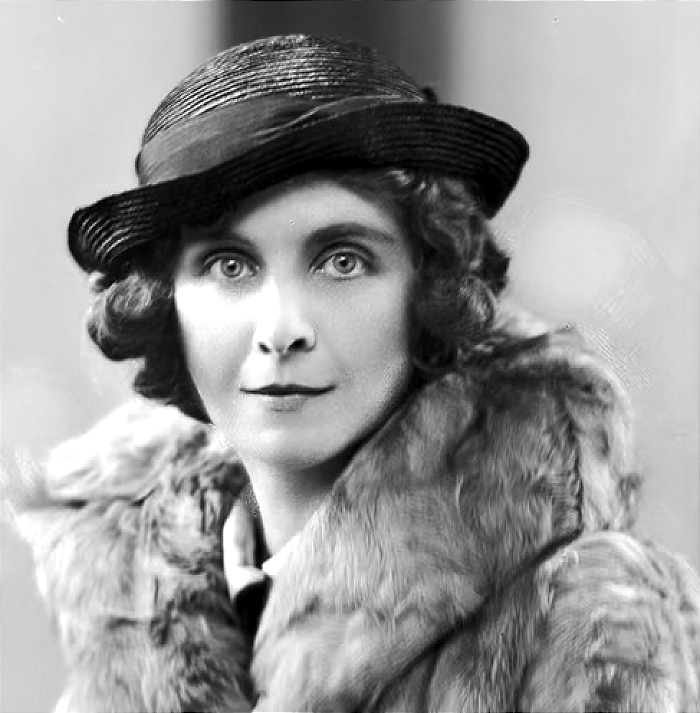
CHAPTER ONE — THE PRICE OF BEAUTY
Honey Harper stood before the enormous gilt mirror in the bedroom of her husband's Belgravia house. She was thirty-one, dressed in a black silk evening gown, and examining herself with the seriousness of a jeweller inspecting a valuable diamond. She turned slightly to the left. Better. The dress followed the line of her hips with precisely the right degree of suggestion. Her shoulders were bare, her golden hair fell in carefully arranged waves, and a small diamond rested against the hollow of her throat.
Honey smiled. It was a smile she had perfected years earlier: neither too eager nor too distant, but just warm enough to suggest that the man receiving it might become important to her. Honey possessed a particular kind of beauty. It was not merely attractive; it was commercially effective. Men wanted to protect her, entertain her, dress her in expensive clothes and demonstrate that they could afford her. She had discovered this talent at fifteen and had never seen any reason to abandon it.
Her husband, Roland Ismay, was downstairs reading the Financial Times. At forty-nine, he was a successful property developer with a country house in Surrey, two expensive cars and a considerable opinion of himself. He had married Honey fourteen months earlier, believing he had rescued her from an uncertain existence. Honey believed she had secured a comfortable income.
Neither had discussed the distinction. "Darling! Are you ready?" Roland called. "Almost!" She collected her handbag and the magnificent mink coat he had bought her for Christmas. Downstairs, Roland looked up. "Good heavens, Honey. You're going to make everyone else look ordinary." "How dreadful for them." He laughed, delighted.
He was still delighted by her, and Honey considered that one of the advantages of marriage. They were expected at a dinner party given by Sir Malcolm and Lady Penrose in Eaton Square. Honey enjoyed such evenings. Politicians, bankers, industrialists and society women gathered in rooms where everyone knew everyone else's secrets but pretended otherwise. She could usually identify the richest man within ten minutes. Tonight, however, there was another subject on her mind. Roland's sixteen-year-old son, Brian, was coming to live with them following the death of his mother.
Honey had met him twice. He was tall, dark-haired and unusually reserved. On their second meeting, he had asked whether her mink coat was real. She had answered yes. He had simply returned to his book. Honey disliked people who failed to react appropriately. "You'll be kind to Brian, won't you?" Roland asked as they drove towards Eaton Square. "Of course, darling. What a peculiar question." She looked out at the wet London streets.
The boy would need attention, perhaps some new clothes, invitations to fashionable places and a little guidance. She had no intention of allowing him to disrupt her comfortable household. At the Penroses' party, Honey quickly attracted three admirers. One was a stockbroker, another an elderly industrialist, and the third a handsome young architect called David Linton. Honey gave each man precisely enough encouragement to maintain his interest.
During dinner, the industrialist admired her necklace. "Your husband must spoil you." "He's very generous." "One must be, with a woman like you." Honey smiled.
Across the room, she noticed a woman wearing an extraordinary emerald necklace. Her companion was a wealthy American financier whose name she recognised from the newspapers. Honey immediately decided she would like to meet him. She had always believed the world was divided into two kinds of people: those who possessed things and those who wanted them. She had no intention of remaining in the second category.
CHAPTER TWO — THE NEW HOUSE
Brian arrived on Saturday morning with two suitcases, a school trunk and a cardboard box of books. Honey received him in the entrance hall wearing a cream cashmere dress and pearls.
"Well, here you are at last. Did you have a pleasant journey?" "All right, thank you." She kissed the air beside his cheek and showed him upstairs. His bedroom overlooked the garden and contained a large bed, a writing desk, bookshelves and a television. "Do you like it?" "Yes. Thank you." "Would you like anything changed?" "No." Honey was disappointed. She had expected more enthusiasm.
At lunch, Roland attempted to establish a cheerful family atmosphere, asking about school, examinations and Brian's friends. Honey contributed observations about London and the forthcoming summer holidays. Brian answered politely and concentrated on his food. During the following fortnight, Honey tried several approaches. She bought him a fashionable jacket, which he thanked her for without wearing. She suggested the theatre, which he declined because he had homework.
She offered to invite friends for Sunday lunch, but Brian preferred visiting his schoolfriend Peter Cresswell. Honey found his independence irritating. Meanwhile, her own social life was flourishing. At a charity dinner at the Dorchester, she met Charles Fenwick, a fifty-six-year-old American industrialist, twice divorced and reputed to be worth several million pounds. He admired her necklace and invited her to lunch. Honey accepted.
Charles was not particularly handsome, but he possessed confidence, money and the apparent ability to spend both without noticing. "Does your husband treat you well?" he asked over lunch at Claridge's. "Roland is a wonderful husband." "That wasn't quite my question." Honey lowered her eyes.
Charles ordered another bottle of champagne. By the end of lunch, he had invited her to Paris. Honey returned home with a new handbag and the pleasant conviction that life was improving. But Roland's business was beginning to deteriorate. Two developments had stalled, a major investor was threatening to withdraw, and the bank was demanding additional security.
Honey noticed that her husband was quieter at dinner and increasingly occupied with business correspondence. One evening she asked whether everything was all right. "Perfectly. Just business." "Could we perhaps postpone the new car?" Roland looked surprised. "Since when have you worried about extravagance?" Honey smiled. She was beginning to calculate.
CHAPTER THREE — THE ART OF POSSESSION
By September, Honey had become dissatisfied with her marriage. Roland spent more time in his office, less time with her and considerably less money on the luxuries she considered essential. Charles Fenwick, meanwhile, had returned from America and was becoming impatient.
He telephoned frequently, sent flowers and suggested that Honey spend Christmas with him in New York. Honey was intrigued. An American millionaire with an apartment overlooking Central Park was an attractive proposition, particularly when one's English husband was beginning to count the cost of electricity. One evening Roland came home unexpectedly early.
Honey was examining a jewellery catalogue. "Have you been spending money again?" "What an unpleasant way to begin an evening." "I received the credit-card statement. Three thousand pounds, Honey." "It was a necklace." "Three thousand pounds for a necklace?" "It's emeralds, Roland, not potatoes."
He stared at her. "We may have to sell the house." Honey slowly put down the catalogue. "You cannot be serious." "I'm afraid I am." She looked at him as though he had announced that he intended to sell HER. "Well, I certainly won't live in some dreadful little flat." Roland said nothing.
The following Saturday, Honey accompanied Brian and Peter Cresswell to the theatre. She wore a magnificent black coat and a hat that attracted considerable attention. Peter's family lived in Hampstead, possessed an extensive library and apparently had no interest in expensive cars or fashionable restaurants.
"How very bohemian," Honey remarked. "I suppose we are," Peter replied. Brian laughed, and Honey noticed something she had not seen before: her stepson was genuinely happy in the company of his friend. On the journey home, she asked whether he had enjoyed himself. "Very much." "Perhaps we should do it again." "Perhaps." At home, she found a message from Charles. He wanted an answer about New York.
Honey telephoned him. "Charles, darling. I've been thinking about your invitation." "And?" "I think a little sunshine would do me good." He laughed. "Excellent. I'll arrange everything." Honey replaced the receiver and looked at herself in the mirror. She was thirty-one, beautiful and still convinced that the world owed her something. But the world was beginning to disagree.
CHAPTER FOUR — THE AMERICAN
Charles Fenwick arrived in London in November, carrying two suitcases, a confident smile and the conviction that money could solve almost any problem. He telephoned Honey from Claridge's and invited her to dinner. She accepted immediately. Roland was in Manchester, Brian was at school, and the house seemed too quiet for a woman who preferred an audience. Charles ordered champagne, oysters and the finest wine on the menu. He talked about New York, Palm Beach and his apartment overlooking Central Park.
"I want you to come to New York with me," he said. "How long?" "Long enough for you to decide whether you like it." "And if I do?" "Then we'll see." Honey smiled. She knew that tone. It was the voice of a man preparing to offer something substantial. When she returned home, Roland was sitting in the drawing room. "Where have you been?" "Dinner." "With whom?" "An old acquaintance." "Charles Fenwick?"
Honey stopped removing her gloves. "Have you been questioning the servants?" "No. I saw his car outside Claridge's." She shrugged. "Charles is a friend." Roland looked at her for a long moment. "I wonder whether you know what friendship means." "Don't be melodramatic, Roland." He stood up. "I've had enough of this." Honey stared at him. She had heard many threats in her life, but this one sounded different.
CHAPTER FIVE — THE BOY WHO WOULD NOT BE BOUGHT
Brian was becoming increasingly independent. His schoolwork had improved, he was spending weekends with Peter Cresswell's family, and he had begun discussing university. Honey found his new confidence irritating. She had imagined that his arrival would give her another person to influence. Instead, Brian seemed perfectly capable of arranging his own life.
One Sunday, she found him in the library reading a letter. "From university?" she asked. "Yes." "Oxford?" "Cambridge, actually." "How exciting. Your father will be delighted." Brian folded the letter. "I hope so." Honey sat opposite him. "You know, I sometimes think you don't appreciate how fortunate you are." He looked up. "In what way?" "Your father has given you everything." "He gave me a home. My mother gave me everything else." Honey felt the remark like a small slap.
"Your mother was a very fortunate woman." Brian's expression changed. "You didn't know her." "No, I didn't." "Then perhaps you shouldn't talk about her." He returned to his letter. Honey stood up. For once, she had no suitable reply. That evening she complained to Roland. He listened without interrupting. "Brian misses his mother," he finally said. "I understand that." "No, Honey. I don't think you do."
CHAPTER SIX — THE EMPTY HOUSE
The financial situation deteriorated rapidly. Roland's bank refused to extend his credit, and the Surrey estate was sold to a property consortium for considerably less than he had expected. He moved investments into cash and began negotiating the sale of the Belgravia house.
Honey was furious. "You cannot simply dismantle our lives!" "Our lives?" Roland asked. "You mean your wardrobe?" She slapped him. Roland did not retaliate. He merely looked at her with exhaustion. "Perhaps we should separate." Honey stared at him. "Don't be ridiculous." "I'm quite serious."
Three days later, Charles telephoned from New York. He was ready to arrange her journey. Honey told him she would come. She packed two suitcases, her jewellery and the mink coat. Before leaving, she walked through the house. The servants were packing china and paintings.
Brian stood at the top of the staircase. "Are you going away?" he asked. "For a little while." "Will you come back?" Honey considered the question. "Of course." Brian nodded, but neither believed her.
CHAPTER SEVEN — NEW YORK, NEW RULES
New York was everything Honey had imagined and several things she had not. Charles's apartment was enormous, with windows overlooking Central Park and furniture that appeared never to have been used. There were dinners, private clubs, expensive shops and parties where everyone seemed to know somebody important. For the first few weeks, Honey was delighted. Charles bought her a diamond bracelet and arranged a wardrobe fitting at an exclusive salon.
He introduced her to bankers, businessmen and women whose faces appeared regularly in society magazines. But there was a difference between London and New York. In London, Honey had been a beautiful woman with an interesting husband. In New York, she was simply another attractive European woman among hundreds. Charles also had expectations. He wanted her beside him at dinners, at business functions and whenever he was free. He disliked her independent shopping trips and questioned the cost of her purchases. One evening, she returned from Fifth Avenue with several expensive bags.
Charles examined them. "Another six thousand dollars?" "Don't be vulgar." "I'm asking a question." Honey removed her gloves. "You said you wanted me to enjoy myself." "I didn't say I wanted to finance an entire department store." Later that night, she telephoned London. Roland had moved into a smaller flat in Chelsea. Brian had been accepted at Cambridge. "Does he ever mention me?" she asked. There was a pause. "Not particularly." Honey replaced the receiver. She felt an emptiness she could not explain.
CHAPTER EIGHT — THE PRICE OF A DIAMOND
By February, Charles had become increasingly difficult. His business was suffering, and a proposed merger had collapsed. He spent long hours on the telephone and returned home in a foul temper. Honey tried to revive his interest with dinners, parties and carefully arranged evenings. But Charles had begun to see her as an expensive distraction.
One night he announced that he was returning to California for several weeks. "You can stay here," he said. "Alone?" "Of course." "And what am I supposed to do?" "Whatever you like."
The next morning, Honey discovered that the diamond bracelet he had given her was not quite what she had believed. It had been purchased through a business arrangement and was to be returned if the merger failed. Honey was speechless. She had always regarded jewellery as the most reliable expression of affection. Diamonds did not forget birthdays, become tired or ask inconvenient questions. Yet here was a diamond that could be reclaimed.
She telephoned Charles. "You gave me that bracelet!" "I lent it to you." "You said it was a present!" "I said you could wear it." She slammed down the receiver. That afternoon she visited a jeweller and discovered that the emerald necklace she had brought from London was worth considerably less than she had paid. The mink coat was also difficult to sell. Fashion had changed. For the first time in her adult life, Honey discovered that expensive things could lose their value.
CHAPTER NINE — THE RETURN
Honey returned to London in March, travelling first class but carrying less money than when she had left. Charles had provided a farewell payment, although she considered it an insult. She arrived at Heathrow wearing the mink coat, which looked heavier and less fashionable than she remembered. Roland was not at the airport.
She telephoned him. "Darling, I'm back." "Yes?" "I thought you might collect me." "I'm afraid I'm working." "Could we have dinner?" "Perhaps another time." She felt the familiar irritation rising. Roland had arranged a room for her at a hotel. The following day she visited his Chelsea flat. He looked older but healthier. He had found a position with another property company and seemed relieved to be free of his former responsibilities. Brian was at Cambridge. "He's doing very well," Roland said. "He may read history." "How wonderful." "He asked me to give you something."
Roland handed her a small envelope. Inside was a photograph of Brian and Peter standing outside their college. On the back Brian had written: I hope you are well. Thank you for the theatre trip. Brian. Honey studied the photograph for a long time. It was a small thing, but it disturbed her more than any of Charles's refusals. She had wanted admiration and received courtesy. She had wanted influence and received independence.
CHAPTER TEN — THE INVITATION
Spring brought new opportunities. Honey rented a small flat in Mayfair and began cultivating old acquaintances. She was still beautiful, still charming and still capable of making a room turn when she entered. But she had discovered that beauty was a depreciating asset. At a dinner party she met Edward Latham, a wealthy widower in his early sixties who owned several hotels and had recently lost his wife.
He was courteous, intelligent and rather lonely. Honey recognised the possibilities immediately. Edward invited her to lunch. He did not boast, display his wealth or seem particularly impressed by fashionable society.
He asked her about her childhood. "My mother always wanted me to marry well," Honey said. "And did you?" "Twice." He smiled. "Perhaps she was right."
For several weeks Edward courted her quietly. He sent flowers, invited her to concerts and took her to the country. Eventually, he invited her to spend a weekend at his Hampshire house. The house was beautiful but not ostentatious, with old paintings, comfortable furniture and a garden carefully tended for generations.
At dinner, Edward asked whether she had ever been happy. "What an extraordinary question." "Is it?" "Of course. Happiness is rather an unreliable business." "Perhaps because people mistake it for possession." Honey looked at him. He was watching her with an expression she could not quite interpret. For once, she felt that someone was examining her rather than admiring her.
CHAPTER ELEVEN — THE LAST PERFORMANCE
Edward eventually proposed marriage. He did so without a grand gesture, without a diamond necklace and without any suggestion that he intended to purchase her affection. He simply asked whether she would like to share his life. Honey accepted.
But Edward had one condition. "I want honesty between us." She laughed. "How very old-fashioned." "I'm serious. I know something about your history, Honey. I know about Roland, Charles and the money. I don't particularly care about any of it. But I won't spend the rest of my life wondering whether you love me or merely enjoy the arrangements." She reached across the table and touched his hand. "Edward, I am very fond of you." "That wasn't quite my question."
She said nothing. A month later, she discovered that Edward had arranged for a substantial portion of his estate to be placed in trust for his daughter and grandchildren. His wife would receive a comfortable income and the use of the Hampshire house, but she would never control the fortune.
Honey was furious. "You don't trust me." "I trust you to be yourself." "What does that mean?" "It means I have spent sixty-two years learning that money cannot buy character." She stared at him. "And what do you think my character is?" Edward smiled sadly. "I think you have never been loved without having to earn it." For the first time, Honey had no answer.
CHAPTER TWELVE — THE MINK COAT
The wedding was small. Edward's daughter attended, along with a few close friends. Honey wore an elegant ivory dress and a modest necklace of pearls. There were no newspaper photographs, no society reporters and no champagne reception at Claridge's. Afterwards, the couple drove to Hampshire. The following winter, Honey discovered that the house was not entirely hers. Edward's daughter visited frequently, the grandchildren occupied the drawing room, and the servants had been employed long before Honey arrived.
She was expected to fit into an established household rather than redesign it. She tried. She learned the names of the gardeners, remembered birthdays and occasionally attended the grandchildren's school performances. Edward praised her efforts, which irritated her more than criticism. One afternoon, she found the old mink coat at the back of a wardrobe. It had begun to shed, and the lining was torn. She considered having it repaired but eventually decided against it.
She carried it downstairs and asked the housekeeper to arrange for it to be donated. "Are you sure, madam?" "Quite sure." That evening, Edward found her sitting alone in the library. "Something wrong?" "Nothing." He sat beside her. "You're very quiet." "I was thinking about London." "Do you miss it?" "Sometimes." "And Charles?" She laughed. "Good heavens, no." "Roland?" She considered the question. "I hope he is well."
Edward took her hand. "You have everything here that you need." Honey looked around the room. The fire was burning, rain tapped against the windows, and the house was filled with the comfortable silence of people who had nothing to prove. "Yes," she said. "I suppose I do." But she was not entirely convinced.
CHAPTER THIRTEEN — THE FINAL ACCOUNT
Three years passed. Edward's health deteriorated, and Honey found herself increasingly occupied with the practical business of nursing him. There were doctors, medicines, sleepless nights and long afternoons in which he seemed to drift in and out of consciousness. She discovered that she was capable of kindness when kindness was required. She brought him books, read aloud and sat beside his bed. Sometimes he held her hand and thanked her. One evening, he asked her to open the curtains.
Beyond the window, the garden was silver with moonlight. "Do you remember the first time we met?" he asked. "At the Penroses' dinner." "You were wearing emeralds." She smiled. "You remember that?" "I remember thinking you were the most beautiful woman in the room." "And were you right?" He laughed softly. "Unfortunately, yes." Honey bent and kissed his forehead.
Edward died two weeks later. His will was administered exactly as he had arranged. Honey received the house for the remainder of her life, a substantial annual income and sufficient capital to live comfortably. His daughter inherited the principal estate. Honey was disappointed, although she would never have admitted it. At the funeral, she watched the earth fall upon the coffin. She had loved Edward, in her way. Perhaps more than she had loved any other man. Yet even now, she found herself thinking about what he had left her.
It was a thought she despised. A month later, she received a letter from Brian. He had married, become a lecturer and was living in Oxford. He wrote to tell her that he and his wife had recently had a daughter. He enclosed a photograph. Honey studied the child's face. There was something of Brian in the eyes. She wrote back, congratulating him and asking whether they might meet. His reply arrived a fortnight later. He would be delighted to see her.
EPILOGUE — WHAT MONEY CANNOT BUY
Honey was fifty-two when she visited Brian in Oxford. His house was modest, filled with books, children's toys and the smell of coffee. His wife was warm and welcoming. Their little daughter regarded Honey with the frank curiosity of a child who had not yet learned to be impressed by expensive clothes. Honey brought her a small silver bracelet. "Thank you," the child said, and immediately returned to her wooden horse. Honey laughed. Brian showed her the garden, the study and the new shelves he had built. He spoke about his work, his family and the ordinary difficulties of life. She listened, surprised by how much she enjoyed the conversation.
Before she left, Brian walked her to the car. "I was rather difficult when I was younger," he said. "Were you?" "I suppose I was." Honey smiled. "You were sixteen. You were entitled." He hesitated. "I don't think I was always fair to you." She looked at him. "Perhaps neither of us understood the other." He nodded. For a moment, they stood silently beneath the old trees. Then Brian said, "I'm glad you came."
Honey drove back to Hampshire through the fading afternoon light. She thought about the men she had married, the jewels she had owned, the houses she had occupied and the opportunities she had pursued. She had spent much of her life believing that the world could be measured by what one could acquire. But the photograph of Brian's daughter lay on the passenger seat, and she found herself smiling at it. At home, she went upstairs and opened the wardrobe. The mink coat was gone. The diamonds were locked away. The emerald necklace had long since been sold.
She looked at herself in the mirror. The woman looking back was older, certainly, but still recognisably Honey Harper. She smiled. It was a different smile now. Less calculated, perhaps, and considerably less certain. For the first time, she wondered whether she had spent her entire life trying to be wanted by people who were never capable of loving her. Outside, the wind moved through the trees. Honey turned off the light. And somewhere in the quiet house, for the first time in many years, there was nothing left to sell, nothing left to bargain for and nobody left to impress.