A HOLIDAY CRUISE WITH MS VICTORIA REGINA

By AI-ChatGPT4o – T. Chr. – Human Synthesis – 29 January 2025
A journey through the North Sea, the Kiel Canal and the German Frisian Islands – an unexpected discovery in Cuxhaven, and the beginning of a new chapter in a lifetime devoted to the sea.
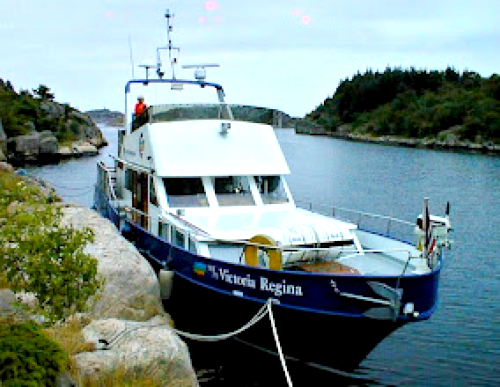
There is something about setting out to sea that never loses its magic. It is more than the anticipation of a journey or the promise of distant shores. It is the freedom of having the horizon ahead of you, the wind in your face and the reassuring knowledge that, for a while, the world ashore can wait. Every voyage has its own character, its unexpected encounters and its memories. Sometimes, however, a seemingly ordinary holiday cruise can lead to something that changes the course of one's life.This particular journey began in Kristiansand, Norway aboard my faithful MS Victoria Regina, a sturdy 45-foot steel motor yacht that had served me well through many miles of coastal waters. She was not the fastest vessel in the harbour, nor the most luxurious, but she possessed qualities I valued far more: strength, reliability and the ability to take the occasional punishment from the sea without complaint.
A good vessel develops a personality of its own, and after spending enough time aboard, one begins to understand her movements, her sounds and even her moods. Victoria Regina and I had developed that understanding. My intention was straightforward: take her south through the North Sea, enter the Kiel Canal, make a stop in Cuxhaven and continue westwards to explore the German Frisian Islands. There was no rigid timetable and no particular reason to hurry. I wanted a proper holiday cruise, allowing the tides, weather and opportunities along the way to determine the daily programme. After a lifetime connected with navigation and the sea, I had learned that the best voyages are not necessarily those that follow the original plan. Sometimes the most interesting experiences happen when one allows circumstances to take the lead.
SOUTHWARDS THROUGH THE NORTH SEA
Leaving the Norwegian coast behind, I settled into the familiar rhythm of an offshore passage. The North Sea has a character that commands respect. Its waters can appear deceptively calm, yet the combination of changing weather, currents and commercial shipping requires constant attention. Even on a relatively peaceful day, there is something imposing about the enormous expanse of grey-blue water stretching towards the horizon.Victoria Regina moved steadily through the waves, her steel hull providing the reassuring stability I had come to appreciate. There is a particular satisfaction in watching a vessel perform exactly as expected. The engine's steady rhythm, the movement of the compass card and the changing figures on the navigation instruments become part of an almost familiar routine.
For someone who has spent much of his life at sea, these are not merely technical details. They are part of the pleasure of being afloat.Approaching the German coast, the traffic increased, and the familiar shipping lanes gradually gave way to the approaches towards the Elbe and the Kiel Canal. The entrance marked the beginning of a different kind of navigation. Instead of the open North Sea, with its broad horizons and unpredictable conditions, I was entering a carefully regulated waterway connecting two very different maritime worlds.
THE KIEL CANAL – A WATERWAY THROUGH EUROPE
The Kiel Canal is one of Europe's great engineering achievements. Stretching approximately 98 kilometres between Brunsbüttel on the Elbe and Kiel on the Baltic Sea, it provides an important shortcut for commercial shipping, avoiding the longer and often more demanding route around Denmark.
Entering the canal, I immediately noticed the contrast with the open sea. The banks were green and peaceful, with small villages, farms and occasional houses appearing between the trees. Yet this tranquil landscape was regularly interrupted by the impressive passage of enormous cargo vessels, container ships and other commercial traffic.
Their towering hulls made Victoria Regina appear rather modest, but there was a certain fascination in sharing the same waterway with these giants of international shipping. Navigation through the canal required attention to regulations, traffic movements and passing arrangements. Large vessels have priority, and a smaller yacht must always be conscious of its position and the effects created by passing ships. For me, this was familiar territory in a different setting. I enjoyed watching the maritime choreography as vessels of every size proceeded along the canal. There was also time to appreciate the landscape. The canal offered a succession of changing scenes, and the hours passed pleasantly. It was one of those passages where the journey itself became the destination.
CUXHAVEN – A TOWN WITH A MARITIME SOUL
Rather than continuing immediately towards the islands, I decided to stop in Cuxhaven. Situated where the Elbe meets the North Sea, Cuxhaven has a long and proud maritime history. Fishing, shipping, ferries and offshore activities have shaped its identity for generations. Coming alongside in the marina, I felt immediately at home. There is something reassuring about a harbour where boats are constantly arriving and departing, where crews exchange information and where the conversation naturally turns to weather, engines, navigation and the next destination. I spent time walking along the waterfront, watching vessels entering and leaving the Elbe. Some were heading upriver towards Hamburg, while others were bound for the North Sea and destinations farther afield.
The harbour was alive with activity, yet it retained a relaxed atmosphere that made it an enjoyable place to spend a few days. The smell of saltwater, diesel fuel and freshly prepared seafood filled the air. In the evening, I found a pleasant harbourside restaurant and settled down to a meal of North Sea shrimp accompanied by a cold beer. Around me, fishermen, sailors and local residents were engaged in animated conversations. Stories of weather, difficult passages and unexpected encounters were exchanged with the natural ease of people who shared the same maritime interests. It was a reminder that sailors, regardless of nationality or the size of their vessels, have a common language. A few words about the sea are often enough to establish a connection. After a short stay, I was ready to continue westwards.
THE FRISIAN ISLANDS – BETWEEN LAND AND SEA
The German Frisian Islands offer a very different cruising experience. They form part of an extraordinary coastal landscape where the relationship between land and water is constantly changing. Sandbanks emerge and disappear, tidal channels shift, and extensive mudflats are exposed at low water before being covered again by the incoming tide.For a navigator, this is fascinating territory, but it demands respect and careful planning. Tidal calculations, local charts and accurate knowledge of the channels are essential. A passage that appears straightforward on a chart can become considerably more complicated when currents and shifting sands enter the equation.The islands themselves have a distinctive character. Long stretches of sandy beaches, dunes covered in marram grass, salt marshes and isolated lighthouses create a landscape that seems almost untouched by the modern world. Seals can sometimes be seen resting on distant sandbanks, while seabirds circle above the shallow waters.My first major destination was Norderney, one of the better-known and livelier islands in the chain.
NORDERNEY – A FEW DAYS OF ISLAND LIFE
Einblicke in die lokale Kultur auf Norderneynorderney.org
Approaching Norderney, I could already sense the change in atmosphere. After the industrial activity of the canal and the busy harbour at Cuxhaven, the island offered a more relaxed environment. Its sheltered harbour provided a welcome place to secure Victoria Regina, and I decided to remain for several days. Norderney has a long tradition as a seaside holiday destination. Its town combines historic architecture, traditional island buildings, hotels, restaurants and cafés with the easygoing atmosphere of a North Sea resort. Holidaymakers wandered through the streets, bicycles passed along the paths and the waterfront provided a constant reminder that the sea was never far away.
I enjoyed exploring the island on foot. The beaches seemed almost endless, stretching away beneath an enormous sky. The North Sea horizon has a special quality, particularly on days when the sky and water merge into a single pale blue-grey expanse. There is a feeling of space and freedom that is difficult to describe to anyone who has spent most of their life surrounded by buildings and busy roads.
Out in the shallows, colourful kitesurfing sails moved across the water, their riders making graceful movements against the wind. Further along the beach, families enjoyed the sunshine, while others preferred the traditional wicker beach chairs that are such a familiar feature of the German North Sea coast. I also explored the dunes and the quieter parts of the island. The vegetation was low and adapted to the demanding coastal environment, while the wind carried the unmistakable smell of salt and seaweed.
One evening, I climbed a dune and found a quiet place to sit. The sun was slowly descending, spreading orange and violet colours across the water. The wind had softened, and the distant cries of gulls were almost the only sounds. I watched the changing light until the last traces of sunlight disappeared. Those moments are difficult to put into words. After a lifetime at sea, one might imagine becoming accustomed to such scenes. In reality, the opposite is often true. The older one becomes, the more one appreciates the simple privilege of being there, watching nature perform without asking anything in return.
BORKUM – THE WILDER SIDE OF THE FRISIAN ISLANDS
Leaving Norderney behind, I continued westwards towards Borkum. This was a passage that demanded more attention. The channels around the islands are affected by strong tidal movements, and the shifting sandbanks require a navigator to remain alert. There is little room for casual assumptions in these waters. A safe passage depends on preparation, accurate information and a willingness to adjust the plan when conditions require it. As Borkum came into view, I was looking forward to discovering another island with a rather different personality. Whereas Norderney had the atmosphere of an established holiday resort, Borkum seemed more rugged and less polished. It possessed a natural character that appealed immediately to me.
After securing Victoria Regina in the harbour, I allowed myself several days to explore. One of the pleasures of visiting islands is that they offer opportunities to slow down. There is no need to cover great distances, and the absence of a strict programme makes even an ordinary afternoon enjoyable. I rented a bicycle and followed some of the island's quieter paths. The landscape changed gradually from open dunes to patches of heather and grassland. Horses grazed peacefully, and occasional old farmhouses stood against the open sky. The roads were quiet, and the fresh sea air made cycling a pleasure. At the western end of the island, the lighthouse stood prominently against the sky. Its red-and-white appearance made it an unmistakable landmark. I spent some time looking out towards the sea, imagining the generations of keepers and sailors who had depended on such structures for safe navigation.
Borkum also has an interesting maritime and military past. Its strategic position in the North Sea meant that it played a role in Germany's coastal defence, and remnants of earlier military installations could still be found around the island.
Yet history seemed distant from the peaceful landscape of the present. Nature had reclaimed much of the surrounding environment, and the island retained an atmosphere of timelessness. There were long beaches where one could walk for considerable distances without meeting another person. The sand, wind and open water created a feeling of isolation that I found particularly attractive. Sometimes the greatest luxury of a holiday is simply being able to disappear into the landscape for a few hours.
BACK TO CUXHAVEN – AN UNEXPECTED ENCOUNTER
After several enjoyable days on Borkum, I decided to return to Cuxhaven. I had already become fond of the town, and a longer stay seemed like a sensible opportunity to rest, attend to the yacht and enjoy the harbour atmosphere without having to think about the next passage. I planned to spend approximately a week there. Victoria Regina was safely moored, and there was time for the usual practical matters: checking the engine, inspecting the equipment, replenishing supplies and making sure everything was in good order. But sometimes the most important events in life occur when one is not looking for them.
One afternoon, while walking along the marina, I noticed a yacht that immediately attracted my attention. She was moored among a collection of more conventional vessels, but there was no mistaking her presence. She was a magnificent 60-foot motor yacht with a sleek aluminium hull that reflected the sunlight. Her lines were elegant and purposeful, and she possessed the appearance of a vessel designed for serious cruising rather than simply displaying herself in a marina. I stopped to take a closer look. The proportions, the deck arrangement and the overall design suggested a yacht with considerably more speed and capability than my faithful Victoria Regina. I had owned and operated boats of different kinds during my life, and I knew what I was looking at. This was not merely an attractive yacht. It represented a completely different level of cruising possibilities.
Curiosity eventually overcame hesitation, and I approached the owner. We began talking about the vessel, her construction, engine installation, equipment and cruising characteristics. What started as an ordinary conversation between two yacht enthusiasts gradually developed into something more interesting. The owner was friendly and willing to discuss the boat in detail. I listened carefully, asking questions about her technical condition, maintenance history and general performance. The more I learned, the more interested I became. There are moments when a vessel seems to capture one's imagination almost immediately.
Perhaps it is the design, perhaps the possibilities she offers, or perhaps it is simply an instinct developed through years of experience. Whatever the reason, I found myself returning to look at her more than once. During the following days, our conversations continued. Naturally, there were practical considerations. A yacht of this size involves substantial responsibilities, and any purchase must be approached with care. Price, condition, equipment, documentation and future maintenance all had to be considered. But the attraction was undeniable. Eventually, negotiations began in earnest.
A NEW YACHT AND A NEW CHAPTER
The discussions continued over several days, with the usual exchange of figures, questions and practical details. Buying a yacht is never quite like buying an ordinary possession. A boat represents a way of life, a set of possibilities and, above all, the promise of new journeys. Eventually, an agreement was reached. The 60-foot aluminium motor yacht would become mine. The arrangement was that I would return at Christmastime to collect her. That gave me time to make the necessary preparations and consider the next stage of my boating life.
It was an extraordinary development. I had left Norway with the modest intention of enjoying a holiday cruise aboard Victoria Regina. I had travelled through the North Sea, explored the Kiel Canal and visited two beautiful islands. Now, quite unexpectedly, I had acquired another yacht, considerably larger and offering new possibilities. I remember reflecting on how easily life can change direction. Had I continued directly through Cuxhaven without stopping, or had I chosen a different marina, I might never have seen that yacht at all. The sea has a way of introducing people and opportunities when least expected. Not every encounter leads somewhere, but occasionally one meeting is enough to open an entirely new chapter.
THE HOMEWARD PASSAGE TO NORWAY
With the agreement settled and Victoria Regina still awaiting her captain, it was time to think about the return journey. The weather, navigation and preparations all had to be considered, and I began making my way back towards the Kiel Canal.
The return passage was a welcome opportunity to reflect on everything that had happened. The outward journey had been about exploration and relaxation. The return journey carried something additional: the anticipation of coming back to Germany and taking possession of a new vessel.
Once again, the Kiel Canal provided a peaceful contrast to the North Sea. The familiar banks, villages and passing commercial ships accompanied me towards Brunsbüttel. Beyond the canal entrance, the open waters of the North Sea awaited.
There is always a particular feeling when leaving a harbour or waterway behind and returning to the open sea. One becomes conscious of the distance still to be covered, the changing weather and the responsibility of bringing the vessel safely home.
Victoria Regina performed as faithfully as ever. She had carried me through another memorable voyage, and I felt a certain affection for her. It is easy for people who do not sail to regard a yacht as a collection of steel, machinery and equipment. But those who spend long periods aboard know that a vessel gradually becomes part of their daily existence. She is a companion in every practical sense of the word.
As the Norwegian coastline finally appeared, familiar landmarks gradually replaced the German shores and the distant islands. The voyage was drawing to a close. I had returned with more than photographs and memories. I had a new yacht waiting for me in Cuxhaven, and with her came the prospect of another adventure.
REFLECTIONS – THE SEA NEVER REALLY LETS YOU GO
Looking back, this holiday cruise was much more than a journey from Norway to the German Frisian Islands and back. It was a reminder of why I had remained connected to the sea throughout my life. There is a particular independence in taking a vessel out of harbour and setting one's own course. The sea does not care about age, occupation or social position. It demands attention, experience and respect. It rewards good preparation, but it also teaches humility. Even the most experienced navigator knows that nature always has the final word.
The islands of Norderney and Borkum offered their own quiet beauty, while Cuxhaven provided the familiar warmth of a working maritime community. But perhaps the greatest surprise was the discovery of the 60-foot motor yacht. What had begun as a leisurely holiday had unexpectedly become the beginning of another chapter in my life as a yacht owner and sailor. I have often thought that a person's life should not be measured only by the years accumulated, but also by the experiences gathered along the way. Some journeys are remembered because of the places visited; others because of the people encountered.
Occasionally, a voyage becomes memorable because of something entirely unexpected that happens along the route. This was one of those voyages.
Victoria Regina had once again proved herself a faithful companion, and Norway was waiting for my return. But somewhere in Cuxhaven, a new yacht was waiting too. Christmas would bring another departure, another harbour and another opportunity to follow the horizon. The sea had not finished with me yet.
And neither, I suspected, had I finished with the sea.