THE HOUSE ABOVE THE GARDEN

By AI Chat.-T.Chr.-Human Synthesis-07 November 2026
PROLOGUE – THE HOUSE OF SILENT WINDOWS
A Gothic family novel of secrets, betrayal, inheritance and revenge. There are houses that welcome people, and houses that swallow them. Greyhaven Manor stood on a hill overlooking the English town of Ashcombe, surrounded by ancient oak trees, overgrown gardens and iron gates that had not been opened to visitors for many years.
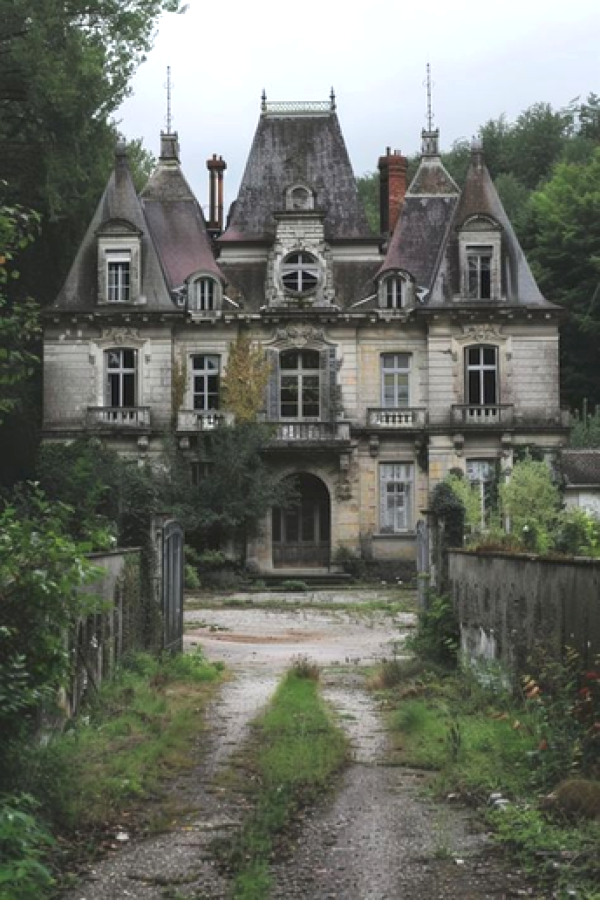
It was an enormous Victorian mansion, built by a wealthy industrialist who had made his fortune in shipping and steel. Its stone walls were darkened by age, its chimneys rose above the trees like the fingers of a giant, and its windows reflected the sky without ever revealing what lay behind them. The people of Ashcombe knew the house well, although few had ever entered it. They knew that its owner, Sir Edmund Ravenscroft, had died many years earlier. They knew that his daughter, Eleanor, had married against his wishes and had subsequently disappeared from respectable society.
And they knew that something strange had happened in the house during the winter of 1958. But nobody knew the whole story. Not until a woman named Clara Whitmore returned to Ashcombe, nearly twenty years later, carrying a small leather suitcase and a photograph of four children standing beneath a summer tree. On the back of the photograph were five words: We were never meant to survive.
PART ONE – BEFORE THE DARKNESS
Chapter 1 – The Last Summer
The Whitmore family lived in a comfortable house overlooking the harbour at Whitby. Daniel Whitmore was a naval architect, a quiet and thoughtful man who spent much of his time designing commercial vessels. His wife, Eleanor, was elegant, ambitious and accustomed to a life of considerable comfort. They had four children. Jonathan, seventeen, was serious and intelligent, with an interest in engineering. Clara, fifteen, was artistic and determined to become a concert pianist. The younger children, twins Oliver and Sophie, were ten. Oliver was fascinated by birds and mechanical toys, while Sophie collected flowers and pressed them between the pages of her books.
Their home was filled with music, laughter and the ordinary disagreements of family life. Daniel was particularly close to his children. He encouraged their curiosity and often told them that the greatest inheritance a father could leave was not money, but the ability to think independently. Eleanor, however, had other ambitions. She had grown up in a wealthy family and had never entirely accepted the financial limitations of her husband's profession. Her father, Sir Edmund Ravenscroft, owned Greyhaven Manor and several industrial properties. He had disowned Eleanor after her marriage to Daniel, whom he considered socially unsuitable. For years she had avoided contact with her family. But everything changed one rainy afternoon when a telegram arrived. Sir Edmund was dying. He had requested that his daughter return to Greyhaven immediately.
Eleanor read the telegram twice. Then she sat quietly for several minutes.
Finally, she said, "Children, we are going to visit your grandfather."
Jonathan looked up from his book. "Does he know about us?" Eleanor smiled, but there was something strangely absent in her expression. "He will soon enough."
Two weeks later, Daniel left for a business meeting in Newcastle. His car was involved in a collision on the coastal road. He died before reaching hospital. The children were devastated. Eleanor appeared equally overcome, but beneath her grief another emotion was beginning to emerge. Opportunity. Without Daniel, she could no longer maintain their former lifestyle. The inheritance at Greyhaven offered a way back into the world she believed she deserved. She wrote to her father. His solicitor replied that Eleanor could return, but certain conditions would have to be observed. She accepted them without discussion. She did not tell the children what those conditions were.
Chapter 2 – The Ravenscroft Inheritance
The journey to Greyhaven took almost an entire day. As their car climbed the winding road towards the estate, the children watched the landscape change. Small villages disappeared behind them, fields gave way to dense woodland, and finally the enormous iron gates appeared.
Above them, carved into a stone arch, were the words: Ravenscroft – Since 1841.
Greyhaven Manor was larger than anything the children had ever imagined. There were two wings, a central tower, an enormous conservatory and a formal garden stretching towards a lake. Yet the house seemed strangely lifeless. A thin woman in a black dress opened the front door. She introduced herself as Mrs Beatrice Vale, the housekeeper. Behind her stood a tall, severe-looking woman with silver hair.
"This is my mother," Eleanor said.
Mrs Ravenscroft examined the children without smiling. "So, these are the consequences of your disobedience."
Jonathan stiffened. Sophie moved closer to Clara. Eleanor laughed nervously. "Mother, please. They are children."
"That is precisely the problem."
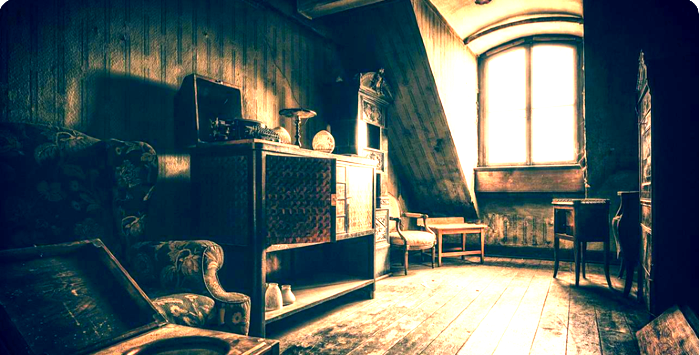
The grandmother led them through the entrance hall, where portraits of dead Ravenscrofts watched from the walls. They were shown a narrow staircase and taken to a collection of old rooms beneath the roof. The largest contained four beds, a washstand, a table and a small fireplace. There was one window, high above the garden.
"This will be your accommodation," Mrs Ravenscroft announced.
"For how long?" Jonathan asked.
"Until your grandfather's affairs have been settled."
Eleanor embraced each child. "Be patient. It won't be long." She kissed Clara on the forehead. "I promise."
The door closed. A key turned in the lock. Somewhere downstairs, a clock began to strike six.
PART TWO – THE YEARS WITHOUT SUNLIGHT
Chapter 3 – The Rules of Greyhaven
The first few days passed slowly. The children were told that their grandfather was seriously ill and that the family solicitor was arranging the inheritance. They were not permitted to leave the attic rooms because, according to their grandmother, their grandfather's health was too fragile to be disturbed. Meals arrived on a tray, delivered by Mrs Vale. Breakfast consisted of porridge, bread and tea. Lunch was usually soup. Dinner was sometimes meat and potatoes, although the portions were small. At first, the children accepted everything. Their mother visited every evening. She brought books, newspapers and occasionally sweets. She told them that their grandfather was becoming stronger and that the solicitor was making progress. But her visits gradually became shorter.
One evening Clara asked, "Mother, when can I practise the piano?" Eleanor hesitated. "There is no piano up here." "Perhaps I could use the one downstairs?" "Not now." "When?" "When everything is settled."
It was the same answer she gave to every question. The children eventually discovered that the door was locked from the outside. There was no key on their side, and the window was too small and too high to provide an escape.
"Does Grandfather know we're here?" Jonathan asked one evening. "Of course," Eleanor replied. "Then why doesn't he send for us?" She did not answer. She kissed him and left.
Chapter 4 – The Woman in Black
Mrs Ravenscroft visited the attic every morning at nine. She was a woman of rigid habits and absolute authority. She wore black dresses, high collars and a heavy silver cross. Her grey hair was always arranged in precisely the same fashion. She inspected the rooms as though they were prison cells. Beds had to be made. Clothes had to be folded. Books had to be returned to their shelves. She disliked laughter, questions and anything that reminded her of Eleanor's marriage.
"Your father was a weak man," she told Jonathan one morning.
Jonathan looked directly at her. "He was a good man."
The grandmother's expression hardened. "You have inherited his insolence."
"He taught me to tell the truth."
She slapped him. Clara rushed forward, but Jonathan raised his hand to stop her.
Mrs Ravenscroft turned towards the younger children.
"Remember this. You are guests in this house only because your mother has asked for mercy. Do not mistake that mercy for affection."
Then she left. Sophie began to cry. Oliver sat beside her. Jonathan looked at the closed door. "One day," he said quietly, "we are going to leave this place." But he had no idea how.
Chapter 5 – The Letters
The first real evidence of deception came from a letter. One afternoon, Clara found a folded envelope beneath a loose floorboard near the fireplace. It was addressed to Eleanor and carried the signature of the family solicitor, Mr Charles Hargreaves.
The letter was dated three weeks earlier. It explained that Sir Edmund Ravenscroft had died shortly after Eleanor's arrival. His will had been opened. Eleanor was the principal beneficiary, subject to certain legal arrangements and the transfer of the estate. There was no mention of the children. At the bottom of the page was a handwritten sentence: I strongly advise that the young people remain completely undisclosed until the succession has been finalised.
Clara read the sentence again. "Why would Mother hide us?"
Jonathan took the letter. "Because Grandfather is dead."
"She told us he was ill."
"She lied."
Oliver looked frightened. "Does that mean we're never going home?"
Jonathan folded the letter. "No. It means we must stop believing everything we are told."
That evening, when Eleanor visited, Jonathan confronted her. He placed the letter on the table. For a moment she seemed unable to speak.
"You were never supposed to find that."
"Grandfather is dead."
"Yes."
"Since when?"
"Almost a month."
Clara stared at her. "Why didn't you tell us?"
"Because I needed time."
"Time for what?"
"To secure our future."
Jonathan's voice became cold. "You have secured yours. What about ours?"
Eleanor stood. "You are children. You cannot understand these matters."
"We understand that you have lied to us."
Her expression changed. For the first time, Clara saw something in her mother's face that she had never seen before. Fear. Not fear for her children, but fear of being discovered.
Chapter 6 – The Winter of Empty Plates
Winter arrived early. The wind howled around the roof, and rain rattled against the small attic window. The fireplace was rarely lit. The children began wearing their coats indoors. Food became increasingly scarce. Sophie lost weight. Oliver developed a persistent cough. Clara suffered from headaches and dizziness. Jonathan tried to maintain their spirits. He organised lessons, read aloud from the books they had brought and invented imaginary journeys to distant countries.
He described warm Mediterranean harbours, Norwegian fjords and great ocean liners travelling across the Atlantic.
"One day," he told them, "we shall see all those places."
Clara smiled. "Will there be music?"
"Everywhere."
But the children were becoming weaker. One afternoon, Oliver collapsed beside the table. Jonathan carried him to bed and called for Mrs Vale, but nobody came. Hours passed before the housekeeper appeared with a tray.
"Oliver is ill. We need a doctor," Jonathan demanded.
Mrs Vale glanced at the boy. "I shall inform your grandmother."
"Now!"
She turned away. Jonathan seized the tray. "If you leave without helping him, I shall tell everyone in this town what is happening here."
Mrs Vale stopped. For several seconds she said nothing. Then she whispered, "You should be careful what you threaten, young man."
She left. Later that evening, a small bottle of medicine appeared beside Oliver's bed. It was the first act of kindness the children had received from anyone in the house other than their mother.
Chapter 7 – The Housekeeper's Secret
Beatrice Vale had worked at Greyhaven for thirty-two years. She had arrived as a young widow and remained because the estate provided a home and a modest pension. She had known Eleanor since childhood and had also known Sir Edmund. He had been difficult, but not entirely heartless. In his final years, he had become increasingly suspicious of the family solicitor and had begun making private arrangements concerning his estate. Beatrice knew something that neither Eleanor nor Mrs Ravenscroft realised.
Sir Edmund had left a separate letter. It had been entrusted to the estate's former gardener, Arthur Bell, with instructions that it should only be delivered to the children if they were ever placed in danger. Beatrice had discovered this after his death, but had been too frightened to act. The grandmother had threatened to dismiss her without a pension if she interfered in family affairs. Now, watching the children deteriorate, Beatrice began to reconsider. One evening, she entered the attic carrying a basket of fresh bread. She closed the door behind her.
"Listen carefully," she whispered. "There are things about this house you have not been told."
Jonathan approached her. "What things?"
"Your grandfather did not leave everything to your mother."
"Who did he leave it to?"
Beatrice looked towards the ceiling. "That is what we must discover."
She slipped a small brass key into Jonathan's hand. "Keep this hidden. It opens the old linen cupboard in the west corridor. Behind it is a staircase leading to the disused servants' quarters."
Jonathan stared at her. "Why are you helping us?"
Beatrice's eyes filled with tears. "Because I should have helped you long ago."
PART THREE – THE PRICE OF SILENCE
Chapter 8 – A Birthday Without Candles
Clara turned sixteen in February. Nobody downstairs acknowledged the occasion. Jonathan had saved a small piece of chocolate from Christmas. He divided it into four pieces and placed them on a plate. Oliver drew a birthday card. Sophie picked a little flower that had somehow survived in a pot beside the window.
Clara smiled at their efforts, but her eyes filled with tears. "I used to think sixteen would be wonderful."
"It still can be," Jonathan replied.
"Do you really believe that?"
He hesitated. Then he took her hand. "I believe we shall have another birthday somewhere else."
That evening, their mother arrived wearing a beautiful blue dress and carrying a handbag of polished leather.
"Do you know what day it is?" Clara asked.
Eleanor frowned. "Thursday."
"It's my birthday."
"Oh, Clara. Of course." She kissed her daughter quickly. "I'm sorry, darling. There has been so much happening."
Clara looked at her mother's expensive dress. "Have you been shopping?"
Eleanor stiffened. "I have been attending to important matters."
"While we sit here?"
"Do not speak to me like that."
"Why not? You don't seem to mind speaking to us as though we don't exist."
Eleanor turned towards Jonathan. "You are encouraging this rebellion."
"No, Mother. You are."
She left without another word. That night, Clara made a decision. She would never again ask her mother to love her.
Chapter 9 – The Man in the Garden
In early March, Jonathan managed to reach the old servants' staircase. The brass key worked. He found himself in a narrow passage that descended towards the western wing. At the bottom was a dusty room filled with broken furniture. A small window overlooked the garden. Beyond it, an elderly man was digging near the greenhouse. Jonathan tapped the glass. The man looked up. For several seconds they stared at one another.
"Who are you?"
"Jonathan Whitmore."
The man's expression changed. "Good Lord."
"Do you know my grandfather?"
The gardener nodded. "I knew Sir Edmund for thirty years."
"Did he leave something for us?"
Arthur Bell put down his spade. "Perhaps he did. Come back tomorrow. When the house is quiet."
The following afternoon, Jonathan returned. Arthur handed him a small leather packet. Inside was a letter, a photograph and a copy of a legal document.
The letter was addressed: To the children of Eleanor Whitmore.
It read:
My grandchildren,
If this letter has reached you, then something has happened that I feared but hoped would never occur. Your mother has inherited my property, but not my entire fortune. I have established a separate trust for each of you, to be released when you reach adulthood. No person, including your mother, has the authority to confiscate these funds.
You are entitled to education, protection and the freedom to live your own lives.
If you are being kept against your will, seek the assistance of Mr Hargreaves. He knows the full terms of my instructions.
I was not always a good father. Perhaps I was too proud, too demanding and too concerned with appearances. But I want you to know that your existence was never a disgrace to me.
Your grandfather, Edmund Ravenscroft.
Jonathan read the letter twice. Then he looked at Arthur.
"Why didn't anyone tell us?"
The old gardener shook his head. "Because there are people in this house who have a great deal to lose."
Chapter 10 – The Poisoned Trust
The children now understood why they had been hidden. Their mother was not simply trying to regain an inheritance. She was trying to control the children's separate fortunes. But there was another complication. The legal document contained a clause requiring the children to be properly educated and cared for. If they were found to have been neglected or unlawfully confined, the trustees could remove Eleanor's control over the estate. Their grandmother knew this. And she had been helping Eleanor conceal the situation. The two women had entered into an agreement. The children would remain hidden until the inheritance had been transferred and the trust arrangements could be challenged or quietly altered.
Jonathan realised that they had become prisoners not because they were unwanted, but because their existence threatened someone else's financial ambitions. That night, he explained everything to Clara.
"Do you think Mother knows what she has done to us?" she asked.
"Yes."
"Do you think she cares?"
He did not answer.
Chapter 11 – The Last Supper
The following week, Oliver became seriously ill. His breathing was laboured, and he complained of severe stomach pains. Jonathan demanded medical attention. Mrs Ravenscroft refused.
"The boy has a weak constitution."
"He needs a doctor!"
"He needs discipline."
Clara rushed towards the door. Mrs Ravenscroft blocked her.
"Your behaviour is becoming intolerable."
Clara looked directly at her. "Then perhaps you should ask yourself why."
The grandmother raised her hand, but Beatrice appeared behind her.
"Madam, I believe the boy requires a physician."
Mrs Ravenscroft turned. "Remember your position, Beatrice."
"I do, madam."
"Then behave accordingly."
But Beatrice did not move. For the first time in her life, she stood between the grandmother and the children. She went downstairs. Twenty minutes later, a local doctor arrived. He examined Oliver and immediately ordered his removal to hospital. Eleanor protested, but the doctor ignored her.
Before leaving, he looked at the children. "How long have you been living up here?"
Nobody answered.
He turned towards Eleanor. "I shall be contacting the authorities."
That evening, Greyhaven Manor was no longer a secret. The following morning, the police arrived. But the greatest shock was not the discovery of the attic. It was the discovery of what had happened to the family fortune.
PART FOUR – THE NIGHT OF THE ESCAPE
Chapter 12 – The Empty Bedroom
When the police entered the attic, they found three children. Jonathan, Clara and Sophie. Oliver had already been taken to hospital.
The rooms were inspected. The small beds, inadequate heating, locked door and limited food supplies told their own story.
Eleanor insisted that the arrangement had been temporary. Mrs Ravenscroft claimed that the children had been receiving everything they needed. Neither explanation convinced the authorities.
But Jonathan had something more important: the letter from his grandfather.
The solicitor was summoned. Mr Hargreaves arrived that afternoon carrying a large leather briefcase. He examined the documents and immediately recognised Sir Edmund's handwriting.
Then he made a telephone call. It was a call that would change the entire future of Greyhaven.
Within hours, an injunction was issued protecting the children's inheritance. Eleanor was removed from control of the trust. Mrs Ravenscroft was questioned about the conditions in which the children had been kept.
For the first time, the two women were powerless.
Yet the children were not celebrating. Oliver remained in hospital, and his condition was uncertain.
Clara sat beside the window. Outside, rain fell across the garden.
"Do you think we shall ever be normal again?" she asked Jonathan.
He considered the question. "I don't know what normal means anymore."
Chapter 13 – The Escape Through the Conservatory
Three nights later, the children were moved temporarily to the eastern wing while the authorities arranged accommodation. But Eleanor had not accepted defeat. She was convinced that the children would destroy her reputation and permanently deprive her of the fortune she believed was hers. She sent a message to Clara, saying that she wanted to speak privately. Clara refused. That evening, Eleanor entered the room while Jonathan was downstairs speaking with the solicitor. She approached Clara and Sophie.
"My darlings," she whispered. "You must come with me."
Clara stepped backwards. "Where?"
"Somewhere safe."
"We are safe here."
"You don't understand. They are trying to turn you against me."
Clara stared at her mother. "You turned us against you."
Eleanor's face became pale. Then she seized Sophie's hand. Clara shouted. Beatrice heard the commotion and rushed into the room. Eleanor released the child. There was a struggle in the corridor. A vase fell and shattered. Jonathan arrived with two policemen. Eleanor was escorted downstairs. As she disappeared around the staircase, she turned towards her children.
"You will regret this!"
Clara looked at her for a long time.
"No, Mother. We already have."
That night, Jonathan, Clara and Sophie left Greyhaven. They did not look back.
Chapter 14 – The Garden Beyond the Wall
The children were taken to a small house outside Ashcombe. It belonged to a retired schoolteacher named Margaret Ellis, who had agreed to provide temporary accommodation. For the first time in almost two years, they slept without a locked door. Sophie cried when she saw the garden. There were roses, lavender, apple trees and a small pond. She walked outside and stood beneath the open sky. Then she began to run. She ran across the grass, laughing and crying at the same time.
Clara watched her. Jonathan stood beside the gate.
"Remember what I told you?"
"About travelling?"
"About seeing the world."
Clara smiled. "Yes."
He looked towards the distant hills. "We shall."
But the past was not finished with them. Not yet.
PART FIVE – THE CHILDREN OF GREYHAVEN
Chapter 15 – A Different Kind of Childhood
The children were separated for medical examinations, counselling and education. Oliver recovered slowly, although his health remained fragile. Sophie began attending a local school. Clara received piano lessons from a retired concert pianist who lived nearby. Jonathan returned to his studies. For the first time, their lives began to acquire some structure.
But freedom did not immediately bring happiness. Clara woke at night believing she could hear the attic door being locked. Jonathan became suspicious whenever someone offered kindness. Sophie refused to sleep with the curtains closed. Oliver developed a fear of food that had not been prepared in front of him. They were physically free, but their minds remained in Greyhaven. Margaret Ellis understood that recovery would take time.
"Nobody expects you to forget," she told them. "But you must not allow that house to decide what the rest of your lives will become."
Clara wrote those words in a notebook. She kept them for the next twenty years.
Chapter 16 – The Trial
The investigation revealed a complicated story. The estate had been mismanaged. Eleanor had secretly transferred substantial sums to private accounts and had attempted to alter the children's trust arrangements. Mrs Ravenscroft had assisted in concealing their confinement. The solicitor's office had also been implicated, although Mr Hargreaves himself had eventually acted upon Sir Edmund's instructions. Eleanor was charged with child neglect, unlawful confinement and financial offences. Her mother faced charges relating to her participation. At the hearing, the courtroom was crowded.
Clara attended with Jonathan. Eleanor looked older. Her expensive clothes could not conceal the exhaustion in her face.
When asked whether she understood the consequences of her actions, she began to cry. She spoke about grief, poverty, social humiliation and the impossible pressure of returning to her family. She said she had always intended to bring the children downstairs. But Jonathan's testimony was devastating. He described the hunger, the cold, the locked door and the promises that had never been kept. Then he placed his grandfather's letter before the court.
The judge read it in silence.
Finally, he looked at Eleanor.
"Mrs Whitmore, you had four children entrusted to your care. You chose an inheritance over their welfare. Whatever your personal difficulties, there can be no excuse for what you have done."
Eleanor was sentenced. Mrs Ravenscroft was also convicted. Greyhaven Manor passed into a legal trust. But the children received something far more important than money. They received the right to decide their own futures.
Chapter 17 – The Last Letter
Several months after the trial, Clara received a letter from her mother. It was written in a careful hand.
My dearest Clara,
I know that nothing I write can undo what happened. I have spent many nights thinking about the years we lost. I cannot explain why I made the decisions I made. I wanted security. I wanted to recover the life I had before your father died. I convinced myself that everything would be temporary. But I allowed fear and greed to become more important than my children. I am not asking you to forgive me. I only want you to know that I sometimes think of the family we once were.
Mother.
Clara read the letter several times. She showed it to Jonathan. He said nothing.
Finally, Clara placed it in a drawer.
"Will you answer her?" he asked.
"No."
"Why?"
She looked towards the garden.
"Because I have spent enough of my life waiting for her to say the right thing."
It was not hatred. It was something quieter: an acceptance that some relationships cannot be restored simply because one person has finally discovered regret.
PART SIX – THE RETURN TO GREYHAVEN
Chapter 18 – Twenty Years Later
Time has a peculiar way of disguising old wounds. Twenty years passed. Jonathan became a successful marine engineer and eventually settled in Southampton. Clara became a concert pianist, travelling throughout Europe and performing in London, Vienna and Copenhagen. Oliver studied ornithology and became a wildlife photographer. Sophie became a teacher, specialising in children who had experienced difficult family circumstances. They remained close, although each carried memories that the others could never entirely understand. When Margaret Ellis died, they attended her funeral together. It was Clara who suggested that they should visit Greyhaven. Nobody answered immediately.
Then Jonathan said, "Perhaps it is time.
They drove to Ashcombe on a cold October afternoon. The iron gates were rusted. The garden had become overgrown, and the mansion looked even more imposing than they remembered. A property company had recently purchased the estate and was planning to convert it into a hotel. The new owner had offered the siblings the opportunity to inspect the building before restoration began. They entered through the main hall. Everything seemed smaller than they remembered: the staircase, the portraits, the enormous windows. Even the corridor leading to the attic appeared less frightening. But when Clara reached the third floor, she stopped. There was the door. The same heavy oak door. Jonathan placed his hand on the handle.
"Are you ready?"
Clara nodded. He opened it. The attic was empty. The beds had been removed, the furniture was gone, and dust covered the floor. Yet the small window remained. Clara walked towards it and looked out over the garden.
"I used to imagine that the whole world ended beyond that window."
Jonathan stood beside her.
"It didn't."
"No," she replied. "But for us, it did."
Chapter 19 – The Hidden Compartment
While inspecting the old rooms, Oliver noticed something unusual about the fireplace. One of the bricks appeared to have been replaced. He called Jonathan. Together they removed the loose brick. Behind it was a narrow wooden compartment. Inside lay a small metal box. They carried it downstairs and opened it on the dining-room table. There were several photographs, old financial documents and a sealed envelope bearing Sir Edmund's handwriting. Clara opened the envelope. The letter was dated only three days before his death.
It contained an unexpected confession. Sir Edmund had discovered that Eleanor and his wife had been secretly arranging to place the children in a private institution abroad. The purpose was to remove them permanently from the family estate and prevent them from making claims upon their inheritance. But there was another secret. The original family fortune had not been accumulated entirely through legitimate business. A considerable portion had come from the exploitation of workers in the industrial factories owned by the Ravenscroft family.
Sir Edmund had spent his final years attempting to make restitution to several families. He had intended to disclose the matter publicly, but his death had prevented him from doing so.
Clara looked at the documents.
"So the family fortune was built on suffering long before we came here."
Jonathan nodded.
"Perhaps that is why everyone was so determined to protect it."
Chapter 20 – The Woman at the Gate
As they prepared to leave, a car stopped outside the mansion. An elderly woman stepped out. She was dressed in a dark coat and carried a walking stick.
It took Clara several seconds to recognise her.
Beatrice Vale.
The former housekeeper was now in her eighties. She approached slowly.
"I wondered whether you would ever come back."
Clara embraced her. For a moment neither spoke.
Then Beatrice looked towards the mansion.
"I have something to tell you."
She explained that, shortly after the trial, she had discovered a second letter from Sir Edmund. This one had been addressed to Beatrice herself. He had asked her to ensure that the children were never forgotten, even if the family tried to erase their existence. But the letter contained another instruction. If the children ever returned as adults, Beatrice was to tell them that their grandfather had made one final provision. The estate could never again become a private family residence. It was to be used for something that would benefit children who had suffered neglect, abuse or abandonment.
Clara looked at her brother.
"Then we know what to do."
Chapter 21 – The House of Open Doors
The siblings spent the following year negotiating with the property company and the legal trustees. Eventually, they purchased Greyhaven Manor using part of their inheritance. They established a charitable foundation. The former ballroom became a library and music room. The dining hall became a communal kitchen. The eastern wing was converted into comfortable accommodation for children in need of temporary protection. The old attic received the most careful restoration.
The beds were removed, the walls painted white and the narrow window enlarged. A staircase was built leading directly to the garden. Clara insisted that the room should never again be locked. She placed a grand piano beneath the window. Sophie planted flowers outside. Oliver created a wildlife garden beside the lake. Jonathan arranged for the old heating system to be replaced and installed a modern fire-safety system. Above the entrance, they placed a simple inscription:
NO CHILD SHALL EVER BE HIDDEN HERE AGAIN.
On the opening day, children arrived from several nearby towns. Some were frightened. Some were silent. Others ran through the garden laughing. Clara watched them from the doorway. She remembered Sophie running across the grass twenty years earlier, discovering freedom for the first time. She turned towards Jonathan.
"We have finally done something good with this place."
He smiled.
"Perhaps that is what Grandfather wanted."
EPILOGUE – THE FLOWERS IN THE GARDEN
Several years later, Clara returned to Greyhaven one spring morning. The garden was filled with colour. Roses climbed the old stone walls. Daffodils grew beneath the trees, and the conservatory was filled with young plants. A little girl sat on the steps, drawing a picture. Clara approached.
"What are you drawing?"
The child showed her a picture of a large house surrounded by flowers.
"That's where I live," she said.
"Do you like it here?"
The little girl nodded.
"Nobody locks the doors."
Clara sat beside her.
"No," she said gently. "Nobody locks the doors."
The child returned to her drawing. Clara looked towards the attic window. For so many years, she had imagined that the past was something she needed to escape. Now she understood that escape was only the beginning. Freedom was not simply leaving a place. It was learning to live without allowing that place to own your thoughts. She remembered her mother, her grandmother, the long winter nights and the terrible years of waiting. She remembered Oliver's illness, Sophie's tears and Jonathan's determination to keep them alive.
She remembered the four children who had entered Greyhaven believing that their mother would protect them, and the people they had eventually become. The house had once been a monument to wealth, pride and cruelty. Now it was something else: a place where children could sleep without fear, where nobody had to earn affection, and where the future was not determined by the sins of the past. Clara stood and walked towards the garden. The little girl called after her.
"Miss Clara?"
"Yes?"
"Why are there so many flowers?"
Clara smiled.
"Because flowers need somewhere to grow."
She continued across the lawn. Above her, the attic window stood open. And for the first time in its history, Greyhaven Manor was full of sunlight.
A PHILOSOPHICAL CONCLUSION – THE INHERITANCE WE LEAVE BEHIND
There are two kinds of inheritance. One is measured in property, money, land and possessions. It can be divided, disputed, stolen and exhausted. The other is invisible. It consists of the memories we leave in other people, the kindness we offer, the courage we inspire and the consequences of our actions. The Ravenscroft family possessed enormous wealth, but its members repeatedly demonstrated how little material prosperity means when human dignity is absent. The children inherited money, but they also inherited fear, distrust and painful memories.
Their greatest achievement was not recovering the fortune. It was refusing to reproduce the cruelty that had shaped their childhood. They could have demolished Greyhaven, sold its contents and walked away. Instead, they transformed the place where their lives had nearly been destroyed into somewhere other children could find safety. That is perhaps the most meaningful form of revenge: not becoming like those who hurt us, but building something better than they ever imagined.
A house can be inherited. A fortune can be accumulated. A name can be remembered. But a person's true legacy is what remains in the lives of others after that person is gone. And sometimes the most beautiful flowers grow in the very soil where the darkest things once happened.
THE END