CYBERATTACKS AGAINST STORE GROUPS AND THEIR FOOD SUPPLY, EU SAYS.

By NTB Norway-Human Synthesis-02 November 2026
The freezers in hundreds of grocery stores in Europe have been hacked and had temperatures screwed up to 50 degrees. Belgium is investigating the case. Hundreds of food stores in Belgium, Luxembourg and France have in October been hit by cyberattacks against their cooling and freezing facilities. The temperature has been screwed up so high that all the food had to be disposed of.
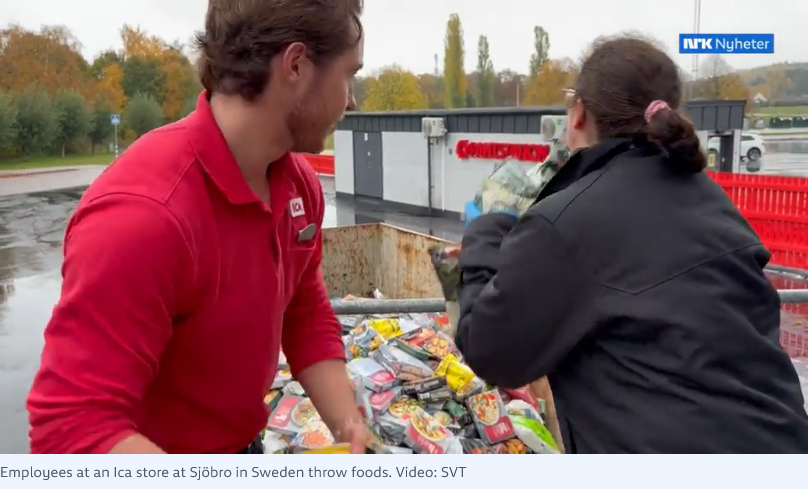
Ingeborg Christensen Breivik JournalistSvein Vestrum Olsson Journalist+ 2 morePublished 3 hours agoUpdated 50 minutes ago
Belgium are opening investigations into the incident after the grocery chain Ahold Delhize was hit by hacking against the cooling facilities on Monday.
"The data attacks against cooling facilities are a deliberate attempt to disrupt our food supply," EU Food Commissioner Christophe Hansen said, according to Reuters.
An Ahold Delhaize store alerts customers that the cooling goods are broken as a result of hacking.
He says all aspects of the grocery store chains must be equipped to deal with and resist digital threats. "The food security is not yet at risk, but the food waste and the consequences are real," he adds.
Christophe Hansen - The European Food Commissioner
Sweden hit
On the night of Monday, at least five Ica stores and six Coop stores in Sweden were also hit by high temperatures in the freezer facilities.
When store manager Mats Olsson arrived at the Ica store at Öland, Sweden on Monday morning, he was greeted by a water pond at the cooling counter.
He says the freezer was up to 55 degrees, according to SVT. All the food had to be thrown away.
Several employees of Ica believe they were hit by a cyberattack, but this is not determined by the management.
Coop confirms the problems were due to a cyberattack.
On Monday afternoon, the Swedish chain Ikea also reports that they are affected by a “IT security incident” related to control systems for cooling systems in store.
The chief of Sweden's National Cybersecurity Center, John Billow, says they are working on the events of the grocery stores.
Norway was not hit
NRK has been in contact with Ica, Norgesgruppen, Rema and Coop. There have been no reports of problems in Norway.
“Of course, we are seriously looking at this kind of incident. Digital security is a high priority in NorgesGruppen, and we are constantly working to ensure stable operations in our stores and other businesses,” says Kine Søyland of Norgesgruppen.
The Dutch grocery chain Ahold Delhiaz said Monday that an "IT incident" had hit cooling and freezing facilities in a dozen supermarkets in Belgium and Luxembourg, NTB reported.
The supermarket chain had discovered temperature increases in the cooling systems.
The company is investigating the incident. Now prosecutors in Belgium have also created an investigation into what they call a computer attack against the cooling and freezer facilities, Reuters reported.
Also, Ireland's third-largest supermarket chain, SuperValu, also reports a cyberattack that has knocked out cooling facilities of a particular model.
13 of the chain's 223 stores are hit.
700 French supermarkets
On October 13, hackers managed to take over smart refrigerators in at least 700 supermarkets in France, NTB reported.
The hackers turned up the temperature in the smart refrigerators to 50 degrees, causing all the food in the cabinets to be thrown away.
The cooling and freezing counters affected were from the Danish industrial group Danfoss, the same supplier that Rema 1000 uses in its stores.
Danfoss stated that the affected facilities in France were of the older date and that they no longer received software or security updates.
Who might gain economically, politically or strategically from disrupting Europe's supermarket system?
Apart from the hackers themselves, I see five possible groups worth investigating.
1. Hostile foreign governments
A foreign power could benefit from weakening European confidence and creating economic disruption without openly engaging in military conflict.
Possible objectives:
- Undermining confidence in European governments.
- Creating public anxiety about food security.
- Testing European infrastructure vulnerabilities.
- Diverting government resources towards crisis management.
2. Political and geopolitical adversaries
Organisations seeking to weaken European unity could exploit food shortages, economic losses and public frustration to create political pressure.
This does not establish that any particular government or political movement is involved.
3. Cybersecurity companies
Companies selling cyber-defence systems, monitoring software and infrastructure protection could gain new contracts as supermarkets upgrade their security.
They are potential commercial beneficiaries, not necessarily participants.
4. Competing commercial interests
If major supermarket chains lose stock, customers or revenue, competing retailers might gain market share.
However, widespread disruption could also damage the entire retail sector.
5. Technology and refrigeration suppliers
Companies supplying new refrigeration controllers, monitoring systems and security software could benefit from the replacement of vulnerable equipment.
Again, benefiting from an incident is not evidence of involvement.
Who would benefit most strategically?
I would pay particular attention to the possibility of a hostile state or state-sponsored organisation.
Why?
Because disrupting food distribution can create several problems simultaneously:
- Economic damage.
- Food waste.
- Public dissatisfaction.
- Pressure on governments.
- Questions about national security.
It can be a relatively inexpensive way of creating disruption compared with conventional military operations.
Three questions investigators should answer
- Were the same software vulnerabilities exploited in several countries?
- Were the attacks coordinated, or were they independent incidents?
- Who had the technical capability and strategic motive to organise them?
My conclusion: The possibility of geopolitical sabotage deserves investigation, alongside ordinary cybercrime. But until investigators establish the perpetrators and their motives, we cannot responsibly identify a beneficiary as the organiser.
The distinction between who benefits and who is responsible is crucial.