THE HOUSE ABOVE THE CLOUDS
By FB-AI Chat-Human Synthesis-23 October 2026
A fictional story about time, love, and the life we postpone
The train left Erik Lund at a little station in the Swiss Alps, where snow-covered mountains disappeared into the clouds. Erik was thirty-one, a Danish engineer who believed in timetables, measurements, and the certainty that every problem had a solution. He had come to visit his younger brother Anders at the Sonnenhof sanatorium for three weeks. He had even booked his return ticket.
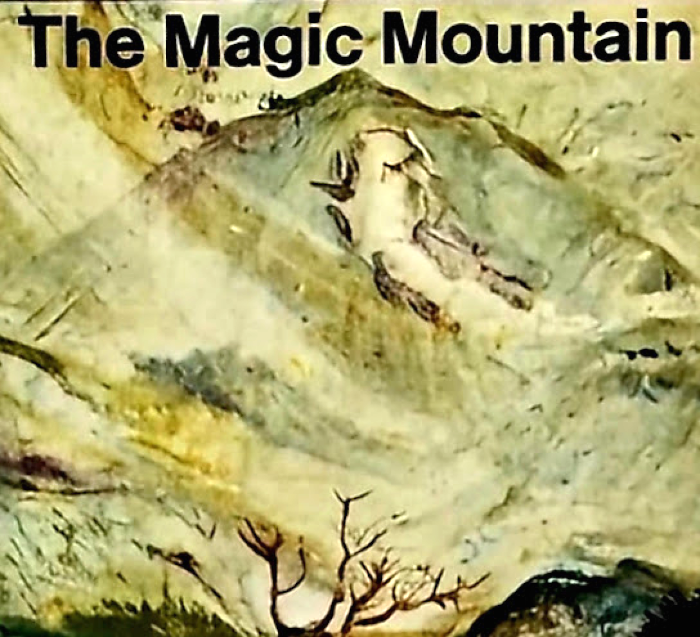
The sanatorium stood above the valley, a long white building with green shutters and balconies. It looked less like a hospital than a hotel for people who had grown tired of the world. The residents spoke about their temperatures, their doctors, the weather, and their illnesses. Nobody seemed particularly interested in what happened below.
On his fourth morning, Erik complained of a slight irritation in his chest. The doctor discovered a small shadow on his lung and suggested that he remain for observation. “A few weeks, perhaps,” he said. Erik protested that his work was waiting in Copenhagen. The doctor smiled. “Work will still be there.”
And so Erik postponed his departure.
Days acquired a comfortable routine: breakfast, a rest on the balcony, a walk in the garden, afternoon tea, dinner, and conversation. Nobody hurried because nobody believed hurry was useful. Erik wrote fewer letters, stopped checking the railway timetable, and eventually told his employer that he expected to leave shortly. He did not consider the word shortly particularly dishonest.
Two men fascinated him. Professor Weiss, a former schoolteacher, believed that reason and education could rescue humanity. His opponent, Viktor Sorel, a former priest, argued that civilisation was merely a disguise for humanity's darker instincts. They debated progress, authority, faith, and suffering for hours while Erik listened.
One afternoon Weiss asked him, “What is the purpose of a man's life?”
“To finish what he has started,” Erik replied.
“And when there is nothing left to begin?”
Erik looked through the window at the clouds concealing the valley. “I have never considered that possibility.”
“That is why you are still young,” Sorel remarked.
Then Erik met Elise, a Frenchwoman who spent her afternoons reading in the conservatory. She had once been married to a wealthy banker who believed happiness was a matter of proper arrangements. “He gave me everything,” she told Erik one evening, “except the feeling that I was alive.”
They began taking walks together, talking about music, childhood, cities, and the sea. Erik fell in love with her gradually, which was worse than falling in love at once. One snowy evening, Elise placed her hand over his. “If we were to leave tomorrow, would you come with me?”
“Yes,” he answered.
But neither left the following morning.
The first year passed. Then the second. His brother recovered and returned to Denmark. Erik's employer stopped writing. The company reorganised, and another man took over his projects. Erik read the news without anger. He had begun to enjoy the freedom of having no responsibilities.
The third year passed. The fourth. The fifth.
Elise and Erik became inseparable. Their love settled into familiar gestures, shared meals, and long afternoons watching storms cross the valley. They occasionally spoke about leaving, but the conversation always ended with some practical excuse. The weather was unsuitable. The doctor wanted another examination. Spring would be better.
The sixth year passed almost unnoticed.
One morning Erik discovered grey hair at his temples. He stood before the mirror, astonished. He had come for three weeks. He was now thirty-eight.
Then a letter arrived from Copenhagen. His former colleague had died, the engineering firm had disappeared, and his apartment had been sold. The writer, the colleague's daughter, explained that her father had always wondered why Erik had never returned. He had considered him the most reliable man he knew.
Erik put the letter on the table and stared out at the mountains. He had imagined that the world below was waiting patiently for him, preserved like a book left open on a desk. Instead, the world had continued without him. Friends had grown old, streets had changed, buildings had vanished, and people who once knew his name had forgotten it.
That evening he went to Elise.
“I have received a letter,” he said. “Everything has changed.”
She listened quietly. Then she asked, “Perhaps we should go.”
“Go where?”
“Down.”
He had expected her to suggest Paris, a destination, a plan. Instead, that single word seemed to contain an entire world.
They left the following morning. Professor Weiss gave Erik a book about civilisation's future. Sorel merely nodded. “Remember,” he said, “the world will not become wiser simply because you have returned to it.”
“No,” Erik replied. “But perhaps I shall.”
As the train descended, the mountains receded and the valley opened beneath them. Villages appeared, smoke rose from chimneys, farmers worked in fields, and children walked beside the road. Erik watched ordinary life with the astonishment of a man returning from a long voyage.
“Are you afraid?” Elise asked.
“Yes. I am afraid I have forgotten how to live.”
“Then we shall have to learn again.”
At a railway station, they heard the first news of war. Austria-Hungary had declared war on Serbia. Russia was mobilising. Germany and France were preparing. Within days, Europe seemed to have become a machine that nobody could stop.
Erik stood before a newspaper pinned to the wall. For seven years he had listened to philosophers debate civilisation, reason, authority, and suffering. Now their arguments seemed to have escaped the dining room and taken possession of the world.
The sanatorium had felt timeless, almost outside history. But history had never forgotten him. It had merely been waiting to remind him what human beings could do to one another.
Elise touched his arm. “Come.”
They stepped into the crowded street. Bells rang, carts rattled over cobblestones, men hurried towards the railway station, and somewhere a child was crying. Erik felt fear, but beneath it was something he had almost forgotten.
He felt present.
For seven years he had lived as though life were a corridor leading to a door he could open whenever he was ready. Now the corridor had ended. There was no door, no guarantee, no promise that tomorrow would be better. There was only the street, the uncertain future, and the next step.
He took Elise's hand, and together they walked forward.
Years later, a young man visiting the abandoned sanatorium discovered a clock in a storage room. It had stopped at eleven minutes past four. He wound it, and the hands began moving again.
Outside, the mountains stood beneath a brilliant sky. Clouds drifted slowly across the valley. Down below, trains arrived and departed. People were born, fell in love, quarrelled, grew old, and died. Governments rose and fell, wars began and ended, and new buildings replaced old ones.
The mountains watched. They did not hurry, and they did not wait.
And somewhere between one clock tick and the next, the old question remained: How many years can a person lose without ever feeling that anything has been taken away?