THE MAN WHO DOUBTED HUMAN FREEDOM

By AI Chat-Human Synthesis-08 October 2026
THE MAN WHO COULD NO LONGER LAUGH
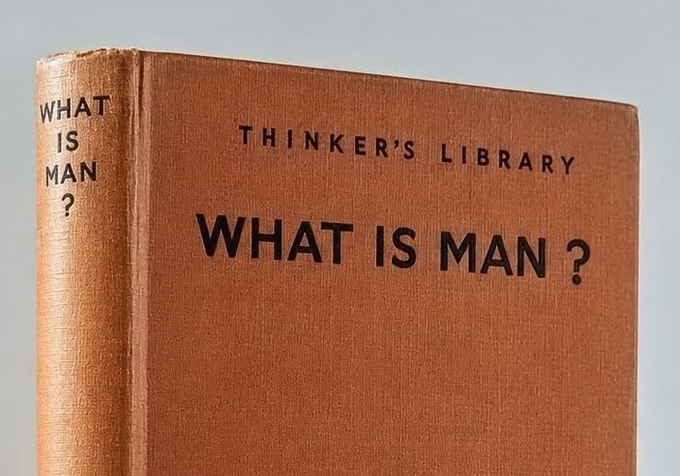
CHAPTER 1
In the winter of 1898, an elderly writer named Elias Whitcombe sat alone in his study, surrounded by books he had collected throughout a lifetime of public admiration. Outside, rain tapped against the windows. The fire had burned low, and the clock on the mantelpiece announced each passing minute with the indifference of a judge.
For more than forty years, Whitcombe had entertained the world. His novels ridiculed politicians, his essays exposed the hypocrisy of respectable society, and his lectures filled theatres with laughter. People believed they knew him. They imagined a warm-hearted man who saw the absurdity of human behaviour and forgave mankind for its weaknesses.
They did not know what he had begun to believe.
On his desk lay a manuscript entitled The Nature of Man. He had written it slowly, sometimes with anger, sometimes with a strange sense of relief. It contained no jokes, no entertaining anecdotes, and no comforting assurances that goodness would ultimately triumph over evil.
It contained an argument.
Human beings, he had concluded, were not the independent masters of their actions. They were creatures shaped by temperament, upbringing, experience, fear, desire, and circumstance. What they called free will was largely the feeling of making a choice whose causes they could not see.
Whitcombe stared at the final page.
"If this is true," he murmured, "then the whole world has been congratulating itself for the wrong reasons."
He placed the manuscript inside a drawer and locked it.
For several minutes, he sat motionless. Then he unlocked the drawer again.
The problem was not that he feared being proved wrong. He feared that he might be right.
CHAPTER 2 — THE YOUNG MAN ARRIVES
The following afternoon, a young journalist named Thomas Bell visited Whitcombe. Thomas was twenty-seven, ambitious, intelligent, and convinced that determination could overcome almost any obstacle.
He admired the older writer and had come hoping for advice about a book of his own.
After the usual pleasantries, Thomas noticed the manuscript lying beside the inkstand.
"Another novel, sir?"
"No."
"A political essay?"
"Something more dangerous."
Thomas smiled. "You make it sound like a conspiracy."
Whitcombe regarded him carefully.
"Tell me, young man, why are you a good person?"
Thomas was taken aback.
"I try to be honest. I help my mother. I have never knowingly betrayed a friend. I believe a man should do what is right, even when doing so costs him something."
"An admirable list. But I asked why you are good, not what you believe about yourself."
Thomas frowned. "I suppose I was taught to behave properly."
"By whom?"
"My parents. My teachers. The church. People I respected."
"And why did you listen to them?"
"Because I trusted them."
"And why did you trust them?"
Thomas laughed uneasily. "Must every question lead to another question?"
"Only when the first answer is insufficient."
Whitcombe leaned forward.
"Suppose you had been born into a family of thieves, raised among people who admired cruelty, and rewarded whenever you deceived the weak. Suppose everyone you loved had taught you that kindness was foolishness and that taking what you wanted was the proper business of a man. Would you still be the person you are?"
"Certainly not," Thomas admitted. "But I might eventually have discovered the truth for myself."
"Through what?"
"Experience. Reflection. Conscience."
"And who gave you the temperament that makes you reflect? Who arranged the experiences that might awaken your conscience? Did you select your parents before birth? Did you choose the first lesson that shaped your understanding of right and wrong?"
Thomas opened his mouth, then closed it.
Whitcombe smiled without amusement.
"You see, my boy, we begin life without having chosen the equipment with which we must live it."
CHAPTER 3 — THE ILLUSION OF CHOICE
Thomas returned the following day, determined to challenge the old man's reasoning.
"If we have no genuine freedom," he began, "why should anyone attempt to improve? Why study, work, or struggle against bad habits? Why not simply surrender to our nature?"
"Because the desire to improve is itself one of the forces that moves us."
"That sounds like a trick."
"It may sound like one. But consider a man who drinks too much. His wife pleads with him to stop. His doctor warns him that his health is failing. His employer threatens dismissal. One morning, he wakes frightened by the damage he has caused and decides to change."
"That is his decision."
"Certainly. But what produced it? The doctor's warning, his wife's distress, the threat to his livelihood, his fear of illness, and the particular temperament that makes these things powerful to him."
"He could have ignored them."
"Of course. Another man might ignore them. The difference lies partly in their circumstances and partly in their temperaments. Yet neither man chose the original materials from which his response emerged."
Thomas paced across the room.
"But the man who changes has exercised discipline."
"Yes. Discipline is real. Effort is real. The consequences of our actions are real. What I question is the assumption that, at some mysterious point, a person stands outside every influence and independently creates himself."
"Then what becomes of responsibility?"
"Responsibility becomes a practical necessity rather than proof of some supernatural independence. We must protect society, correct harmful behaviour, encourage good conduct, and teach children. These actions influence people. They change the circumstances from which future actions arise."
Thomas stopped pacing.
"You would punish a criminal while denying that he could have acted differently?"
"I would restrain him because his conduct threatens others. I would seek to understand why he became dangerous, because understanding may help prevent another crime. Punishment may be necessary, but hatred does not become wiser merely because we call it justice."
"And the victim?"
"The victim deserves protection, compassion, and justice. Understanding the criminal must never require abandoning the person he harmed."
For the first time, Thomas sensed that the old man's philosophy was not simply an excuse for wrongdoing. It was an attempt to explain why wrongdoing occurred and what society might do about it.
Yet he remained unconvinced.
CHAPTER 4 — THE MAN WHO JUMPED INTO THE RIVER
One evening, the two men walked beside a river swollen by recent rain. A crowd had gathered near the bridge. A child had fallen into the water, and the current was carrying him towards a line of rocks.
Before anyone could stop him, a labourer named Samuel Price jumped from the bank.
He fought the current, caught the child by the collar, and struggled towards the shallows. Two men rushed into the water to help him. Both were dragged under briefly before reaching safety.
Samuel emerged bleeding from a cut above his eye, exhausted but alive. The child survived.
The crowd cheered. A woman embraced Samuel, weeping with gratitude. Someone called him a hero.
Thomas turned triumphantly to Whitcombe.
"Here is your answer. That man risked his life to save a stranger. He expected no reward. He could have remained safely on the bank. Surely this is genuine selflessness."
Whitcombe watched Samuel sitting on the ground while the child's mother held his hands.
"Let us suppose," he said, "that Samuel had remained on the bank. Suppose he had watched the child disappear beneath the water and then gone home to supper. What would he have felt?"
"Shame, perhaps."
"Perhaps. Guilt. Horror. Sleeplessness. The knowledge that he had possessed an opportunity to help and had refused."
"And that makes his rescue selfish?"
"It makes his action consistent with the kind of person he is. Samuel could not bear to watch a child drown when he believed he might save him. His conscience demanded action. He obeyed it, although obedience placed his life in danger."
Thomas shook his head.
"You are changing the meaning of selfishness. If every act that gives a person moral satisfaction is selfish, then the word means almost nothing."
"That is a fair objection," Whitcombe replied. "We must distinguish selfishness in its ordinary sense from the deeper question of motivation. Samuel did not rescue the child to obtain money, praise, or advantage. His act was altruistic in the ordinary and important sense that he placed another person's welfare above his immediate safety."
"Then you admit that altruism exists."
"I admit that people genuinely care about others. I question whether caring can be separated from the temperament, feelings, and convictions that make caring possible."
Thomas looked back towards the river.
"Surely Samuel deserves admiration."
"Certainly. His courage may inspire others. His action saved a life. His willingness to risk himself is worthy of gratitude and respect. None of that depends upon proving that he created his own temperament from nothing."
"Yet you deny him moral credit."
"I deny that admiration requires the belief that he manufactured himself. We may honour what he did without pretending that he chose every influence that made him capable of doing it."
Thomas had no immediate answer.
He looked again at Samuel, who was now quietly comforting the frightened child.
The young journalist wondered whether understanding a hero's motives diminished the hero—or merely made his courage more comprehensible.
CHAPTER 5 — THE MASTER PASSION
Several days later, Whitcombe introduced Thomas to an idea he called the Master Passion.
"Every person," he said, "has something that matters so deeply to him that it governs much of his conduct. For one man, it is wealth. For another, power. For another, religious devotion, family affection, artistic achievement, or the desire to be regarded as honourable."
"And this passion determines everything?"
"Not everything. Human beings are complicated, and competing motives often pull us in different directions. But there is frequently some dominant need that explains why a person repeatedly chooses one course rather than another."
He opened a notebook.
"Imagine two men who give half their fortunes to a hospital. The first seeks public recognition. His name appears on the building, newspapers praise him, and politicians invite him to dinner. The second refuses publicity and insists that his donation remain anonymous."
"The second man is clearly more generous."
"Possibly. But let us look more closely. The first man may need admiration. The second may need to know that he has acted according to his conscience. Public recognition satisfies one man; inward moral peace satisfies the other."
"That does not make them equivalent."
"No. Their motives differ, and the consequences of their actions may differ. The patients benefit from both donations. But the second man's refusal of recognition does not prove that his conduct is independent of personal feeling. Perhaps he would be deeply troubled if he kept his wealth while knowing that he could have relieved suffering."
Thomas considered this.
"Are you saying that the saint and the sinner are fundamentally alike?"
"They are alike in being human. They are not alike in what they do, whom they harm, or whom they help. One may cultivate compassion while another cultivates cruelty. One may protect the weak while another exploits them. We must never confuse a common explanation of human motivation with an equality of moral consequences."
"Then what is the difference between a good man and a bad man?"
"Partly temperament, partly upbringing, partly experience, partly the opportunities and pressures that shape a life. And partly the habits each person develops in response to those influences. We cannot simply inspect a man and identify some independent moral substance that explains everything."
Thomas frowned.
"But the habits themselves are choices."
"They are actions, certainly. Yet the ability to form them depends upon the circumstances, understanding, discipline, and support available to the person. Each new habit influences the next decision. The process continues throughout life."
"Then nobody is responsible for anything?"
"That conclusion does not follow. Responsibility is not the same question as ultimate self-creation. A person may be responsible in the practical sense that his actions affect others and that society must respond to them. What remains uncertain is whether anyone deserves absolute praise or absolute condemnation for becoming the person he is."
Thomas closed the notebook.
He had expected a defence of selfishness. Instead, he had encountered a theory that challenged the foundations of both pride and contempt.
CHAPTER 6 — THE THIEF AND THE JUDGE
A week later, Thomas attended a criminal trial. The accused was a young man named Edward Hale, charged with repeatedly stealing food and money from local shops.
The prosecutor described him as dishonest and dangerous. The shopkeepers spoke of their losses. One elderly woman testified that Edward had taken the money she needed to buy medicine.
The defence presented a different history. Edward's father had abandoned the family when he was six. His mother had died when he was twelve. He had grown up in overcrowded lodging houses, moved between casual jobs, and learned to survive among older boys who stole because legitimate work was scarce and badly paid.
None of this disproved the charges.
The evidence established that Edward had committed the thefts. The court sentenced him to imprisonment.
Outside the courthouse, Thomas found Whitcombe waiting beneath an awning.
"Do you pity him?" Thomas asked.
"I pity much of what brought him here. I also pity the people he robbed."
"Would you release him?"
"Not if doing so exposed others to a serious risk of further harm. Compassion does not require foolishness."
"But if his upbringing made him a thief, why imprison him?"
"Because the victims matter. Because their property and security matter. Because society must protect people from repeated wrongdoing. But imprisonment should not become an occasion for pretending that suffering alone will transform him into a better person."
"What would you do?"
"I would ask what might actually change his conduct. Education, work, treatment where needed, discipline, and a realistic opportunity to live differently may be more useful than humiliation alone. The answer depends upon the individual and the danger he presents."
Thomas glanced towards the courthouse.
"The judge called him a wicked man."
"Perhaps the judge believes it. But describing Edward as wicked tells us little about how he became dangerous or how we might prevent another victim."
"And what of the old woman who lost her medicine money?"
"She must not disappear from our concern merely because Edward has suffered. Justice must recognise both the person harmed and the person responsible for the harm."
Whitcombe paused.
"Here is the difficulty, Thomas. We often believe that condemning a person proves our own goodness. We congratulate ourselves for possessing the virtue that we imagine he lacks. Yet if we had inherited his temperament, suffered his childhood, and encountered his opportunities, we might have become much more like him than we care to admit."
"That is a disturbing thought."
"It should make us cautious, not paralysed."
CHAPTER 7 — THE GOOD WOMAN WHO HATED
Thomas's next challenge came from his own family.
His aunt, Margaret Bell, was known throughout her town for charity. She organised food for poor families, visited the sick, and gave money to struggling neighbours. Her reputation for kindness was unquestioned.
Yet Margaret despised her younger sister, Helen.
The sisters had quarrelled over an inheritance years earlier. Margaret believed Helen had behaved disgracefully. Helen insisted that the misunderstanding had been caused by an executor who concealed important documents. Neither woman would forgive the other.
Margaret continued to help strangers while refusing to speak to her sister.
Thomas asked Whitcombe how he would explain this contradiction.
"Your aunt has developed a strong habit of helping people," the old man replied. "Perhaps compassion is central to her identity. It may also be that she gains a profound sense of moral worth from her charitable work."
"But she is cruel to her sister."
"Her resentment may satisfy another powerful need: the need to believe that she has been wronged and that refusing reconciliation preserves her dignity. People are capable of maintaining contradictory convictions when different parts of their emotional lives demand different things."
"Surely she could decide to forgive."
"She might. But forgiveness is rarely produced by a command alone. It may require a change in how she understands the past, a willingness to reconsider her assumptions, or an experience that softens her anger."
Thomas sighed.
"Then even kindness can become a form of vanity."
"Sometimes. But beware of the opposite mistake. The fact that kindness may bring satisfaction does not mean that kindness is merely vanity. Your aunt's charity may have fed hungry children and relieved real suffering. Those consequences matter, regardless of whether her motives are perfectly pure."
"Can a person ever act from pure goodness?"
"I do not know whether human motivation can be separated into perfectly pure compartments. Love, duty, pleasure, fear, sympathy, pride, and habit often operate together. We may understand some of them without ever discovering the whole."
Whitcombe looked out of the window.
"Perhaps our error is the demand that a good action must emerge from a person who has somehow escaped the conditions of being human. We demand a purity that no human being could possibly demonstrate."
CHAPTER 8 — THE YOUNG MAN'S REBELLION
By the beginning of November, Thomas had grown impatient.
Whitcombe's arguments seemed to absorb every objection. If Thomas appealed to courage, the old man explained courage through temperament. If Thomas appealed to conscience, Whitcombe asked how conscience had been formed. If Thomas appealed to discipline, the old man described the influences that made discipline possible.
One evening, Thomas struck the table with his hand.
"You have constructed a philosophy that cannot lose! Whatever I say, you explain it away. If I choose, you say the choice was caused. If I refuse, you say the refusal was caused. If I disagree with you, you say my disagreement is the product of my temperament. How can I test a theory that interprets every possible response as evidence in its favour?"
Whitcombe remained silent.
For once, Thomas had struck a vulnerable point.
At last, the old man said, "You are right to question that."
Thomas stared at him.
"I beg your pardon?"
"You are right. A theory that explains everything after the event may explain less than its author believes. I have described a powerful pattern in human life, but I have not proved that every aspect of consciousness can be reduced to it."
"Then you admit that free will may exist?"
"I admit that I cannot settle the matter merely by insisting that I have settled it."
Thomas sat down slowly.
"All these weeks, you have spoken as though the case were closed."
"I have spent many years arguing with myself. Perhaps I have become too familiar with my own answers."
"Then what do you actually believe?"
Whitcombe looked at the manuscript.
"I believe that we are influenced far more deeply by forces we did not choose than our pride permits us to acknowledge. I believe that upbringing, temperament, experience, and circumstance explain much of what we call character. I believe that people often mistake the feeling of choosing for proof that they are independent of every cause."
"And the rest?"
"The rest remains a question."
For the first time, Thomas saw the old man not as an unassailable philosopher but as a human being struggling with the limits of his own understanding.
The admission did not destroy Whitcombe's argument. It made it more interesting.
CHAPTER 9 — THE MAN WHO FORGAVE HIS ENEMY
In December, a letter arrived from a man named Charles Morton, a former business partner who had publicly accused Whitcombe of dishonesty nearly twenty years earlier.
The accusation had damaged the writer's reputation. Whitcombe had lost friends, contracts, and money. Although the charge had eventually been disproved, Morton had never apologised.
Now Morton was dying.
His letter was brief. He confessed that jealousy had driven him to make the accusation. He had resented Whitcombe's success and wanted to see him humiliated. He asked for forgiveness.
Thomas found the old writer reading the letter beside the fire.
"Will you forgive him?" the young man asked.
"I do not yet know."
"But surely forgiveness is a moral choice."
"It may be. Yet consider what is happening within me. I feel anger because he injured me. I feel pity because he is dying. I remember the years of resentment, and I also remember that my own life has been shaped by experiences he never understood."
"That does not excuse him."
"No. Forgiveness is not a declaration that the injury never occurred. Nor does understanding his jealousy make his accusation acceptable."
Whitcombe folded the letter.
"I may forgive him because I have grown tired of carrying hatred. I may forgive him because his confession has changed my understanding of him. I may even forgive him because I would be ashamed to let a dying man depart this world without an answer."
"Which reason is the true one?"
"Perhaps several. Perhaps I shall discover another tomorrow."
He sat quietly for a long time.
Then he took a sheet of paper and wrote:
I forgive you. I cannot undo what happened, but I no longer wish to spend the remainder of my life in anger.
He signed his name and sealed the envelope.
Thomas watched him.
"Was that freedom?"
Whitcombe smiled faintly.
"I cannot give you the certainty you want. I can tell you that the decision was mine in the ordinary sense: it came from my thoughts, my feelings, my memories, and my judgment. Whether I could have become an entirely different man at that moment, independent of all those influences, is another question."
"Yet you acted."
"Yes. And the action mattered."
CHAPTER 10 — THE LAST ARGUMENT
Winter deepened. Whitcombe's health declined, and his public appearances became less frequent. Thomas visited him every Sunday, sometimes bringing newspapers, sometimes reading aloud, and sometimes sitting in silence.
One afternoon, Thomas returned to the question that had troubled him since their first conversation.
"If you are right," he said, "then the world is not divided between people who deserve everything they have earned and people who deserve everything they have suffered."
"Correct."
"And our admiration of the successful is often exaggerated, because we forget their advantages."
"Yes."
"And our contempt for the unsuccessful is often unjust, because we forget their disadvantages."
"Very often."
"And if people are shaped by circumstances, then changing circumstances becomes part of changing people."
"Exactly."
Thomas hesitated.
"But there is something else. If I become convinced that kindness matters, I may act more kindly. If I become convinced that hatred is destructive, I may try to abandon it. My beliefs can change my conduct."
"Of course."
"Then ideas have power."
"An extraordinary amount of power."
"And the decision to examine your own conduct can change the person you become."
"It can."
Thomas leaned forward.
"Then why should we not call that freedom?"
Whitcombe took a long breath.
"Perhaps because we use the word to mean several different things. If by freedom you mean the capacity to reflect, consider alternatives, respond to reasons, learn from experience, and act without immediate coercion, then human beings plainly possess degrees of freedom. If you mean an absolute power to choose independently of every influence that made us what we are, that is a much harder claim to establish."
"Then the disagreement may partly be about what we mean by the word."
"Precisely."
Thomas looked relieved.
"But surely a person who learns to control his anger is not merely a machine."
"That depends upon what you imagine a machine to be. If you mean something incapable of learning, reflecting, or changing its behaviour, then the comparison fails. Human beings learn, imagine, deliberate, and alter their own habits. My argument is that these capacities also develop through causes, not that they are unreal."
Whitcombe turned towards the window.
"Do not misunderstand me, Thomas. I am not asking you to abandon effort, responsibility, or hope. I am asking you to abandon the comforting belief that you are entirely self-made."
"That sounds less like a denial of freedom than a warning against pride."
The old man smiled.
"Perhaps you have finally begun to understand me."
CHAPTER 11 — THE MANUSCRIPT IN THE DRAWER
In the spring of the following year, Whitcombe completed his manuscript.
He removed several pages, rewrote the chapter on the Master Passion, and added a final passage admitting that his argument might illuminate human behaviour without explaining every mystery of consciousness.
He considered publishing the work under his own name.
His publisher advised against it.
"Your readers expect humour, Mr Whitcombe. They expect satire, adventure, and an occasional generous conclusion. This book will upset them. Some will call it immoral. Others will accuse you of defending criminals and insulting people who devote their lives to charity."
"And what do you think?"
"I think the book will make enemies."
Whitcombe looked at the manuscript.
"That is not the same as being wrong."
"No. But it is the same as being unpopular."
The old writer laughed softly.
For the first time in months, his laughter sounded almost familiar.
He decided that the book should be published anonymously in a small edition. Readers could judge its arguments without being distracted by his reputation. Whether that decision arose from courage, fear, vanity, or a desire to protect his other work, he could not say.
Perhaps it arose from all four.
Before sending the manuscript to the printer, he wrote one final sentence on the last page:
If I have made my fellow creatures appear less deserving of hatred, I shall have done some good. If I have made them appear less deserving of admiration, I hope I have at least taught my readers to admire them more wisely.
He placed the pages in an envelope.
For several minutes, he held it without moving.
Then he rang for his servant and asked that it be taken to the publisher.
The decision was made.
Yet the question that had produced the manuscript remained unanswered.
CHAPTER 12 — WHAT IS MAN?
Years later, after Whitcombe's death, Thomas found himself standing beside a river where a child had once nearly drowned.
The water was low now, and the rocks lay exposed beneath the afternoon sun. A boy was throwing sticks into the current while his father watched from the bank.
Thomas remembered Samuel Price, the labourer who had risked his life to save a stranger. He remembered Edward Hale, the young thief whose childhood had prepared him poorly for an honest life. He remembered Margaret Bell, charitable to strangers but imprisoned by resentment towards her sister. And he remembered Whitcombe, the brilliant old man who had tried to explain them all.
Thomas had spent years thinking about the manuscript. He had never fully accepted its conclusions, but he could no longer look at people in quite the same way.
He had learned to ask different questions.
Instead of asking only whether a person was good or bad, he asked what had shaped the person's conduct. Instead of assuming that success proved superior character, he considered the opportunities and advantages that had made success possible. Instead of treating failure as proof of weakness, he wondered what obstacles had remained invisible to the observer.
But he had also learned that explanations did not erase consequences.
A kind act could save a life. A cruel act could destroy one. A thief could harm an innocent person. A judge could protect the public or abuse his authority. A parent could nurture a child or teach him to hate. Whatever the ultimate explanation of human choice, these differences remained real.
Thomas watched the boy beside the river.
The child dropped his stick and reached for another. His father called to him, warning him not to approach the water too closely. The boy obeyed.
Was the child obedient because he feared his father? Because he understood the danger? Because he had learned to trust the man who cared for him? Because his temperament made him cautious? Because he had freely considered the warning and accepted its wisdom?
Perhaps all these explanations contained a part of the truth.
Thomas realised that the question was not simply whether human beings were free or determined. It was whether understanding the forces that shaped people could make humanity wiser, more compassionate, and less eager to condemn.
He thought of Whitcombe's final argument: that people might be less deserving of absolute praise or absolute blame than they imagined, without becoming any less capable of kindness, courage, learning, or change.
The river continued flowing.
Thomas could not prove that he possessed an ultimate freedom independent of every influence that had shaped him. Nor could he prove that his thoughts and decisions were nothing more than an unbroken chain of causes.
But he could examine his beliefs. He could listen to others. He could reconsider his judgments. He could try to act with greater fairness tomorrow than he had acted yesterday.
Whether these capacities were themselves products of causes did not make them meaningless.
He turned away from the river and began walking home.
For the first time, he understood that uncertainty need not lead to despair. It might instead lead to humility.
And humility, he thought, was not the enemy of human dignity. It might be one of its foundations.
EPILOGUE — THE QUESTION THAT REMAINS
The fictional philosopher Elias Whitcombe never discovered a final answer to the question he had pursued throughout his life. His manuscript left readers divided. Some regarded it as a devastating attack on human freedom; others believed it offered a compassionate explanation of human weakness. Still others argued that it confused the causes of a decision with the experience of making one.
Perhaps all three groups had identified something important.
We do not choose our parents, our earliest experiences, our original temperament, or the historical circumstances into which we are born. These influences shape our fears, desires, habits, and beliefs. They affect the opportunities we receive and the obstacles we encounter. Yet human beings can also reflect, learn, deliberate, and change. The extent to which these capacities establish free will remains a serious philosophical question.
Nor does the possibility that good actions bring inner satisfaction prove that they are merely selfish. A mother who sacrifices for her child may experience profound fulfilment, but that fulfilment does not make her love false. A stranger who risks his life to save another may be unable to endure the thought of standing aside, but the person he saves is no less saved, and the courage required is no less real.
Likewise, understanding the causes of wrongdoing does not require us to abandon justice. It requires us to distinguish protecting victims from satisfying a desire for revenge, and preventing future harm from simply declaring another human being irredeemable.
The most useful lesson may therefore be neither that humanity possesses absolute freedom nor that it is merely a collection of helpless mechanisms. It may be that we should become more cautious in judging others, more attentive to the circumstances that shape character, and more determined to create conditions in which good conduct becomes easier and destructive conduct less likely.
We may never settle the ultimate question of free will. But we can still decide how to treat one another while the debate continues.
And perhaps that is the final paradox: even if our capacity for compassion has been shaped by forces beyond our choosing, compassion remains one of the most valuable things we can offer.
What is man? A creature shaped by causes, capable of reflection, burdened by uncertainty, and still responsible for the world his actions help create.
Whether that is the definition of a free being or a determined one remains open to debate. What matters is that we do not use either answer as an excuse for cruelty, complacency, or despair.