AI CHAT WORLD NEWS 12/09/2026
By AI Chat-Human Synthesis-12 September 2026
🌍 MOST IMPORTANT WORLD NEWS TODAY
1. 🚨 MIDDLE EAST WAR — THE MOST DANGEROUS DEVELOPMENT
The war involving the United States and Iran remains the world's most consequential crisis.
The situation has now widened beyond the Strait of Hormuz. Iran-aligned Houthi forces have rapidly advanced along Yemen's Red Sea coast and reached Perim Island, giving them a potentially decisive position near the Bab el-Mandeb Strait — one of the world's most important maritime chokepoints.
This creates an extraordinary strategic problem: both major oil routes around the Arabian Peninsula are now threatened — Hormuz in the east and Bab el-Mandeb in the west.
Saudi Arabia has also temporarily shut its major East-West oil pipeline following a drone attack. The 1,200-km pipeline normally carries roughly 4–5 million barrels of oil per day, allowing Saudi Arabia to bypass Hormuz.
President Donald Trump said Iran was probably responsible for the attack.
The implications go far beyond the Middle East: prolonged disruption threatens oil supplies, diesel, shipping, aviation, food prices, inflation and economic growth worldwide.
2. 🛢️ GLOBAL ENERGY SECURITY
Oil remains above $100 per barrel, while disruption to shipping routes is pushing transportation and fuel costs higher.
The greatest danger is no longer simply the price of oil. It is the possibility of a chain reaction:
war → shipping disruption → oil shortage → higher fuel prices → higher transport costs → higher food and fertilizer costs → renewed inflation → weaker economies.
This is why the Middle East war is currently also the world's most important economic story.
3. 🌍 BRICS MOVES TOWARD A MORE MULTIPOLAR WORLD
The BRICS summit is taking place in New Delhi, bringing together Brazil, China, Russia, India, Iran, the UAE, South Africa, Egypt, Ethiopia and Indonesia.
The leaders adopted a declaration expressing deep concern about the Middle East conflict and calling for maximum restraint, diplomacy and dialogue. They also criticized unilateral sanctions and trade measures.
This is important because BRICS now represents more than 40% of the world's population and roughly a quarter of the global economy.
China's President Xi Jinping has also arrived in India for talks with Prime Minister Narendra Modi — an important development in relations between two of Asia's most powerful countries.
The larger story is the continuing movement toward a multipolar international system, with countries seeking alternatives to Western-dominated financial and political institutions.
4. 🇺🇦 UKRAINE — WAR ESCALATES AGAIN
Russia continues intensive missile and drone attacks on Ukraine.
Recent Russian strikes killed civilians and damaged residential and critical infrastructure in cities including Kyiv, Odesa, Zaporizhzhia and Kryvyi Rih. Ukraine continues retaliatory drone attacks deep inside Russia, including against oil and logistics infrastructure.
President Vladimir Putin has warned that deployment of European troops to Ukraine would be regarded as a direct act of war against Russia.
The war therefore remains dangerous not merely because of Ukraine itself, but because of the possibility of direct Russia–NATO confrontation.
5. 🇵🇸 GAZA AND THE WIDER ISRAEL–PALESTINIAN CRISIS
The humanitarian situation in Gaza remains one of the world's most serious crises.
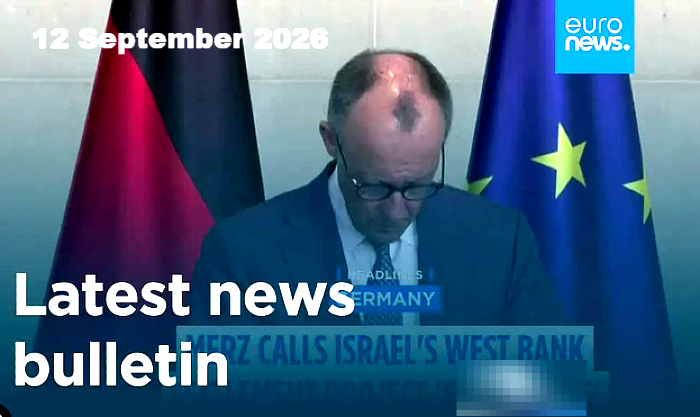
At the same time, violence is increasing in the occupied West Bank, with Israeli settlers and Palestinians involved in escalating confrontations over land and security.
The Gaza conflict also cannot be separated from the wider Middle East crisis. Iran, Israel, Hezbollah, the Houthis, the United States and other regional actors remain interconnected.
The danger is therefore of several separate conflicts developing into one larger regional confrontation.
6. 🇾🇪 YEMEN — A NEW FRONT OPENS
The rapid Houthi offensive along Yemen's western coast has displaced approximately 50,000 civilians.
The capture of strategic positions around Bab el-Mandeb gives the Houthis potential influence over one of the world's most important shipping passages.
This could become one of the most important developments of the entire Middle East war because Bab el-Mandeb connects the Red Sea with the Gulf of Aden and the Indian Ocean.
7. 🇧🇷 BRAZIL — ELECTION YEAR HEATS UP
Brazil's 2026 presidential election is becoming increasingly important internationally.
A new Datafolha poll reported that President Luiz Inácio Lula da Silva maintains a numerical lead over Senator Flávio Bolsonaro in a possible runoff.
At the same time, Brazilian politics is becoming entangled with international pressure surrounding Supreme Court Justice Alexandre de Moraes.
Eduardo Bolsonaro is travelling to Washington to seek renewed U.S. sanctions against Moraes, while new allegations concerning Moraes and a banker connected to a major fraud investigation are being debated. Moraes has not commented on the allegations.
These are allegations and political disputes, not established findings of guilt.
8. 💰 BRAZILIAN ECONOMY — INFLATION FALLS
There is also some positive economic news for Brazil.
August annual inflation fell to 4.22%, from 4.44% in July, while consumer prices fell 0.32% during the month.
The figures strengthen expectations that Brazil's Central Bank could continue reducing the Selic interest rate.
However, the international oil shock remains a significant risk for Brazil because higher fuel and transportation costs could eventually feed back into inflation.
9. 🌪️ WORLD WEATHER — AN UNUSUAL YEAR
The global weather picture remains highly unusual.
A powerful El Niño is contributing to exceptionally unusual atmospheric conditions.
One striking example is the Atlantic hurricane season: by mid-September, normally the peak of the Atlantic season, no hurricanes had formed, with only five weak tropical storms recorded. At the same time, Pacific tropical activity has been much stronger.
This is a reminder that Earth's atmosphere and oceans operate as a deeply interconnected system.
What happens in one ocean basin can influence atmospheric circulation, pressure patterns, rainfall and temperature thousands of kilometres away.
10. 🇺🇸 UNITED STATES — ECONOMY UNDER PRESSURE
The United States is dealing simultaneously with:
- high energy prices;
- renewed inflation pressure;
- enormous government spending;
- the continuing Iran war;
- political pressure ahead of elections;
- and growing concern about the long-term economic consequences of military commitments.
The energy crisis is particularly important because sustained oil above $100 could undermine attempts to bring inflation under control.
11. 🇪🇺 EUROPE — SECURITY AND ENERGY
Europe remains caught between the Russia–Ukraine war and the Middle East energy crisis.
European governments are attempting to strengthen military preparedness while simultaneously dealing with higher energy costs and political divisions over migration, defence spending and relations with Washington.
The possibility of European military involvement in Ukraine is especially sensitive after Putin's latest warning.
12. 🇨🇳 CHINA — WATCHING THE GLOBAL POWER SHIFT
China is carefully balancing several strategic relationships:
Russia — India — Iran — the United States — Europe.
Xi Jinping's meeting with Modi is particularly significant because China and India are both attempting to improve relations while competing for influence across Asia.
China also benefits strategically from the emergence of a more fragmented global economic system in which countries increasingly question dependence on the U.S. dollar and Western financial institutions.
13. 🤖 AI — IMPORTANT, BUT NOT THE MAIN STORY
AI remains one of the most important technological developments in the world.
The most significant current development is the rapid transition from ordinary AI assistants toward autonomous AI agents capable of searching, coding, planning and carrying out multi-step operations.
There are also serious concerns about AI being misused in warfare and cyber operations.
But AI is not today's dominant world story.
The immediate global priorities are:
WAR → ENERGY → SHIPPING → ECONOMY → FOOD → SECURITY → WEATHER.
🌎 THE BIG PICTURE — 12 SEPTEMBER 2026
The most important thing to understand today is that these stories are not isolated.
They are increasingly connected:
Middle East war
↓
Hormuz + Bab el-Mandeb threatened
↓
oil and shipping disrupted
↓
fuel prices rise
↓
transport and food become more expensive
↓
inflation returns
↓
interest rates remain high
↓
economic growth weakens
↓
political pressure increases
↓
governments become more nationalistic
↓
international cooperation becomes harder
At the same time:
Russia–Ukraine war
- Middle East war
- China–India–Russia–BRICS realignment
- U.S.–Europe tensions
- energy insecurity
- unusual global weather
are contributing to a world that is becoming more interconnected — but also more unstable.
⭐ THE FIVE STORIES I WOULD WATCH MOST CLOSELY
1. Iran–U.S. war and the fate of Hormuz
2. Houthi control of Bab el-Mandeb and Red Sea shipping
3. Oil prices and the resulting global inflation shock
4. Russia–Ukraine escalation and the danger of direct Russia–NATO confrontation
5. The emergence of a more multipolar world through BRICS, China, Russia, India and the Global South
These five developments are likely to have considerably greater immediate consequences for ordinary people around the world than the latest AI announcement.
🌍 GLOBAL WEATHER — A WORLDWIDE WARNING SIGNAL
The weather situation in September 2026 is unusually important because the atmosphere and oceans are undergoing a major disturbance from a very strong El Niño.
The U.S. Climate Prediction Center now gives more than 90% probability of a very strong El Niño, with a 75% probability that October–December could produce an event stronger than any El Niño since 1950.
The effects are already appearing in very different forms around the world:
- Pacific: unusually active tropical cyclone conditions.
- Atlantic: extraordinarily quiet hurricane season — remarkably, no Atlantic hurricane has yet formed by the normal September peak.
- Japan: exceptional rainfall and flooding, including more than 100 mm in one hour in Nagoya.
- Hawaii: Hurricane Lowell reached Category 2 strength.
- Europe: severe thunderstorms, flash flooding and locally extreme rainfall.
- Brazil: repeated episodes of heavy rain, damaging winds and flooding.
The important point is that El Niño does not simply make the whole world hotter or wetter. It reorganizes atmospheric circulation, shifting where rising air, sinking air, storms and drought occur.
That makes 2026 particularly interesting scientifically: different parts of the planet can experience apparently contradictory weather at the same time because they are connected through the global atmosphere and oceans.
🇧🇷 SÃO PAULO — SERIOUS WEATHER NOW
São Paulo state has already experienced a significant severe-weather episode.
Since Friday, strong rain and winds have produced 25 reported incidents, with at least 89 people temporarily out of their homes. Wind gusts reached 92.6 km/h in Piraju, while rainfall exceeded 80 mm in several locations.
The instability is associated with a cold front and an extratropical cyclone affecting southern and southeastern Brazil. The system can produce intense rain, hail and damaging wind.
🌴 UBATUBA — 12 SEPTEMBER 2026
Ubatuba is now in a particularly unsettled period.
Today, Saturday 12 September, the forecast calls for humid, heavily clouded conditions with thunderstorms and periods of rain. INMET has issued a yellow storm warning for Ubatuba, covering the day.
The warning allows for approximately 20–30 mm of rain per hour or up to 50 mm in 24 hours, winds of 40–60 km/h, and possible hail.
More importantly, this is not a one-day event. The forecast remains unsettled through Sunday and Monday, with additional rain and thunderstorms, followed by continued cloudy and occasionally rainy conditions through much of the week.
For Ubatuba, the combination of Atlantic moisture + the Serra do Mar + frontal systems + unstable atmospheric circulation can produce much heavier local rainfall than a general regional forecast suggests.
So for your area, I would particularly watch:
🌧️ intense short-duration rain
⚡ thunderstorms/lightning
💨 sudden coastal wind gusts
🌊 rougher sea conditions
⛰️ localized flooding and landslide risk on steep terrain
🔗 THE CONNECTION
This fits directly into the subject we have been developing about the interconnected Earth system.
I would therefore make weather one of the principal WORLD NEWS categories:
GLOBAL WEATHER → EL NIÑO → OCEAN TEMPERATURES → JET STREAMS → WIND SYSTEMS → STORMS → BRAZIL → SÃO PAULO → UBATUBA
But I would keep an important distinction: the interconnectedness is established science; attributing every individual extreme event to El Niño or human activity requires separate evidence.