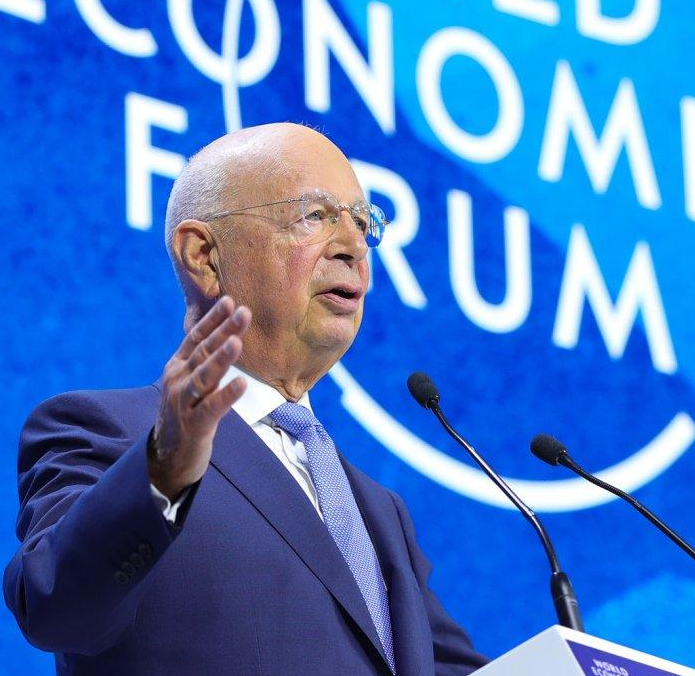
WORLD ECONOMIC FORUM (WEF) COMPANIES 2026
By AI Chat - Human Synthesis-04 September 2026
I would classify the 125 organizations from the list we were discussing by their principal economic function, rather than simply by the industry labels used by the WEF. That gives a much clearer picture of where the concentration of influence lies.
One caveat first: the WEF's current material describes its Strategic Partners as leading companies and organizations, but the directory is not a pure list of 125 conventional corporations—there are also foundations, sovereign/investment institutions and public-sector organizations.
1. Banking, finance & investment — about 25
This is arguably the most important concentration.
Major banks / financial institutions
- AIG
- Allianz
- Banco Bradesco
- Banco Santander
- Bank of America
- BNY
- Barclays
- BlackRock
- Citi
- Deutsche Bank
- Goldman Sachs
- HSBC
- ING Group
- Itaú Unibanco
- JPMorganChase
- Morgan Stanley
- MUFG Bank
- Standard Chartered
- UBS
- Wells Fargo
- Zurich Insurance Group
Investment / private capital
- Bridgewater Associates
- CD&R
- KKR
- Lazard
- Mubadala Investment Company
- Qatar Investment Authority
Why this matters: these organizations collectively operate across banking, asset management, insurance, private equity, sovereign wealth and capital markets. The WEF itself has a Centre for Financial and Monetary Systems, and financial-market infrastructure is explicitly part of its agenda.
2. Technology, AI & digital infrastructure — about 20
- Accenture
- Capgemini
- Cisco
- Cloudflare
- Cognizant
- Dell Technologies
- HCLTech
- Hewlett Packard Enterprise
- HP
- IBM
- Infosys
- Microsoft
- Meta
- Palantir Technologies
- Qualcomm
- Salesforce
- SAP
- Sony Group
- Wipro
This is an exceptionally powerful group because it covers cloud computing, AI, enterprise software, cybersecurity, communications infrastructure, semiconductors and data analytics.
The WEF's 2026 agenda puts considerable emphasis on AI and "agentic AI"; WEF material says AI agents could become major drivers of productivity and explicitly discusses responsible deployment and governance.
Particularly significant
Microsoft + Google + Meta + IBM + Salesforce + SAP + Palantir
Together these companies represent enormous capabilities in:
- artificial intelligence
- cloud infrastructure
- data
- enterprise systems
- digital identity/communications
- analytics
- automation
That makes the technology sector one of the two most strategically important groups in the WEF network.
3. Energy, oil, gas & commodities — about 12
- Aker
- African Rainbow Minerals
- Aramco
- Mercuria
- OCP Group
- SABIC
- SOCAR
- Trafigura
- Yara International
- Mitsubishi
- Mitsubishi Heavy Industries
- Hanwha Group
This group is particularly interesting because it spans oil, gas, mining, chemicals, fertilizer, commodities trading and industrial energy systems.
There is also a substantial connection to the WEF's energy-transition programme. WEF publications explicitly bring together business and government around energy transition, critical minerals, industrial decarbonization and related investment.
4. Pharmaceuticals, healthcare & biotechnology — about 8
- AstraZeneca
- Kaiser Permanente
- Novartis
- Novo Nordisk Foundation
- Pfizer
- Royal Philips
- Sanofi
- Takeda Pharmaceutical
These organizations give the network considerable influence over:
medicine → healthcare systems → pharmaceuticals → medical technology → health policy
The presence of both pharmaceutical giants and a major healthcare provider is significant because WEF discussions increasingly treat healthcare as an economic, technological and geopolitical issue rather than merely a medical one.
5. Industrial manufacturing, engineering & infrastructure — about 15
- ABB
- ArcelorMittal
- Dow
- Hitachi
- Honeywell
- Siemens
- Schneider Electric
- Volkswagen Group
- Volvo Group
- Tata Consultancy Services
- Bajaj Group
- Mahindra Group
- Reliance Industries
- Hanwha Group
- Gulfstream Aerospace
These companies cover:
steel → machinery → electricity → chemicals → transportation → automobiles → aerospace → industrial automation.
This sector is particularly important to the WEF's concept of the Fourth Industrial Revolution, because it connects physical infrastructure with digital systems and AI.
6. Consumer goods, food & beverage — about 8
- Amazon
- Coca-Cola
- Nestlé
- PepsiCo
- Unilever Netherlands
- Walmart
- Majid Al Futtaim
- Reliance Industries
These companies collectively touch the everyday lives of billions of consumers.
Particularly notable are:
Amazon + Walmart + Nestlé + Coca-Cola + PepsiCo + Unilever
They cover enormous portions of global:
- retail
- food
- beverages
- household products
- logistics
- e-commerce
7. Consulting, accounting, professional services & management — about 12
- Accenture
- AlixPartners
- Bain & Company
- Boston Consulting Group
- Deloitte
- EY
- Kearney
- KPMG
- McKinsey & Company
- ManpowerGroup
- Marsh
- PwC
This is a very consequential group.
Why?
They don't necessarily manufacture products or control banks. Instead, they advise the organizations that do.
The presence of:
McKinsey + BCG + Bain + Deloitte + EY + KPMG + PwC + Accenture
means that a substantial portion of the world's largest corporations and governments can be connected to the same professional-consulting ecosystem.
KPMG, for example, is deeply involved in WEF discussions on AI, cybersecurity, workforce transformation and economic policy.
8. Telecommunications, media & communications — about 5
- e&
- Verizon
- Sony Group
- Publicis Groupe
- TikTok
This is smaller numerically but disproportionately important because communications companies influence how information reaches populations.
TikTok and Verizon are particularly different types of influence:
Verizon → communications infrastructure
TikTok → mass information/social-media distribution
Publicis operates extensively in advertising and communications.
9. Logistics, transportation & global supply chains — about 7
- DHL Group
- DP World
- FedEx
- Uber Technologies
- Volkswagen Group
- Volvo Group
- Amazon
These organizations sit inside the physical infrastructure of globalization:
ships → ports → warehouses → trucks → aircraft → automobiles → delivery networks
The WEF has made supply-chain resilience and geopolitical trade a major theme. Its 2026 analysis specifically discusses companies restructuring supply chains because of geopolitical fragmentation.
10. Foundations, sovereign institutions & civil-society organizations
These are not ordinary corporations, and I would keep them separate from the commercial companies.
- Gates Foundation
- Open Society Foundations
- Qatar Investment Authority
- Mubadala Investment Company
- Bahrain Economic Development Board
- Novo Nordisk Foundation
This distinction is important.
For example, a sovereign wealth fund such as QIA or Mubadala has a very different function from Coca-Cola or Siemens.
They represent state-linked or philanthropic capital, rather than ordinary corporate commercial interests.
The bigger picture
If we reduce the entire network to its major power centres, something interesting emerges:
| Sector | Strategic importance |
|---|---|
| 🏦 Finance & investment | Very high |
| 💻 Technology & AI | Very high |
| ⚡ Energy & commodities | Very high |
| 🏭 Industry & infrastructure | High |
| 💊 Healthcare & pharmaceuticals | High |
| 📊 Consulting | Very high |
| 🚢 Logistics & supply chains | High |
| 🛒 Consumer/food | High |
| 📡 Communications/media | High |
| 🌐 Foundations/sovereign capital | Very high |
The most striking feature is not the number of companies.
It is the interconnection.
Consider this simplified chain:
Capital
→ BlackRock / JPMorgan / Goldman Sachs / UBS
Management
→ McKinsey / BCG / Bain / Deloitte / PwC
Technology
→ Microsoft / Google / IBM / Meta / Amazon
Energy
→ Aramco / SOCAR / Trafigura / Mercuria
Industry
→ Siemens / ABB / Schneider / Hitachi
Healthcare
→ Pfizer / Novartis / AstraZeneca / Sanofi
Consumer economy
→ Walmart / Nestlé / Coca-Cola / Unilever
Information
→ TikTok / Verizon / Publicis
Global logistics
→ DHL / FedEx / DP World / Amazon
That is why I would not interpret the WEF Strategic Partners simply as a list of companies that pay to attend Davos. The more interesting question is how these organizations participate in the WEF's various initiatives and whether common policy frameworks emerge across them.
And the WEF itself explicitly describes its role as bringing business, government and other stakeholders together around issues including AI, financial systems, energy transition, trade, cybersecurity and global risks.
One important correction to my previous answer
I would also not treat the 125-name list I gave you as definitively "the 2026 list of 125 Strategic Partners." The WEF's own current material needs to be used as the authoritative source for the membership status, and the directory appears to mix different types of organizations. So the sector analysis above is best understood as an analysis of the organizations in the list we were discussing, not as a claim that all 125 have identical WEF membership status.
WORLD ECONOMIC FORUM MAIN PAGE