NORWAY NEVER GAVE AWAY SHETLAND
By Shetland News-Magnus Hutchison-Whalsay-Human Synthesis-09 August 2026
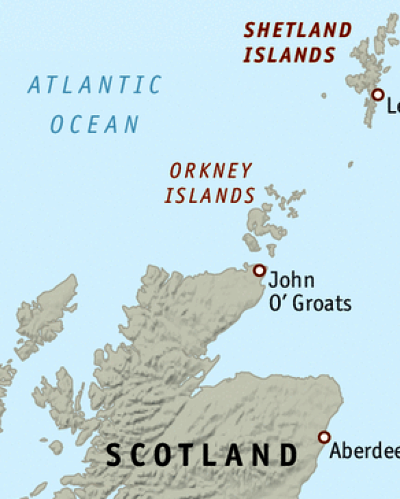
We often hear that Norway gave Shetland away. But it is not true. The truth is there in black and white, buried in legal documents. In 1468 and 1469, the islands of Orkney and Shetland were pawned by King Christian I of Denmark-Norway to King James III of Scotland, as a temporary guarantee for a dowry payment.

This was a pledge, not a sale or gift. The original charters (dated 28 May 1469, from Havn/Copenhagen) explicitly state that the islands were pledged “under assured security” and were to remain under Scottish control until the dowry was repaid — nothing more.“We have granted, pledged and mortgaged, and under assured security and pledge do grant, mortgage and pledge all and sundry our lands of the islands of Shetland…” (Christian I’s Pawning Documents, Shetland Museum)
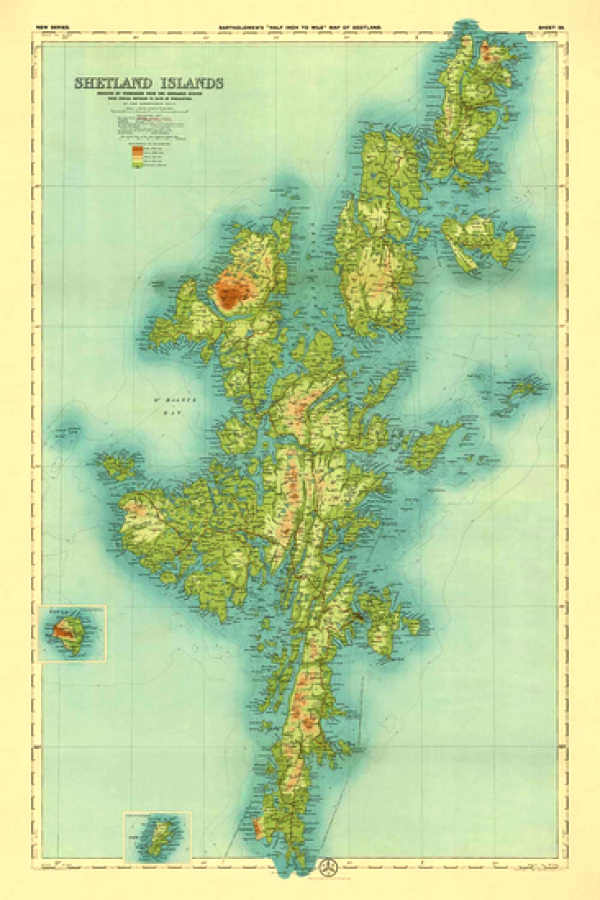
What is often missed is this: Christian said I was not pawning the Shetlanders’ land at all, nor even his own, because under Norwegian law no monarch could give away the lands of the realm. What he pawned were the royal rights tied to the islands — the revenues, taxes, and authority. Yet Scotland went on to treat that as if Shetland itself had been sold, even though such a thing was forbidden by Norwegian law and beyond the Crown’s power.But the whole story collapses for an even deeper reason.How could Norway have given us away when Norway wasn’t even consulted? At the time, Denmark and Norway were united under Christian I, but Shetland belonged to the Kingdom of Norway, not Denmark.
The 1450 Treaty of Bergen confirmed that Norway remained a separate kingdom within the union, with its own laws and its own Council of the Realm.Under Norwegian constitutional law, set out in the 1449–50 electoral charter, the king was constitutionally bound to seek the consent of the Council of the Realm before taking any action affecting Norway’s territories. That consent was never given. The pawning went ahead without Norway’s approval — a clear breach of its constitution, and entirely illegitimate under the laws in force at the time.
Christian said I never relinquished Norway’s sovereign right to reclaim the islands. His successors attempted to redeem the dowry pledge multiple times, in 1549, 1550, 1558, 1585, 1589, 1640 and 1660, but each time the Scots effectively refused redemption. Scotland’s takeover was not lawful. It was opportunistic and exploitative. And it wasn’t just Denmark–Norway that understood this. Scotland knew it too. In 1514, the Duke of Albany, acting as Regent of Scotland, offered to return both Shetland and Orkney to Denmark in exchange for military support.
A decade later, in 1524, Scotland’s government — during James V’s minority — proposed returning Orkney for financial aid. These were not symbolic gestures. They were serious political negotiations, and they prove something devastating to the Scottish claim: even Scotland itself acknowledged that its possession of the isles was not absolute and could be undone.And who suffered the consequences? We did.
Under Norway, we had udal law, an ancient legal system tied to land, inheritance, and everyday life in Shetland. We had Norse customs, Norse names, and our own Norse language — Norn. It should never have been dismantled. But under Scottish rule, that’s exactly what happened.Our legal system was pushed aside and later abolished. Norn was lost. Our Norse names were discouraged and altered. Parents could not give their children Norse or so-called heathen names. Our old patronymic naming system was gradually replaced as fixed surnames took over.
And that is before even getting into the severe oppression Shetlanders suffered, which would need a letter of its own.“The islands continued to follow Norse Law and were connected to the Law Book of Magnus the Lawmender until 1611 when an act of parliament abolished its use and ordered the islands to follow Scottish law.” (“The Norse influence on Shetland culture” on Shetland.org)
And the consequences didn’t stop in the past. The illegitimate way Shetland was absorbed into Scotland laid the foundation for what we still face today. The past defines the present. The erosion of our sovereignty began in 1469, and its impact still reaches into every corner of our lives today.Perhaps our future lies in our past?
Shetlanders deserve to know the truth — for ourselves, for those who lost everything, and for those who will come after us. They deserve to grow up knowing our real history, not a version that suits Scotland’s claim to our isles.The original documents still exist. The facts are still visible. We were not given away. We were taken.
Magnus Hutchison-Whalsay
NORWAYS CONSTITUTIONAL RIGHTS TO BOTH THE SHETLAND AND ORKNEY ISLANDS
Let us take it to the actual constitutional/legal question and separate what can be established from what is an argument.
1. First, an important correction
The sentence you originally quoted—
“Under Norwegian constitutional law, set out in the 1449–50 electoral charter, the king was constitutionally bound to seek the consent of the Council of the Realm before taking any action affecting Norway’s territories.”
—is too categorical if attributed solely to the 1449 charter.
The evidence does establish that Christian I accepted a Norwegian electoral charter in 1449 and that it imposed important restrictions on royal government. One contemporary-historical summary of the charter says that Christian promised that Norway would retain its laws, liberties and privileges and that “no important matter” could be decided without the advice of the Council.
But I have not found the original charter saying literally that every action affecting Norwegian territory required prior Council consent.
That distinction is important if we want to build a legally credible case.
CONCLUSION
that is the important constitutional point, with one qualification.
Christian I was not pawning something that was simply his personal property. He was acting as King of Norway and pledging Norwegian royal rights in Norwegian territory.
So the analogy should really be:
Christian I pawned Norwegian Crown property/rights to satisfy a debt arising from his daughter's marriage.
That is very different from:
“Christian I sold his own property.”
And it brings us directly back to your original question about the Norwegian Council of the Realm.
The crucial legal issue is therefore:
Could the King of Norway constitutionally pledge Norwegian Crown territory without the proper authority of the Norwegian kingdom and its Council?
The 1469 document actually says that Christian acted with the “consent and assent” of Norwegian prelates, magnates and nobles. So we cannot simply say he acted entirely alone. But whether that amounted to the formal constitutional consent of the Riksråd is a separate question—and I think that is the point worth investigating further.
If the Riksråd did not formally authorise the pledge, then we have a substantially stronger constitutional argument that Christian could bind himself and perhaps the Crown, but could not permanently alienate Norway's territorial rights.
And that makes the subsequent Scottish conversion of a redeemable Norwegian pledge into permanent sovereignty the really fascinating part of the story.