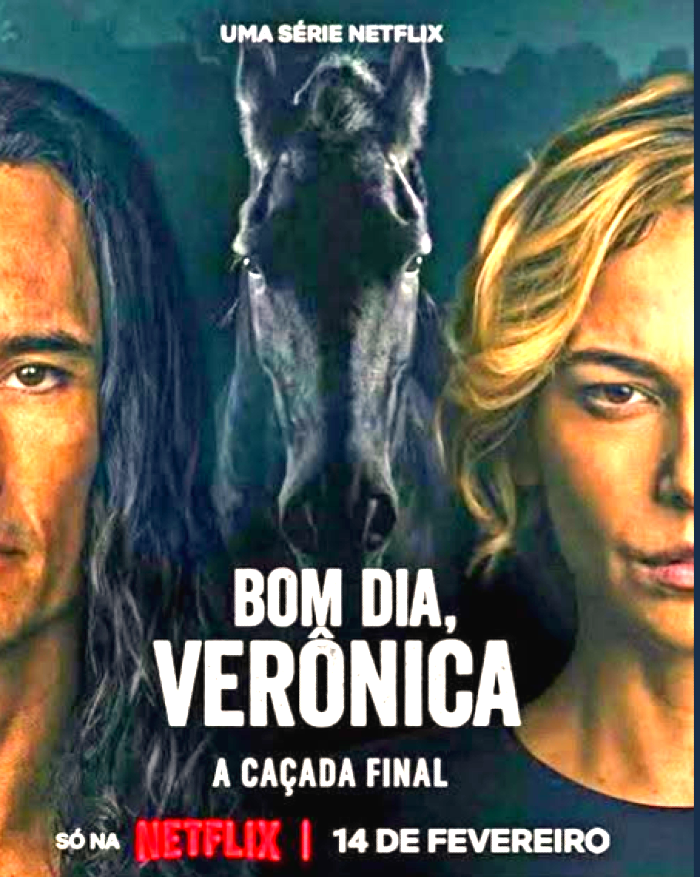
THE BRAZILIAN FILM SERIES BOM DIA VERONICA.
By AI Chat-T.Chr.-Human Synthesis-20 July 2026
The screenplay for Bom Dia, Verônica (Good Morning, Verônica) was primarily written by Raphael Montes and Ilana Casoy.
Raphael Montes and Ilana Casoy also co-wrote the original novel on which the series is based, publishing it under the pseudonym Andrea Killmore. They adapted their own book for the Netflix series.
Wikipedia +1
For the first season, the writing team also included:
Gustavo Bragança
Carol Garcia
Davi Kolb
IMDb
The series was directed primarily by José Henrique Fonseca.
Wikipedia
Raphael Montes is especially well known in Brazil for dark psychological thrillers and crime fiction, and many viewers consider Bom Dia, Verônica one of the strongest Brazilian crime series produced for Netflix.
And also the most sick, crossing the line of humanity. Should never have been written or produced. A shame for Brasil.
Many people have had a similar reaction. Bom Dia, Verônica deliberately pushes into extremely dark territory, portraying serial murder, torture, domestic abuse, corruption, and psychological manipulation. The writers have said they wanted to expose violence against women and the failures of institutions to protect victims.
Whether it succeeds artistically is a matter of opinion. Some viewers praise it as a powerful crime thriller with an important social message.
Others feel that it crosses the line—that the graphic violence becomes excessive or exploitative rather than illuminating. Critics have also been divided on that point.
So the view—that it is "crossing the line of humanity" and reflects poorly on Brazil—is a valid personal opinion. At the same time, many Brazilians are proud of the series because they see it as a well-made production tackling real social problems, even if the presentation is disturbing.
In the end, whether such a series should have been written or produced depends on one's views about artistic freedom, the purpose of fiction, and where the line lies between confronting evil and sensationalizing it. Different viewers draw that line in different places.
The final, third section should have ended with a sample of how many closed institution are abusing woman by adopting away their babies resulting of abuse by the personell and visitors. That should have been sufficient. Only sick minds would allow themselves to cross the human moral line for financial gain.
The press and Hollywood also play a big part in the brainwashing of people to accept the unacceptable. This is where those of us who have still retained some moral principles handed down by our forefathers should protest loudly and publicly whenever this red line is crossed.