OCCUPIED NORWAY WWII

By FB-Human Synthesis-19 July 2026
When Germany occupied Norway during World War II, escaping the country seemed almost impossible. The borders were heavily guarded, the seas were dangerous, and anyone caught helping the resistance faced imprisonment or execution. Yet, a group of ordinary fishermen and brave sailors refused to give up
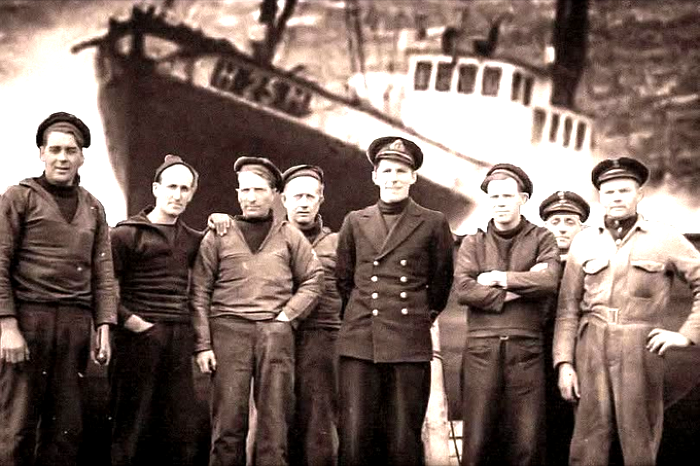
Their mission became known as the "Shetland Bus."
Using small wooden fishing boats, Norwegian crews secretly crossed the violent North Sea between occupied Norway and the Shetland Islands in Scotland. The journey was one of the most dangerous in Europe. Giant waves, freezing temperatures, German patrol ships, aircraft, and hidden sea mines threatened every voyage.
These boats carried far more than cargo. They transported resistance fighters, rescued civilians, delivered intelligence to the Allies, and smuggled weapons, radios, medicine, and supplies back into occupied Norway. Every successful crossing strengthened the Norwegian resistance and gave hope to families living under occupation.
The crews often sailed without lights during storms to avoid detection. Many never returned home, sacrificing their lives so others could remain free. Their courage created a vital connection between Norway and the United Kingdom, proving that even a small fishing boat could become a powerful weapon against tyranny.
Today, the Shetland Bus stands as one of the greatest examples of cooperation between Norway and Britain during World War II. It reminds us that heroes are not always found in tanks or battleships—sometimes they are found behind the wheel of a weather-beaten fishing boat, risking everything for strangers.
Their legacy lives on as a symbol of bravery, friendship, and the unbreakable spirit of people who refused to surrender.

OVERVIEW OF RESISTANCE MOVEMENT IN NORWAY DURING WWII
The story of Norway being invaded, holding out for 2 months and occupation, is epic and immensely sad.
Fleischer turned the tide of the war in Norway, but the capitulation of France stopped any more progress. Colonel Erikson sank Blücher, saving the king and government. The heroes of Telemark, made sure Germany would never achieve production of a nuclear bomb. The escape of Baalsrud is an incredible story of survival. Max Manus war effort saved the western front.
As a Norwegian it is important to remember General Fleischer, who after his Narvik operations and subsequently driving the Nazi's back in the north. He put the Nazis on the run and on the retreat. He was turning the tide of the war here. Unfortunately, Nazi Germany invaded France on May 10th. By June 25th, France had capitulated. And that spelled the doom for the cooperation in Norway.
For his courageous actions, he was dumped in Canada and left as a liaison there. Which usually is left to the lieutenant rank, and an immensely slap to the face. He felt an enormous defeat and outing from any military action for the rest of the war. Feeling forgotten and shit on by Norway's government at the time, he took his own life.
He received Norway's highest reward, in recognition for his action in the north, the warcross with two swords. He would never receive it. It arrived the day after his suicide.
The Battle for Narvik is being made into a movie Kampen om Narvik. No subtitles for this.
Or the immense bravery of Colonel Birger Erikson in the face of Nazi invasion force and the subsequent sinking of Blücher.
Or our heroes from the heavy water sabotage, see Miniseries: The Heavy Water War. Dropped in the wrong location, during a winter storm. Deciding to not get all of their supplies. Subsequent shooting and killing of the British saboteurs, having to flee deeper into the mountains. Eating nothing but moss for 2 months and becoming malnourished, and still infiltrating and sabotaging the process plant successfully and evading capture.
And the story of the The 12th Man, Jan Baalsrud who, after being discovered due to treason, managed to evade capture by swimming for his life in the coldest winter and loosing his shoes a long the way. And somehow managing to get to Sweden
And Max Manus, theMan of War who "Ville oss et land" ('We want ourselves a country' illegal newspaper) and sabotaging the Nazis left and right and evaded time and again capture. Culminating in the sinking of Donau, making sure that Nazi Germany did not have fresh troops to send to the western front.
These are some amazing and sad stories, especially Manus and Fleischer. There's a scene in the movie Hamilton (1998) where agent Hamilton is shooting his gun, at home, in his house and almost shooting his wife. This scene is liftet from Manus life after the war. He struggled with guilt and PTSD for the rest of his life.
The story of Jan Baalsrud is also a story about great courage from civilians. They risked death and torture to help him not only with clothes, food and shelter, but arranging transport and actually get him past german lines, away from his pursuers and into Sweden, where he stayed till after the war.
Jan Baalsrud was also quite a badass, swimming in freezing water, running barefoot away from the nazis while missing a shoe in the snow. He lost most of his toes to gangrene during his escape, and had to learn to walk again in Sweden, as you might not know, but toes are crucial for your balance.
This war story is much more than just a single guy managing to elude capture and escape. It is about resistance, humanity and bravery, from ordinary people, and resistance fighters.
THE FORGOTTEN NORWEGIAN WAR SAILORS.