RURIK DYNASTI IN RUSSIA FOR 700 YEARS.

By AI Chat-T.Chr.- Human Synthesis - 03 July 2026
RURIK DYNASTI IN RUSSIA FOR 700 YEARS
Rurik, a Viking (Norse) leader traditionally credited with founding the Rurik dynasty.Rurik is traditionally said to have begun ruling in 862 AD, when he established himself at Novgorod. After his death, his kinsman Oleg of Novgorod captured Kyiv in 882 AD, making it the capital of the state known as Kyivan Rus'.
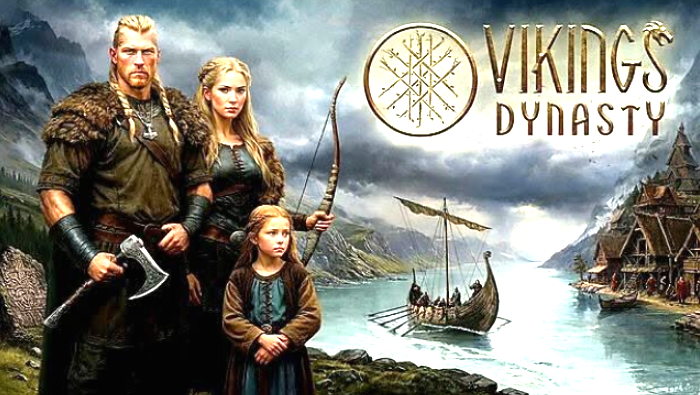
The rulers of the Rurik dynasty—who were of Viking (Varangian) origin but gradually adopted the local East Slavic language and culture—governed much of what is now: Ukraine, Belarus and Western Russia for roughly 700 years (from the 9th century until the late 16th century.) Many modern historians regard the early rulers of Kyivan Rus' as Scandinavian adventurers who established a dynasty that became thoroughly Slavic within generations. The Vikings came to rule Kyiv by traveling the great rivers to the Black Sea, one of the most remarkable stories of the Viking Age.
THE VIKING AGE EXPLAINED
The popular image of Vikings is dominated by raiders because monasteries and kingdoms that were attacked left many written accounts. However, most Scandinavians during the Viking Age (roughly 793–1066 AD) were not raiders.They were primarily:Farmers and livestock keepers,Fishermen,Craftsmen (blacksmiths, shipbuilders, woodworkers, weavers)Merchants trading across Europe, the Baltic, and beyond.
The people we call "Vikings" were actually only those who went on víking—an Old Norse term referring to overseas expeditions, which could involve raiding, trading, or exploration. Most people stayed in their home communities. Archaeological discoveries show that Viking-Age Scandinavia had a sophisticated culture. They built remarkable longships, produced fine metalwork and jewelry, had extensive trade networks reaching as far as the Constantinople and the Baghdad, and had legal assemblies called TING, where disputes were settled and laws were made. Many communities also had a high degree of local self-government.
The Norse were also explorers and settlers. They established communities in places such as Iceland, Greenland, parts of Ireland, England, France (especially Normandy), and reached the U.S.A. centuries before Columbus. So while Viking raids were often brutal, they involved only a fraction of the Scandinavian population. The majority lived ordinary lives in farming villages and trading towns and contributed to a rich and influential culture.
By FB - Human Synthesis-17 July 2026 (Confirming above)
One group of Norsemen turned their backs on the western raids entirely and rowed the other way, into a wilderness of rivers and forests, and ended up shaping the map of the East.
The Rus followed the river roads deep into what is now Russia, Ukraine and Belarus, founding trading towns and eventually powerful centers like Novgorod and Kiev. The old chronicles credit a Norse leader named Rurik with founding the dynasty that would rule the region for centuries.
Whether every detail is legend or history, the Norse fingerprint on the birth of the eastern Slavic states is real, right down to the name.
While their cousins were storming monasteries in the west, the Rus were quietly building an empire of trade.
Raider or river-merchant, which Viking legacy is more impressive to you?
#rus #rurik #vikings #norse #history