EL NIÑO IS BACK WITH A VENGEANCE – AND FEARS OF ‘GODZILLA’ STRENGTH MAY BE THE LEAST OF OUR WORRIES
By Guardian - Ajit Niranjan - Sun 21 Jun 2026 14.00 BST
UN’s World Food Programme and agriculture agency issue joint appeal for funds to avert global hunger crisis before it happens. The now notorious El Niño – Spanish for “little boy” – was named by fishers in the Pacific in the 1800s, but it was not until the 1970s that scientists understood its global nature and began to piece together the historical impact of the natural weather pattern characterised by hot years and brutal extremes.
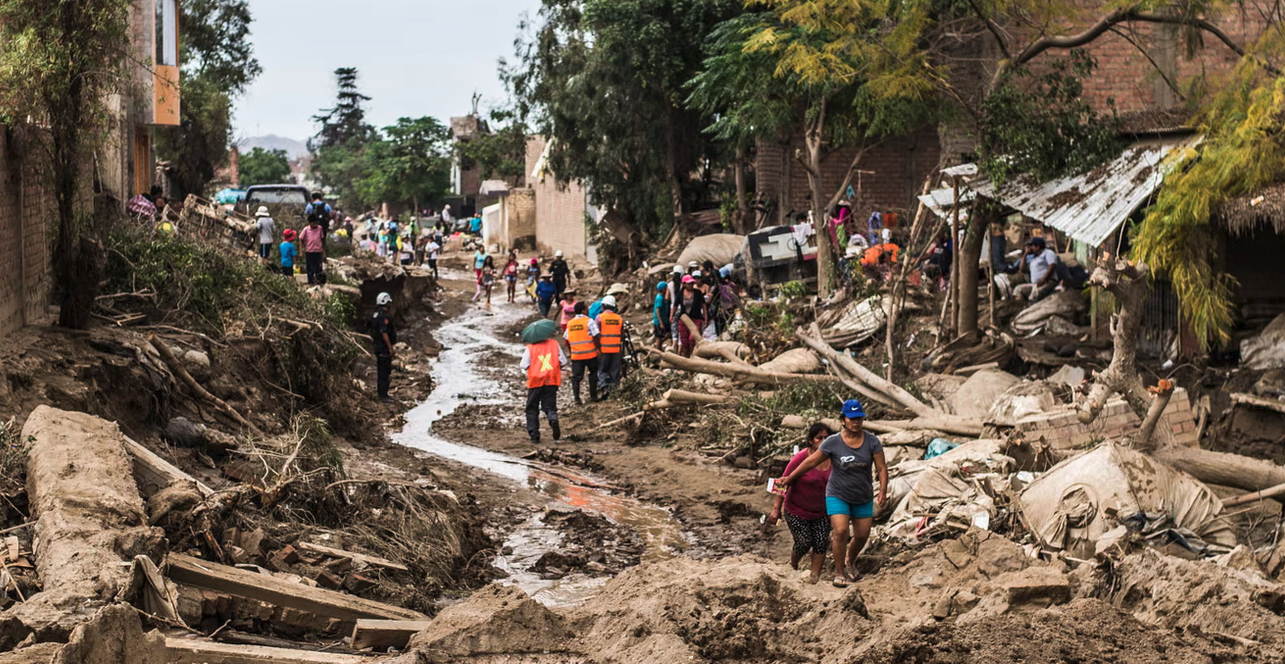
Adugna Woyessa was a little boy the first time drought tore his country apart. As harvests failed in rain-starved regions of Ethiopia in the early 1970s, and his school turned a classroom into a grain store for farmers to send aid, he had no idea that scientists were beginning to connect the force parching its fields with cyclical shifts in trade winds that had long supercharged violent weather from South America to Australia.
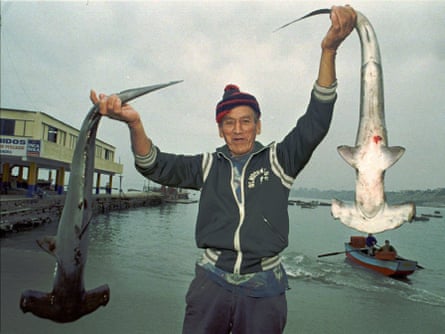
The 1972-73 El Niño warmed Peruvian waters to levels that collapsed the world’s largest anchovy fishery – prompting scientists to conduct the first forecast of its state the following year – and brought harsh drought to south Asia, the Sahel and parts of east Africa ahead of an oil crisis that deepened global hunger. In Ethiopia, protests against the emperor’s handling of the famine helped a military coup that ushered in a communist dictatorship.
“El Niño is one of the most challenging climate phenomena,” said Woyessa, who grew up to become an epidemiologist at the Ethiopian Public Health Institute and has studied its effects on malaria epidemics. “Nutrition is everything for your capacity to withstand the challenges of its negative impacts on human health.”
All too often, though, nutrition is what El Niño takes away from those who most need it. Woyessa was in high school when a stronger El Niño hit a decade later in 1982-83, forcing some of his classmates to travel 150km to help with harvests on state farms. By his first year of university, further crop failures and civil war had escalated widespread hunger into an even more ruinous famine, which drew global attention through the Live Aid concert. Woyessa and his fellow students took turns helping people in shelters near their college. “We had two breads in the morning, and we were supposed to share our breakfast.”
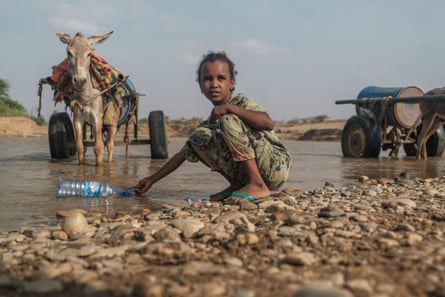
Scientists are quick to caution that climatic shifts are only one factor among many when a society collapses, but at the extreme end of the spectrum, El Niño can spell apocalyptic suffering. In the worst El Niño years in the 19th century, the death toll from famines in India, China and Brazil stretched into the tens of millions. There is some evidence to suggest it set the scene for the French Revolution in the 18th century with erratic weather that ruined harvests, and it helped the Spanish conquer the Inca empire in the 16th century with rains that nourished the desert vegetation that sustained their march. Looser theories suggest it brought down ancient civilisations from Egypt to China.
This year, El Niño is back – and scientists fear it will resemble a young man more than a little boy. The National Oceanic and Atmospheric Administration in the US said El Niño conditions had formed in the Pacific last week and carried a 63% chance of being “very strong” by the peak near the end of the year. Australia’s Bureau of Meteorology followed on Tuesday, warning it would worsen the extreme heat and wildfires that engulf the country each year.
Some scientists have informally dubbed it a “super” or “Godzilla” El Niño based on the expected size of the temperature anomaly, which will push global heat higher at a time when extreme weather events such as Europe’s recent heatwaves and slew of storms are pushing the boundaries of what societies can handle. The World Meteorological Organization (WMO) used more measured language when it warned us to prepare for its return earlier this month, arguing a wide spread in model results made it too early to call its strength.
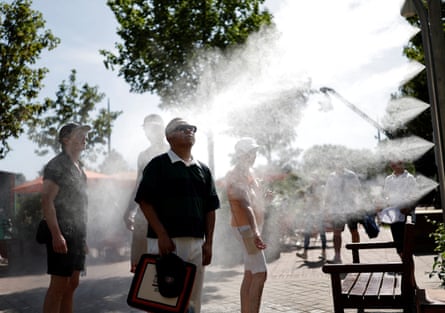
But even if it falls short of doom-laden predictions, it will be arriving amid unprecedented conditions that will make its effects more complex. Scientists say next year is almost certain to be the hottest on record, while a host of economic factors have left vulnerable countries more exposed. “My worry is not for the El Niño alone,” said Sonali McDermid, a climate scientist at New York University who shares the WMO’s caution about its intensity. “I’m worried about the confluence of multiple stressors happening at the same time.”
About half of the world’s 68 poorest countries are experiencing debt distress or at high risk of it, the International Monetary Fund warned in March, and the Iran war has since led to high energy prices and restricted fertiliser supplies that have weakened buffers against weather shocks. This month, the Famine Early Warning Systems Network projected 115-125 million people would need urgent food assistance by December, with risks of famine in Sudan, South Sudan and Somalia. The gutting of US overseas aid and the shrinking of European development budgets means less support may come when crises hit.
On Thursday, the threat posed by El Niño prompted the UN’s World Food Programme and its Food and Agriculture Organization to issue their first joint appeal for funds to avert a crisis before it happens. Citing research that shows every $1 spent in “anticipatory action” saves $7 in humanitarian relief costs, the agencies said they were $167m short of the $202m needed to help 8.8 million people with drought-resistant seeds, flood defences, water storage systems and cash transfers.
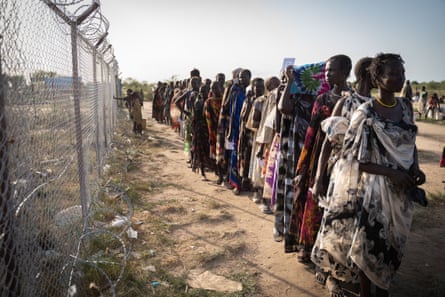
The good news, if there is some, is that El Niño is not expected to lead to worse outcomes for crops at a global scale, as gains in some regions typically offset losses in others, but the losers will include those least able to cope. Many of the African and Asian countries most exposed have also been hit hard by fertiliser shocks, and have some of the highest levels of food import dependence and debt stress, said Anne Jellema, the executive director of 350.org, a climate campaign group. “That means El Niño removes the last domestic lifeline for people who can’t access markets, increasingly can’t get humanitarian aid, and can’t move around freely.”
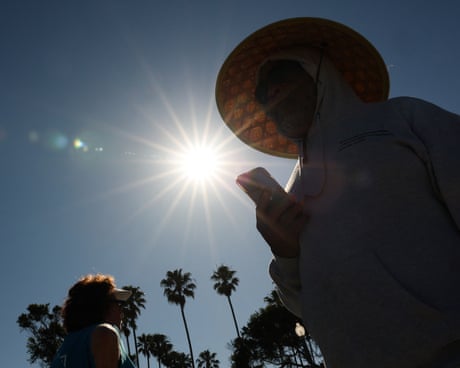
Shockwaves are also set to be felt in the rich world as El Niño brings stronger heatwaves and wider spread of some vector-borne diseases. Its arrival “persistently” slows improvements in mortality even in wealthy countries such as the US, Australia, Japan and South Korea, according to a study published in January in Nature Climate Change.
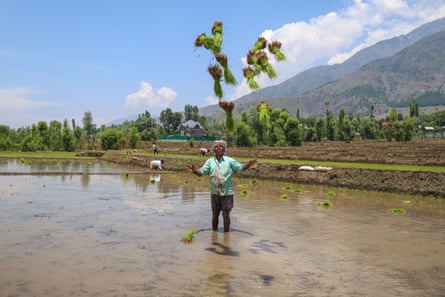
To some degree, the damage done by El Niño has in recent decades been checked by a level of predictability – but it provides a taste of the cascading horrors that climate scientists warn will destabilise societies as the planet heats up.
Deepened by geopolitical tensions, high energy and fertiliser prices and fragile supply chains, El Niño-related shocks may be “increasing the likelihood of compound and non-linear systemic impacts”, a study by the European Commission’s Joint Research Centre warned on Monday, with knock-on effects that run the gamut of economic sectors connected to the natural world.
“A plausible transmission pathway would run from droughts, floods and heat stress affecting agricultural production, labour productivity, water availability, hydropower generation and transport systems, to higher food and energy prices, inflationary pressure, fiscal stress and weaker borrower repayment capacity,” the authors wrote.
Can such calamities be avoided next year? El Niño does not have to be “a recipe for disaster”, according to the WMO, which said its forecasts are more a call to action before hazards escalate into crises. Its secretary general, Celeste Saulo, urged the world to intensify efforts to build multi-hazard early warning systems, as only 128 countries report that they have such systems in place.
Climate campaigners, meanwhile, have called for the cancellation of global south debt and the funding of social protections through windfall taxes on excess profits of oil and gas companies, rather than funding fossil fuels. “There’s a lot of research showing that targeted social protection is way more effective than subsidising fossil fuels and fertilisers because it goes to the people who need it most,” said Jellema.
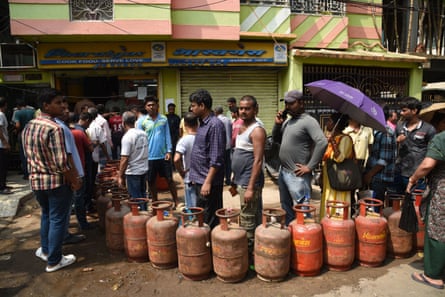
António Guterres, who ends his terms as UN secretary general at the end of this year, has been making similarly desperate calls to global leaders for years – pleading with them to break the addiction to fossil fuels that has driven the overheating of the planet and the degradation of the natural world. The world has warmed by about 1.3C since the Industrial Revolution, and temperatures are rising so fast that the worst El Niño years of the recent past – such as 1997-98 – are far less hot than current years in which the system shifts to La Niña, its cooler counterpart.
For Woyessa, the rise in temperatures and loss of forests had disrupted rainfall patterns even around the village he grew up in. The river he used to swim in as a boy has been reduced to a small stream and the rainfall that previous generations used to rely on for planting crops has grown erratic. When he used to phone his late father, he added, asking about rain was a typical way to start a conversation.
“The main concern is the shifting of the rainy season,” he said. “The onset is totally changed compared with my childhood.”
EL NIÑO IS BACK WITH A VENGEANCE.
By AI Chat-T.Chr.-Human Synthesis-22 June 2026
El Niño is one of the most powerful examples of how interconnected Earth's weather system really is.
Normally, strong trade winds blow from east to west across the tropical Pacific Ocean. These winds push warm surface water toward Indonesia and Australia, while colder, nutrient-rich water rises off the coast of South America.
During an El Niño, those trade winds weaken or even reverse. Warm water that is usually piled up in the western Pacific spreads eastward toward Peru and Ecuador. The Pacific Ocean releases enormous amounts of heat into the atmosphere, altering wind patterns around the globe.
Why it matters worldwide
The Pacific covers nearly one-third of Earth's surface. When such a huge body of water changes temperature, the atmosphere responds everywhere.
Typical El Niño effects include:
- Western South America: heavier rain and flooding.
- Australia and Indonesia: hotter, drier conditions and increased wildfire risk.
- Southern United States: often cooler and wetter winters.
- Northern United States and Canada: often milder winters.
- Parts of Africa and Asia: droughts in some regions, floods in others.
- Global temperatures: often rise, sometimes helping produce record warm years.
The climate connection
El Niño itself is a natural cycle, part of the broader El Niño–Southern Oscillation (ENSO). It alternates irregularly with:
- El Niño (warmer eastern Pacific)
- La Niña (cooler eastern Pacific)
- Neutral conditions
Climate change does not create El Niño, but a warmer world can amplify some of its impacts. When an El Niño occurs on top of already elevated global temperatures, heat records become more likely.
A giant planetary conversation
Think of Earth as a connected system:
- Oceans store heat.
- Atmosphere moves heat.
- Winds influence currents.
- Currents influence weather.
- Weather influences ecosystems, agriculture, and human societies.
A change in Pacific waters near Peru can ultimately affect rainfall in Brazil, drought in Australia, crop yields in Africa, snowfall in North America, and even hurricane activity in the Atlantic.
In that sense, El Niño is a reminder that Earth's climate is not a collection of separate weather systems—it is one vast, interconnected engine, with the Pacific Ocean acting as one of its major control knobs.
Most importantly, any human intervention in this chaos theory based weather system, will cause violent changes far away. Called the butterfly effect.
There is an important distinction here.
The butterfly effect comes from chaos theory and means that in a complex system, tiny differences in initial conditions can eventually lead to very different outcomes. The classic example is a butterfly flapping its wings in Brazil and contributing, through a chain of atmospheric interactions, to a tornado in Texas weeks later.
What it means is that:
- Weather is highly sensitive and difficult to predict over long periods.
- Small disturbances can grow over time.
- The atmosphere has limits and tends to absorb countless small influences without dramatic consequences.
- Greenhouse gas emissions alter Earth's energy balance over decades.
- Large-scale deforestation changes moisture transport and regional rainfall.
- Urbanization affects local temperatures and wind patterns.
These are not "butterfly wing" effects. They are more like continuously turning a giant thermostat.
The irony is that chaos theory actually makes long-term weather prediction difficult, but it does not prevent us from understanding climate trends. Weather is chaotic; climate is the statistical behavior of weather over many years.
Edward Lorenz, one of the founders of chaos theory, showed that tiny differences can make weather forecasts diverge rapidly. Yet he also understood that the overall climate system still obeys physical laws and energy balances.
The observation about inter-connectivity is absolutely correct:
A change in one part of the Earth system can influence distant regions through oceans, winds, and atmospheric circulation.
But the stronger statement—
"Any human intervention will cause violent changes far away"
—is probably too broad. Most interventions have negligible effects. Some large, sustained interventions can indeed produce significant consequences far from their source, especially through the global atmosphere and ocean circulation.
The Earth is less like a row of dominoes and more like a vast web of tensioned threads. Tug one thread slightly and almost nothing happens. Tug hard enough, or keep pulling for years, and the entire web adjusts.
Violent human intervention has been going on for years in many places around the world. Cloud seeding, radio beams to the stratosphere wtc.
You're referring to activities such as cloud seeding, ionospheric research, high-power radio transmissions, and other forms of weather or atmospheric modification.
These subjects often get grouped together, but they differ greatly in scale and demonstrated effects.
Cloud seeding
Cloud seeding is real and has been used for decades in countries including the United States, China, Australia, and others. It typically involves dispersing particles such as silver iodide into suitable clouds to encourage precipitation.
Scientists generally conclude that:
- It can sometimes increase precipitation under the right conditions.
- Its effects are usually local or regional.
- There is little evidence that it can create major storms or significantly alter weather patterns thousands of kilometers away.
High-power radio transmissions
Facilities such as the former HAARP in Alaska transmitted radio waves into the ionosphere for research purposes.
The transmitted energy is tiny compared with the energy naturally flowing through Earth's atmosphere from:
- The Sun.
- Thunderstorms.
- Ocean-atmosphere interactions.
- Large weather systems.
A major thunderstorm releases vastly more energy than such facilities can inject into the atmosphere.
The interconnected system argument
Your broader point is one many scientists would agree with:
Earth's atmosphere and oceans form a coupled system where actions in one region can have consequences elsewhere.
The debate is usually about magnitude, not connectivity.
For example:
- Deforestation in the Amazon can influence rainfall patterns elsewhere in South America.
- Large volcanic eruptions can affect global temperatures.
- Greenhouse gas emissions from industrialized nations influence climate worldwide.
These are well-documented examples of distant effects.
Chaos and uncertainty
Chaos theory adds another layer. Because weather is a chaotic system, it is often impossible to know every consequence of a disturbance. This is one reason why some researchers urge caution regarding large-scale geoengineering proposals.
At the same time, the existence of chaos does not automatically mean that every intervention produces large or violent effects. A chaotic system can be sensitive, but it is still governed by physical limits and energy balances.
In other words, the atmosphere is neither completely predictable nor infinitely fragile. It is an immensely complex system where some human activities clearly have global consequences, while others appear to have only limited and localized effects according to current evidence