THE VIKING AGE THAT BEGAN WITH A PROBLEM

By FB-AI Chat-T.Chr-Human Synthesis-13 June 2026
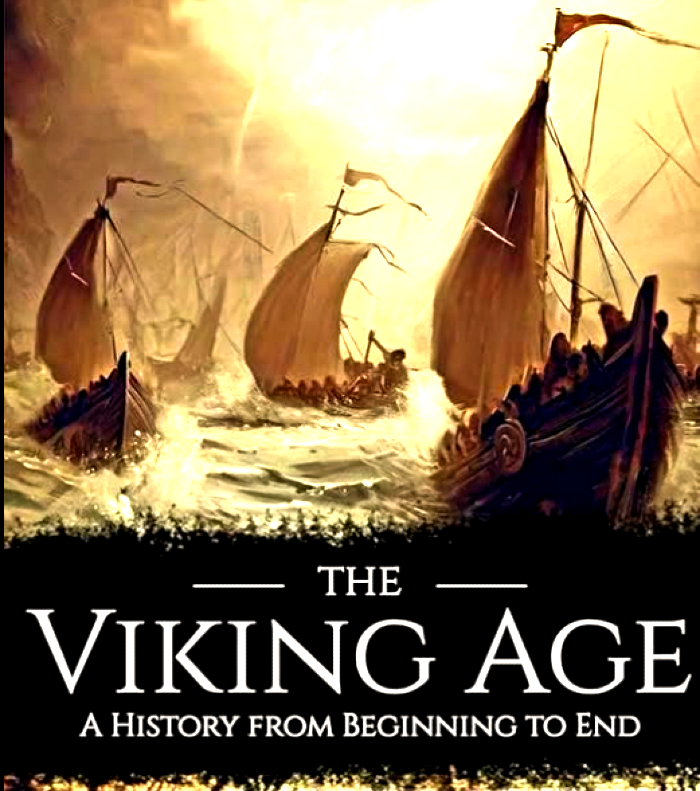
History tells us that the Viking Age began when a dark ship appeared on the horizon and descended upon a lonely monastery. Bells rang, monks fled, and flames consumed sacred walls. To Europe, it seemed that a new terror had emerged: fierce heathens from the north who lived only for violence and destruction. But history rarely begins where people think it does.
The Viking Age did not truly begin with a raid. It began in the smoky darkness of longhouses, around winter fires, in the ambitions of leaders and the worries of ordinary families. It began with a problem.
In the eighth century, Scandinavia was not Norway, Sweden, or Denmark. Those nations did not yet exist. The land was divided among countless local chieftains and petty kings. There was no central government, no national army, and no public institutions to guarantee safety. Survival depended on family, loyalty, and strength. Most people were not warriors. They were farmers, fishermen, traders, craftsmen, women managing households, and children learning how to survive in a harsh world. To go "on a Viking" was simply an activity—a journey. Most people never did it. They stayed home to tend livestock, harvest grain, and prepare for unforgiving winters.
Life was governed by scarcity. The land produced only so much food. The sea yielded only so many fish. Every season reminded people that survival was uncertain. A failed harvest could ruin a family. A severe winter could destroy years of work. Out of that uncertainty emerged a timeless question: How do you secure your future in a world that owes you nothing?
For a chieftain, the answer was power. But power required loyalty, and loyalty required wealth. A leader had to reward followers with gifts, silver, weapons, and opportunities. The more followers he gained, the more wealth he needed. The stronger he became, the greater the demand for even more silver. It was a hunger without end. Archaeologists still uncover buried silver hoards throughout Scandinavia—rings, ingots, and chopped-up coins hidden beneath fields centuries ago. Each treasure tells the same story: someone needed more. Someone always needed more.
Silver became the lifeblood of power. Yet desire alone does not change history. What transformed ambition into destiny was technology. Over generations, northern shipbuilders created vessels unlike any the world had seen. Longships were fast, flexible, and remarkably advanced. They could cross open seas, land on beaches, and travel far inland through shallow rivers. The sea was no longer a barrier. It became a highway. Suddenly, the world opened.
The earliest voyages were often journeys of trade. Northern merchants exchanged furs, iron, amber, and walrus ivory for luxury goods. Their routes connected Scandinavia to an immense commercial network stretching across Europe, the Middle East, and Central Asia. A farmer standing beside a northern fjord might carry silver that had once circulated through markets in what is now Iraq, Iran, or Uzbekistan. Long before globalization had a name, the world was already connected, and the Vikings were part of that connection.
But trade moved slowly. Ambition moved faster. Some leaders discovered that commerce alone could not satisfy their need for wealth. Across the sea stood monasteries and churches filled with gold and silver. They were wealthy, vulnerable, and often undefended. To Christians, they were sacred places. To raiders, they looked like treasure houses. The first attacks were successful, and another discovery followed: fear itself had value. A reputation for brutality could be more profitable than violence itself. Towns and rulers often paid enormous sums simply to avoid attack. These payments became known as Danegeld. Silver flowed northward. Violence became a business. Reputation became a weapon.
Yet the Viking Age was never only a story of raiders. Recent discoveries reveal a far more complex society. Women traveled, traded, settled new lands, and sometimes were buried with weapons. At home, they often controlled households and estates while family members journeyed abroad. This was not merely the story of warriors. It was the story of people.
People facing questions that remain familiar today. How much is enough? What are we willing to risk for security? When does ambition become greed? When does survival become conquest?
The Viking Age was not simply an age of violence. It was an age shaped by scarcity, opportunity, and human desire. The longships were built from oak and iron, but they were driven by something older than either. They were driven by the belief that somewhere beyond the horizon lay the answer to what was missing.
Perhaps that is why the Viking Age still fascinates us. Beneath the swords, legends, and myths, we recognize ourselves. The ships did not carry monsters. They carried human beings. And the force that launched them across oceans was not barbarism alone. It was the same restless hunger that has driven humanity throughout all history—the desire for security, power, wealth, meaning, and a future beyond the limits of the present.
The Viking Age did not begin with a ship appearing on the horizon. It began with a question. And humanity is still searching for the answer.