VISIT TO BLACKWELL ISLAND ASYLUM

By FB-AI Chat-T.Chr.-Human Synthesis-04 June 2026
She was 23 years old. She convinced four doctors she was insane. Then she spent ten days in hell to expose the truth. In September 1887, Elizabeth Cochrane—who wrote under the pen name Nellie Bly—walked into the offices of the New York World with nothing but determination and desperation.
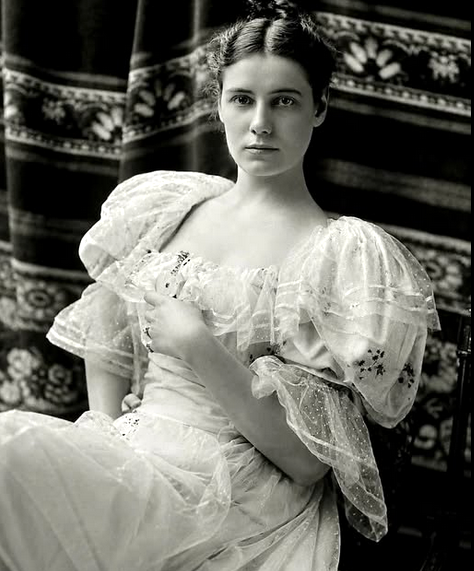
She'd been rejected by every newspaper in New York City for months. Editors wouldn't hire women. They said journalism was "too dangerous" for ladies.
Bly was broke, hungry, and running out of time.
Joseph Pulitzer's managing editor, Colonel John Cockerill, finally agreed to meet with her. But instead of offering her society page fluff or theater reviews, he proposed something far more dangerous: "Can you get yourself committed to the lunatic asylum on Blackwell's Island?"
For years, rumors had circulated about horrific abuse inside the Women's Lunatic Asylum on Blackwell's Island in the East River. But no one could prove it. Patients who complained were dismissed as "crazy." Families who protested were ignored. The asylum walls kept its secrets locked inside.
Bly didn't hesitate. "I can do it."
Cockerill gave her only three instructions: use the name Nellie Brown so they could track her, report honestly, and stop smiling—it might give her away.
He had no plan for getting her out.
On September 22, 1887, Bly checked into a cheap boarding house called the Temporary Home for Females at 84 Second Avenue under the alias Nellie Brown. That night, she stayed awake for hours, giving herself the wild-eyed, exhausted look of someone unhinged. She practiced "crazy" expressions in the mirror. She began making strange accusations about the other women in the house.
"There are so many crazy people here," she told the matron. "One can never tell what they will do."
Within two days, the terrified boardinghouse staff called the police.
Bly was hauled before a judge, who spent less than five minutes with her before declaring her insane. She was sent to Bellevue Hospital for evaluation—her first taste of what awaited her. At Bellevue, doctors examined her with shocking carelessness. One physician was more interested in flirting with the attractive nurse assisting him than actually listening to Bly. After a cursory glance, he pronounced her "positively demented" and possibly a prostitute.
Four medical "experts" diagnosed her as insane. None asked substantive questions. None took time to understand her situation. On September 25, 1887, Bly was loaded onto a ferry packed with unwashed, confused women and transported across the East River to Blackwell's Island—a 120-acre sliver of land that housed the city's prisons, poorhouses, smallpox hospitals, and the lunatic asylum. "This is an insane place," the ambulance driver told her. "You'll never get out." The moment Bly arrived at the Women's Lunatic Asylum, she dropped her act. She spoke normally, acted calmly, and repeatedly insisted she was not insane. Surely, she thought, the staff would notice.
They didn't.
The more sanely she behaved, the crazier they believed her to be. When she pleaded for release, nurses recorded it as "evidence of delusion." When she acted normally, they noted it as "disturbed behavior." Every word she spoke was twisted into proof of madness. Bly quickly realized the terrifying truth: once you were labeled insane, there was no way to prove otherwise.
The asylum was built to hold 1,000 patients. It held 1,600. Only sixteen doctors were assigned to care for them all, and most paid no attention to patients whatsoever.
The conditions were medieval. Patients were forced to sit for hours on hard wooden benches in freezing, unheated rooms with no protection from the cold. The food was inedible—watery gruel, spoiled beef, bread that was barely more than dried dough, and water so filthy it made women sick.
But the worst horror was the baths.
Patients were stripped naked and subjected to ice-cold water dumped over their heads in buckets—three buckets, one after another, freezing water poured into their eyes, ears, noses, mouths. The bathwater was rarely changed; dozens of women bathed in the same filthy tub without it being cleaned. Women with open sores and skin infections shared towels with healthy patients.
Bly described her own experience: "My teeth chattered and my limbs were goosefleshed and blue with cold. Suddenly I got, one after the other, three buckets of water over my head—ice-cold water—into my eyes, my ears, my nose and my mouth. I think I experienced some of the sensations of a drowning person." The nurses were cruel. They beat patients who spoke up. They mocked women who cried. They tied "dangerous" patients together with ropes like animals. And as Bly spoke with her fellow inmates, she made a devastating discovery: many of them weren't mentally ill at all.
They were immigrants who didn't speak English, caught in a legal system they couldn't navigate. They were poor women with no family to support them, committed simply for being destitute. They were wives whose vindictive husbands wanted them gone. They were women who had been exhausted by brutal labor and mistaken for "insane."
The asylum wasn't a hospital. It was a human warehouse for unwanted women.
"The insane asylum on Blackwell's Island is a human rat-trap," Bly later wrote. "It is easy to get in, but once there it is impossible to get out."
For ten days, Bly endured the freezing baths, the spoiled food, the psychological torture. She took careful notes. She memorized details. She befriended women whose stories deserved to be told. And then, on October 4, 1887, an attorney from the New York World arrived and secured her release. On October 9, 1887—just five days after her release—the New York World published the first installment of Bly's exposé under the headline "Behind Asylum Bars.
It was a sensation.
The articles filled two full pages, an almost unheard-of amount of space for a single story. And even more remarkably, Bly's name appeared as a byline—something rarely granted even to veteran journalists, let alone a 23-year-old woman on her first major assignment. Newspapers across the country reprinted her story. The public was outraged. The doctors who had declared her insane offered profuse apologies.
And within weeks, a grand jury was convened to investigate the asylum.
The grand jury confirmed every single thing Bly reported. The result was immediate reform: New York City allocated an additional $1 million annually to improve conditions at Blackwell's Island and other asylums. Living conditions improved. Food quality increased. Abusive staff were dismissed. More thorough psychiatric evaluations were mandated before commitment.
Seven years later, the asylum on Blackwell's Island closed entirely.
Nellie Bly's exposé didn't just launch her journalism career—it launched an entire genre of investigative "stunt reporting" and proved that courageous journalism could force systemic change. She went on to race around the world in 72 days, interview famous criminals, expose sweatshops and corrupt politicians, and become one of the most famous journalists of her era.
But it all started in 1887, when a 23-year-old woman convinced the world she was insane so she could give voice to the women everyone else had forgotten. She risked her sanity, her safety, and her freedom.
And she changed journalism forever.