HOW THE INSATIABLE THIRST OF DATACENTERS IS LEAVING COMMUNITIES ACROSS THE US HIGH AND DRY.
By Guardian - Oliver Milman - Fri 5 Jun 2026 07.00 BST
In this week’s newsletter: Utah’s gargantuan Stratos development is the latest battleground in the AI-driven fight for water, energy, and our environmental future. For the people of Utah, however, O’Leary is the highly controversial face of a new climate controversy. I’ll explain why, after this week’s most important reads.
Kevin O’Leary is many things. He is a flamboyant venture capitalist, co-host of the TV show Shark Tank, vocal supporter of Donald Trump and, recently, a villainous tycoon (or, in his character’s words, a vampire born in 1601) in the Oscar-nominated Marty Supreme.
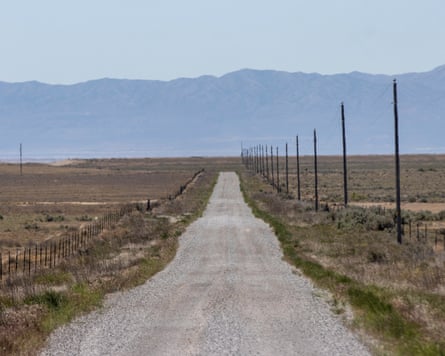
The 71-year-old O’Leary is a key backer of a plan to build one of the world’s largest data-centers in a particularly parched corner of the “beehive state”. The Stratos development, approved by Box Elder County commissioners last month, is set to be twice the size of Manhattan and will, by itself, double the entire energy use of Utah.
The fierce backlash from local residents to Stratos, amid concerns about rising power bills and water demand upon the shrinking Great Salt Lake, has spilled over into contentious public meetings. “I don’t know anyone who wants Stratos,” Ben Abbott, a Utah ecologist, told me. “We’ve seen threats and verbal abuse and fear and anger over this. We do need to cool the temperature.”
The furore is one of the higher profile local battles now raging across the US amid a proliferation of hundreds of new datacenters to feed the explosive growth of the artificial intelligence industry.
Supporters and investors like O’Leary argue the datacenters are needed to win an AI arms race with China (O’Leary has also claimed, without evidence, that opponents of Stratos are paid protesters in league with the Chinese Communist party).
But critics warn that the voracious water use of these datacenters – by some estimates as much as 73bn gallons of water will be needed to cool the humming arrays of computers in datacenters by 2028 – poses a threat amid recent record drought conditions in the US. The climate crisis is worsening these conditions in America and elsewhere, scientists have found, heightening the threat to water security around the world.
Most of the datacenters, too, are set to rely on gas-powered energy for their enormous electricity use, adding to the world’s planet-heating emissions and causing even greater water use. Stratos, for example, will raise Utah’s emissions by about 50%. Another datacenter, this time proposed by Meta in rural Louisiana, will require 10 gas-fired power plants in order to produce 7.2 gigawatts of electricity, equivalent to the annual power consumption of about 5.7m homes.
The grassroots revolt against these centers is unusually bipartisan in today’s divided America, posing a growing electoral threat to politicians, such as Trump, who have backed the aggressive expansion of AI. However in Utah, the state’s Republican leadership has demanded that Stratos be downsized and have sought to assure voters that their environment and wallets won’t be harmed by the development.
But the age of data-centers raises broader questions on how we best marshal resources such as water and energy in increasingly overheated and drought-ridden conditions in many parts of the world. Tools like ChatGPT may be useful, but what cost to our environment will we be willing to tolerate?
Read more:
More than 100 UK datacentres plan to burn gas to generate electricity
‘Hidden datacentre tax’ costing Irish households millions, report says
In first, California city overwhelmingly votes to permanently ban datacenters
To read the complete version of this newsletter – subscribe to receive Down to Earth in your inbox every Thursday.