THE CIRCLE OF GLASS
By AI Chat-T.Chr.-Human Synthesis-30 May 2026
"The problem with drinking..."
The problem reaches beyond alcohol. It touches something older and deeper in the human condition: our uneasy relationship with reality itself.
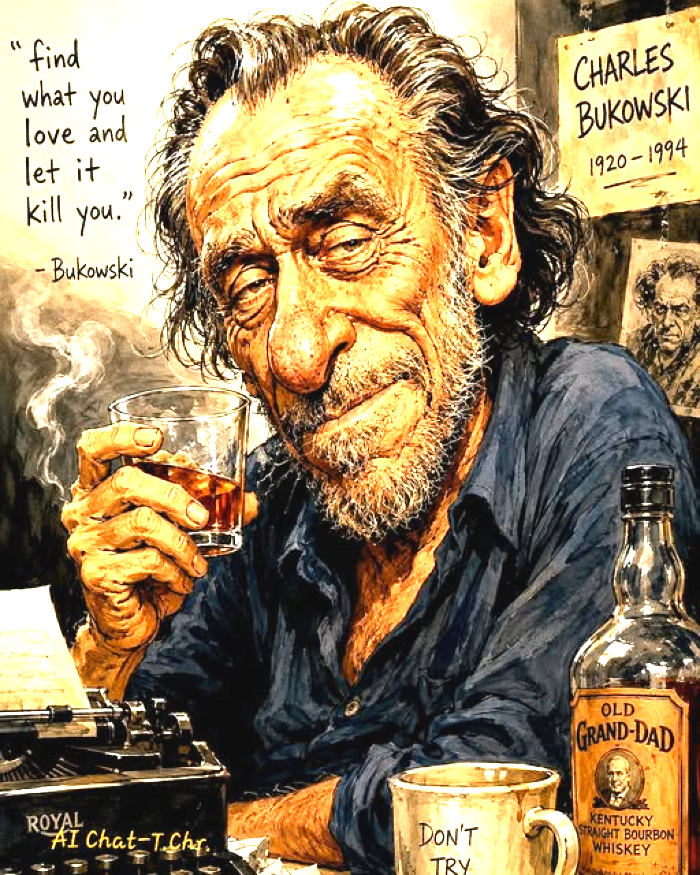
When sorrow arrives,
We seek a drink to soften its edges. We call it forgetting, but what we often desire is not amnesia. We desire distance. Pain insists on being felt, and the glass offers a temporary curtain between ourselves and the things we cannot bear to look at directly. For a few hours, grief loosens its grip, memory becomes less sharp, and the world appears more negotiable than it truly is.
When joy arrives,
We drink for a different reason. We raise a glass to celebrate, as though happiness alone is somehow incomplete. The moment seems too precious to trust. We fear its passing even while it is happening, and so we attempt to preserve it in ritual. The toast becomes a small rebellion against time itself, a declaration that this fleeting moment mattered.
And when nothing happens,
When life settles into its vast stretches of ordinary silence, the temptation may be strongest of all. Human beings are restless creatures. We are uncomfortable with stillness. We want drama, revelation, movement, meaning. The uneventful day can feel like an unanswered question. A drink then becomes not an escape from life, but an attempt to awaken it—to manufacture significance where none seems immediately visible.
The Hangover.
Philosophically, the hangover is where the bargain reveals itself.
The drink promised escape, celebration, or meaning. The morning asks for payment.
Yesterday's sorrow is still there. Yesterday's joy has faded. Yesterday's boredom has returned. But now they are joined by a new companion: regret. Not necessarily regret for drinking, but regret for believing, even briefly, that a temporary alteration of consciousness could permanently solve a problem rooted in existence itself.
The hangover is reality reclaiming its territory.
You wake with a dry mouth, a pounding head, and a peculiar sense of spiritual exhaustion. The world seems stripped of colour. What felt profound the night before appears ordinary. What felt bearable now feels heavier. It is as though happiness has been borrowed from tomorrow, leaving tomorrow impoverished.
And this is where the cycle becomes tragic.
The suffering person drinks to escape pain.
The hangover creates more pain.
The new pain becomes the reason for the next drink.
At that point one is no longer drinking for pleasure. One is drinking to return to a state that resembles normality. The remedy becomes the illness and the illness becomes the remedy.
Philosophically, this resembles many human pursuits. We often seek freedom in things that eventually require our servitude. The chains arrive disguised as comforts.
The morning after can also produce a strange clarity.
One sits quietly with a cup of coffee, feeling the weight of body and mind, and a question emerges:
"What exactly was I trying to escape?"
Not the headache.
Not the anxiety.
Not even the loneliness.
But perhaps the simple fact of being human.
The uncertainty of life.
The inevitability of loss.
The passing of youth.
The silence of unanswered questions.
The awareness that every joy ends and every possession is temporary.
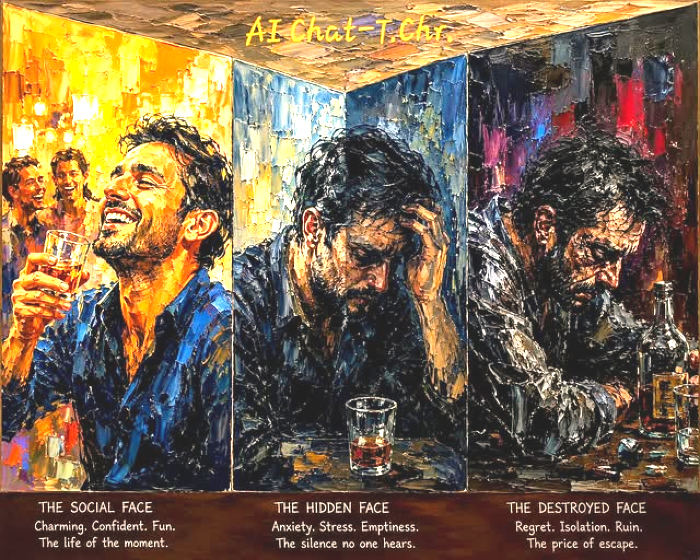
Conclusion
Yet beneath all four reasons lies the same impulse: dissatisfaction with the present moment.
The sad wish to be somewhere else.
The happy wish to hold on longer.
The bored wish for something different.
The Hangover suffers the repayment of his joy.
The glass becomes a companion in our struggle against impermanence. We drink because reality hurts. We drink because reality delights. We drink because reality sometimes appears unbearably ordinary. In every case, we are negotiating with existence, asking it to be less painful, more lasting, or more interesting than it naturally is.
The irony is that life itself already contains everything we seek. Sorrow teaches depth. Joy teaches gratitude. Silence teaches awareness. But these gifts often arrive wrapped in forms we do not immediately recognize. We reach for the bottle because it seems easier than sitting with what is before us.
Perhaps the deepest question is not why people drink when bad things happen, or when good things happen, or when nothing happens at all.
Perhaps the question is why we find it so difficult simply to be with life as it comes.
For life moves between triumph and disappointment, excitement and monotony, gain and loss. The wise person eventually discovers that meaning is not hidden in extraordinary moments alone. It is also present in the quiet afternoon, the ordinary conversation, the uneventful evening, and the silence between ambitions.
The drink promises another world.
Reality offers only this one.
And after enough years, many discover that this one—imperfect, fleeting, sometimes painful, sometimes beautiful—is more than enough.
Source- Charles Bukowski