MIDDLE EAST CRISIS LIVE: TRUMP WARNS ‘CLOCK IS TICKING’ FOR IRAN TO REACH PEACE DEAL
By Guardian -Yohannes Lowe/Tom Ambrose-18 May 2026
Trump warns 'clock is ticking for Iran' to reach peace deal. We are restarting our coverage of the US-Israeli war on Iran and Israel’s war on Lebanon. Donald Trump has issued an extreme warning to Iran to quickly agree to a peace deal with the US or face devastation. US president says there ‘won’t be anything left’ of country if it doesn’t come to an agreement.
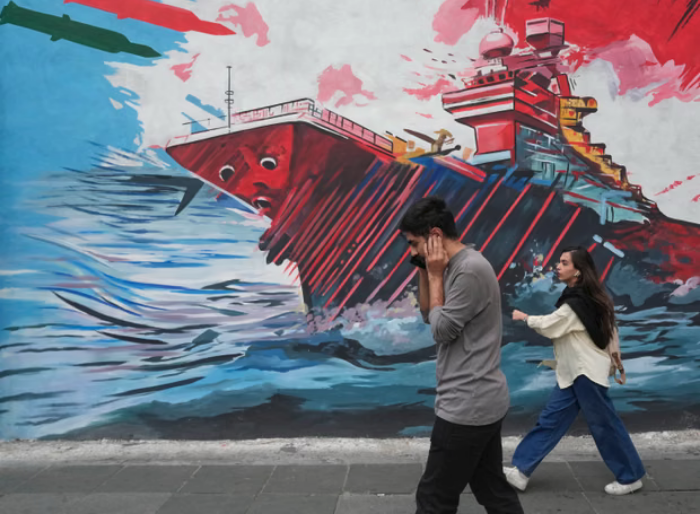
As Washington struggles to break an impasse on ending the war, the US president said on his Truth Social platform on Sunday: “For Iran, the Clock is Ticking, and they better get moving, FAST, or there won’t be anything left of them. TIME IS OF THE ESSENCE!”
Trump is expected to meet top national security advisers on Tuesday to discuss options for military action on Iran, according to a report in the US outlet Axios.
It came as a drone strike in the United Arab Emirates caused a fire at a nuclear power plant – which the country called a “dangerous escalation” and blamed on Iran or its proxies – and Saudi Arabia reported intercepting three drones.
Tehran has demanded a lasting ceasefire in Lebanon before any broader peace deal with Washington.
Israel’s airstrikes killed seven people in Lebanon on Sunday, including an Islamic Jihad commander, Lebanese authorities and state media said, despite the fragile ceasefire as Hezbollah called US-brokered talks between the two countries a “dead end”.
In other key developments:
- Iranian media said the US had failed to make any concrete concessions in its latest response to Iran’s proposed agenda for negotiations to end the war. The Fars news agency said on Sunday that Washington had presented a five-point list that included a demand for Iran to keep only one nuclear site in operation and transfer its stockpile of highly enriched uranium to the US.
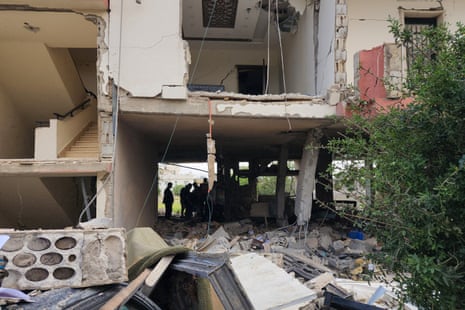
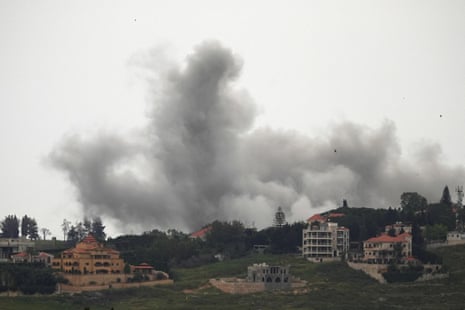
- Islamic Jihad commander Wael Abdel Halim and his 17-year-old daughter were killed in an Israeli missile strike on an apartment in eastern Lebanon on Sunday, Lebanese state media said. Israeli strikes on towns in southern Lebanon earlier killed five people, including two children, and left at least 15 people injured, the Lebanese health ministry said, despite Israel and Lebanon agreeing to extend their ceasefire by 45 days.
- Hezbollah had fired about 200 projectiles at Israel and its troops over the weekend, an Israeli military official said on Sunday.
- Israel’s cabinet approved a plan to build a defence compound on the site of the recently demolished premises of the UN Palestinian refugee agency (Unrwa) in East Jerusalem. Israel seized the site last year in an act the agency condemned as a violation of international law.
Iranian foreign minister Abbas Araghchi has posted to his Telegram account saying that he has held a phone conversation with his Saudi Arabian counterpart, Faisal bin Farhan al Saud, in which they discussed the latest “regional developments” and issues “related to the current diplomatic process” (between Tehran and Washington).
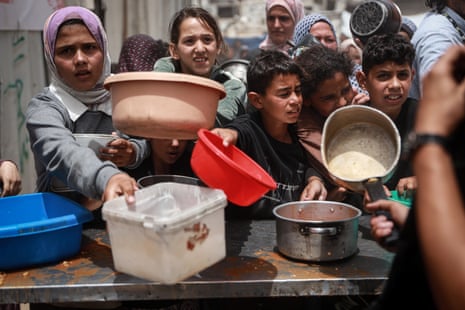
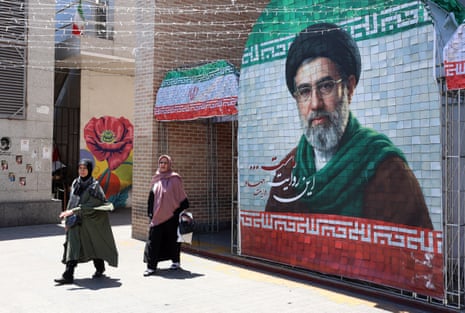
Here are some of the latest images being sent to us over the newswires from Gaza, Lebanon and Iran:
US offers waiver of sanctions on Iranian oil in order to reach peace deal - report
The US has put forward a temporary waiver of sanctions on Iran’s oil to agree to a peace deal and reopen the strait of Hormuz, Iran’s semi-official Tasnim news agency has reported.
The offer has yet to be confirmed and would not be in place until a final agreement is reached between the two countries, it said, citing a source close to the negotiations.
In March, the Trump administration waived sanctions on Iranian oil purchases at sea for 30 days to ease surging oil prices driven by the effective closure of the strait of Hormuz by Iran in retaliation for being attacked by the US and Israel in late February.
It was a stunning reversal of longstanding American policy and reflected the White House’s concern that soaring oil prices would hurt US businesses and consumers ahead of the November midterm elections. The US hoped the move would quickly bring about lots of oil to global markets.
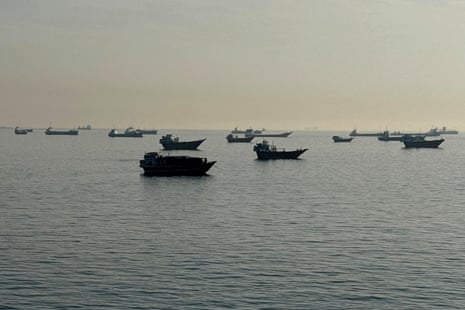
The US-Israeli war with Iran, the subsequent damage to Iran and its Gulf neighbours’ oil infrastructure and the effective closure of the strait have caused the largest oil supply crisis in history, according to the International Energy Agency. Global oil stockpiles are plummeting and analysts are now warning that inventories may not recover until late next year.
Iran Guards say struck groups linked to US, Israel in Kurdish area near Iraq
Iran’s Revolutionary Guards said Monday their forces had struck groups linked to the United States and Israel in the western Iranian province of Kurdistan, near the border with Iraq.
In a statement carried by the ISNA news agency, the Guards said groups from “northern Iraq and acting on behalf of the US and the Zionist regime were attempting to smuggle a large shipment of American weapons and ammunition” into Iran.
They said the groups were hit in the Iranian city of Baneh in the Kurdistan region.
Lebanese president Joseph Aoun said Monday that he would do the “impossible” in order to stop the war with Israel, after a ceasefire and direct talks between the countries failed to end the fighting.
“The framework that Lebanon has set for the negotiations consists of an Israeli withdrawal, a ceasefire, the deployment of the army along the border, the return of the displaced, and economic aid,” Aoun said in a statement.
“My duty, based on my position and my responsibility, is to do the impossible, and to choose what is least costly, in order to stop the war against Lebanon and its people,” he said.
The Israeli military has ordered residents of three towns and villages in southern Lebanon to evacuate immediately by a “distance of no less than 1000 meters to open areas” in advance of attacks against the locations.
The affected towns and villages are: Harouf, Burj Al-Shamali and Dibal, according to a social media post by the IDF’s Arabic-language spokesperson, Avichay Adraee, who claimed the attacks are being launched due to Hezbollah, the Iranian backed Lebanese militant group, violating the US-mediated ceasefire agreement Israel signed with the Lebanese state in mid April.
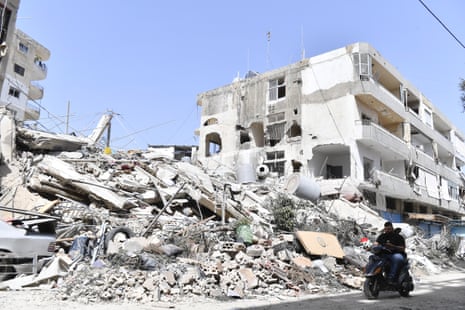
International law experts say Israel’s warnings are inconsistent and often overly broad and open-ended. Sometimes there is no warning at all before the airstrikes. More than one million people have already been displaced by the renewed Israeli war on Lebanon which started when Hezbollah launched missiles at Israel on 2 March after the US-Israeli bombing of Iran in late February.
In its latest update, the Lebanese health ministry said since 2 March Israeli attacks have killed at least 2,988 people, including many women and children.
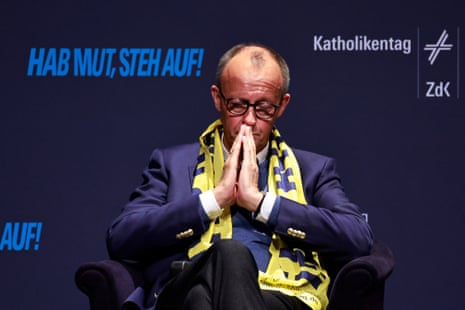
Friedrich Merz has been embroiled in a row with Donald Trump over his war on Iran ever since the German chancellor suggested the Trump team was being outplayed in its negotiations with Tehran and said he would not advise his children to study or work in the US in the current climate.
The Guardian’s Berlin correspondent, Deborah Cole, has looked at the declining relationship between the two leaders in this story. Here is an extract:
Disputes over trade and military aid for Ukraine have fuelled tensions between the US and its European allies and tested the Nato alliance.
Merz is struggling to revive an anaemic German economy and has said the impact of the US-Israeli military action in Iran and the ensuing closure of the strait of Hormuz has been severely damaging to European interests.
Late last month he stunned listeners in Germany as well as the US with blunt comments stating that the Americans were being “humiliated” by Iran’s leadership in the current conflict, angering Trump.
Days later, Washington announced a partial troop withdrawal from Germany, where it has about 36,000 military service members, and tariff hikes on cars imported from the EU, a sector crucial to the German economy.
Merz, whose popularity ratings are plumbing record depths in German polls, has since then said he was “not giving up on working on the transatlantic relationship”, while declining opportunities to retract his criticism of Trump.
Updated at 12.16 BST3h ago12.04 BST
German chancellor Friedrich Merz has posted the following statement on his X account:
We strongly condemn the renewed Iranian airstrikes against the United Arab Emirates and other partners. Attacks on nuclear facilities pose a threat to the safety of people throughout the entire region. There must be no further escalation of violence.
Iran must enter into serious negotiations with the USA, stop threatening its neighbours, and open the strait of Hormuz without restrictions.
Merz’s comments come after a drone strike caused a fire on the edge of the UAE’s only nuclear power plant on Sunday in what authorities called an “unprovoked terrorist attack” (see post at 08.48 more details).
Iran announces new body to manage strait of Hormuz
Iran’s top security body has announced the formation of a new body to manage the strait of Hormuz, which Tehran has effectively closed to countries it deems hostile to it – and wants to charge ships to traverse.
On its official X account, the Supreme national security council shared a post for the Persian Gulf Strait Authority (PGSA) saying it would provide “real‑time updates on the Hormuz Strait operations and latest developments”.
The Guardian’s expert news coverage is funded by people like you, not a billionaire owner. Readers who choose an All-access digital subscription make the most impact and enjoy great benefits in return. Will you join them today?
Support $5/monthly Recommended Support $15/monthly
Support with another amountContinue