A TALE OF WAR
By AI Chat-T.Chr.-Human Synthesis-05 May 2026
War does not begin with weapons.
It begins earlier—so quietly that no one marks the moment. A hesitation in recognition. A subtle rearrangement of value. One life, weighed against another, becomes negotiable. Language follows, adjusting itself with precision: necessity, security, inevitability. Words that seem to explain, but in truth, permit.
By the time the first bomb falls, war is already old.
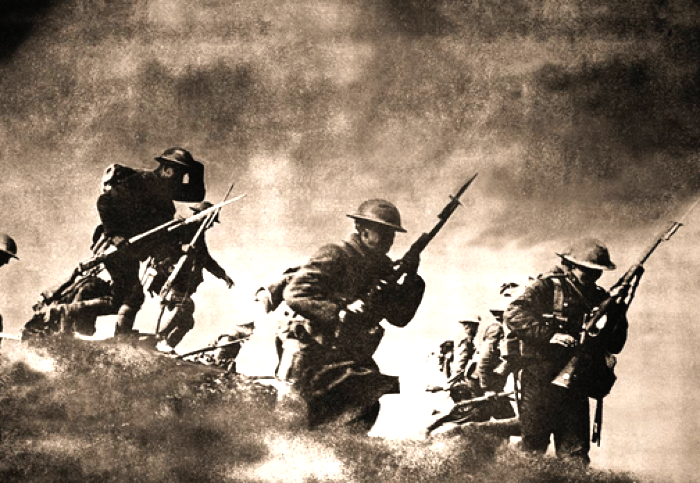
In the city—though it could be any city—people learn quickly what remains and what disappears. Hunger arrives not as absence, but as structure. It organizes thought. It redraws priorities until memory itself becomes a luxury. Clothing thins, then dignity follows, though no one speaks of it in those terms. Fear replaces both, fitting more closely to the body than fabric ever could.
There is a peculiar transformation that occurs under sustained threat. The future contracts. Not metaphorically, but materially—as if time itself has been compressed into a narrow corridor through which one must pass repeatedly. Tomorrow is no longer an expectation; it is a hypothesis. Something to be tested, not assumed.
And yet, even here, cognition persists in its old habits. People still ask questions that no longer have stable answers: Will this end? Will anything return? The mind resists discontinuity. It insists on narrative, on causality, on resolution. War offers none of these. It provides only sequence—events without closure.
Elsewhere, far removed from the immediate radius of destruction, war takes on a different character. It becomes legible. Discussable. It acquires shape through maps, statistics, arguments. Here, distance performs its most important function: it restores coherence. Suffering is translated into information. Loss becomes quantifiable. Fear becomes interpretable.
This is not indifference, exactly. It is a necessary abstraction. Without it, thought would collapse under the weight of what it attempts to comprehend.
But abstraction carries its own danger. It allows war to persist without being fully encountered. It transforms lived experience into something that can be debated, justified, even strategically admired. In this way, war sustains itself not only through force, but through understanding—of a certain kind.
Meanwhile, within its immediate presence, another form of understanding emerges. Not conceptual, but embodied. Knowledge stripped of explanation. One learns the sound of incoming fire not through instruction, but through repetition. One learns the geometry of survival—the angles, the distances, the timing—without ever naming it as such.
And beneath all of this runs a quieter question, rarely articulated:
What remains of a person when the conditions that define personhood are removed?
Not physically—bodies endure, often beyond expectation—but existentially. When continuity is broken, when memory is saturated with interruption, when the future no longer extends far enough to support identity, what persists?
War does not answer this question. It exposes it.
Some would say that what remains is resilience. Others, that it is instinct. But these are interpretations imposed afterward, from a distance where reflection becomes possible again. Within war itself, there is no such clarity. There is only persistence—unadorned, untheorized.
And yet, even in this reduction, something resists total erasure.
Not hope, exactly. Hope implies projection, and projection requires a future sufficiently stable to receive it. War destabilizes that structure. Instead, what persists is something more minimal: a refusal to fully relinquish the idea that meaning exists, even if it cannot currently be accessed.
This refusal is not visible. It does not announce itself. It does not alter outcomes in any immediate sense. But it endures, quietly, beneath fear, beneath hunger, beneath exhaustion.
It is what prevents war from becoming the final condition of human existence.
Because war, for all its force, is parasitic. It depends on the very things it erodes—value, recognition, meaning. It cannot generate these on its own. It can only consume them, distort them, delay them.
And so it contains, within itself, the conditions of its own end.
Not inevitably. Not quickly. But structurally.
For as long as there remains—even in diminished form—the capacity to perceive another life as irreducible, as non-negotiable, the logic of war is incomplete. Undermined from within by the very humanity it attempts to override.
When the bombs cease—and they always do, eventually—what follows is not resolution, but reckoning. Not peace, as an immediate state, but the difficult re-expansion of time. The slow reintroduction of tomorrow as something more than a risk.
And with it, the return of questions long suspended:
What was lost?
What can be restored?
What must be remembered, even at cost?
War does not end when violence stops.
It ends, if it ends at all, when these questions are faced without the protective distance that once made them tolerable.
Until then, it lingers—not only in ruins, but in the structures of thought that made it possible.
And those, unlike cities, are far more difficult to rebuild.
Source - Guro Hofmo Bergli