MEGA GROUP
By Alisa Valdes - Human Synthesis- 05 April 2026
Before we get to the meat of this story, I need to clarify a few things. Judaism Is Not Zionism Is Not Israel. Very powerful people depend on the public conflating several terms. It’s how they survive to bully the world. So let us define our terms clearly, so you know exactly what I mean—and what I do not mean.
Judaism
Judaism is one of the world’s oldest religions—a faith tradition spanning more than three thousand years. It encompasses Torah, Talmud, prayer, ethical obligation, and a profound civilization of thought, art, and moral philosophy. It belongs to the Jewish people—all of them—across every nation, in every diaspora community, in every tradition from Reform to Orthodox to the Sephardic communities of North Africa and the Iberian Peninsula.
Zionism
Zionism is a political ideology. It is not a religion and not a religious mandate. It emerged in late nineteenth-century Europe, most forcefully articulated by Theodor Herzl, as a nationalist movement advocating for the establishment of a Jewish homeland in Palestine. Like all political ideologies, it can be examined, critiqued, supported, or opposed.
It is not sacred. It is not beyond question. Many deeply observant Jews, then and now, have opposed Zionism on both religious and ethical grounds, arguing that the establishment of Israel through the displacement of another people violated Jewish law and Jewish values. Zionism is a political choice—not a divine mandate.
Israel
Israel became a nation-state, founded in 1948. It is currently governed by a right-wing nationalist coalition. Like all nation-states, its government makes decisions—about war, occupation, intelligence operations, and alliances—that are subject to scrutiny, criticism, and accountability under international law. Criticizing the Israeli government is no different from criticizing the American government, the Russian government, or any other government. It is not hatred. It is not bigotry. It is civic obligation.
Judaism is not Zionism is not Israel.
The Holocaust and Its Political Use
Now we must address something far more difficult. The Holocaust was one of the most monstrous crimes in human history. Six million Jewish men, women, and children were systematically murdered by the Nazi regime—gassed, shot, starved, and worked to death in an industrial program of genocide without modern parallel. The trauma of that genocide is real. Its legacy is real. The obligation to remember it is permanent. But trauma does not confer impunity. Suffering does not become a license to make others suffer.
And the memory of genocide must never be weaponized to silence witnesses to another one. The argument presented here is that the memory of the Holocaust has, at times, been invoked politically to deflect criticism of Israeli government actions—particularly regarding Palestinian displacement and conflict. Critics argue that equating all criticism of Israeli policy with antisemitism risks blurring an important distinction and may ultimately undermine genuine efforts to combat antisemitism. Many Jewish scholars, rabbis, and survivors themselves have voiced similar concerns.
Personal Context
I say this as someone with skin in this game—literally. My third-great-grandfather, Abraham Haim de Meza y Delvalle, was among the founding members of the first Jewish temple in the United States outside the original thirteen colonies: Touro Synagogue in New Orleans, in 1828. The Haim line of my family originates in Belarus. They fled persecution to Amsterdam, were sent to Curaçao, and eventually moved to New Orleans.
My family carries both Sephardic and Ashkenazi lineage, on both sides. I know what Judaism is. I know what it is not. What follows is not about Judaism. It concerns governments, intelligence networks, and powerful individuals—and the ways identity can be invoked within political contexts.
The Mega Group and Jeffrey Epstein
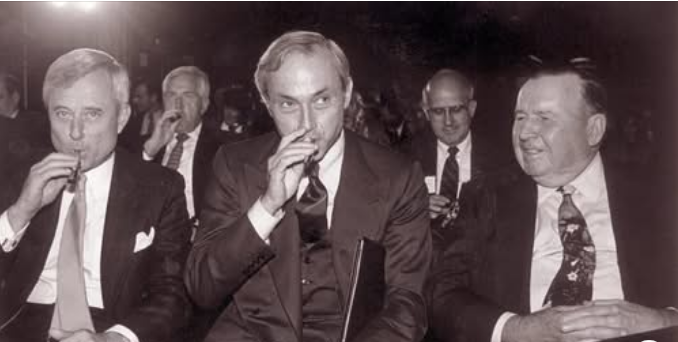
Most Americans have never heard of the Mega Group. That is not accidental. In 1991, two North American billionaires—Leslie Wexner and Charles Bronfman—quietly founded what they called the “Study Group.” It was a by-invitation-only consortium of roughly twenty of the wealthiest Jewish businessmen in North America. They met privately, twice a year. Membership dues began at $30,000 annually. The group remained largely unknown to the public for years.
It would later become known as the Mega Group. A 1998 Wall Street Journal investigation briefly brought it into public view, describing it as a loosely organized philanthropic network. The story received little follow-up. Reported members included prominent figures from business, philanthropy, and media. Their activities included funding educational, cultural, and policy-oriented initiatives related to Jewish life and Israel.
Epstein’s Rise
Jeffrey Epstein was widely described as a wealthy financier, despite limited publicly documented evidence of traditional financial credentials or a large client base. He maintained relationships with powerful individuals across politics, business, and academia, and controlled significant assets, including high-value real estate. Some journalists and former officials have speculated about how Epstein accumulated such influence and resources, raising questions about whether his role extended beyond finance.
Allegations and Interpretations
Various investigators, journalists, and former intelligence officials have offered differing interpretations of Epstein’s activities. Some have suggested he may have functioned as an “access agent”—someone who builds relationships with powerful individuals and potentially gathers compromising information. Others, including survivors, have described his network as involving coercion and exploitation. These claims remain subjects of ongoing debate, investigation, and controversy. It is important to distinguish between documented facts, testimony, and interpretation.
Broader Context
The broader context includes:
- Philanthropic and political networks
- Historical ties between business and government institutions
- The role of influence in shaping policy and public narratives
None of these elements alone proves coordinated wrongdoing. However, together, they form a complex landscape that continues to draw scrutiny.
Conclusion
Epstein’s operations did not exist in isolation. They involved wealth, access, and relationships at the highest levels of society. Questions remain about how those elements intersected—and who benefited. The purpose of this piece is not to provide definitive answers, but to outline connections, raise questions, and encourage careful, evidence-based inquiry. Precision matters. Because precision is what separates journalism from speculation.
The Mega Group, Jeffrey Epstein, and the Architecture of Influence
This piece is news analysis and synthesis based on publicly available reporting, documents, and on-record statements. It is not original investigative reporting. Sources are listed at the end.
Most Americans have never heard of the Mega Group. And that’s exactly what the members of the Mega Group want.
In 1991—the same year Robert Maxwell, father of Ghislaine Maxwell, fell from his yacht into the Atlantic and was buried in Jerusalem with multiple current and former Israeli intelligence officials in attendance—two North American billionaires quietly founded what they called the Study Group. These men were Leslie Wexner, who would later become closely associated with Jeffrey Epstein, and Charles Bronfman, heir to the Seagram liquor empire. Their “Study Group” was a by-invitation-only consortium of roughly twenty of the wealthiest Jewish businessmen in North America. They met twice yearly, behind closed doors, with membership dues starting at $30,000 a year—approximately $72,000 in 2026 terms.
The public did not learn the Study Group existed for seven years. And even then, barely. This was by design. It would later become known as the Mega Group.
A 1998 investigation by The Wall Street Journal first brought the group to public attention. The paper described it in restrained terms—as a loosely organized philanthropic network with shared political and cultural interests.
The story ran, then faded. There were no major follow-ups.
No congressional hearings.
No sustained public scrutiny.
That absence is notable given the prominence of reported members.
They included:
- Edgar Bronfman, chairman of the World Jewish Congress
- Charles Schusterman of Samson Investment
- Harvey Meyerhoff
- Laurence Tisch, chairman of Loews Corporation
- Donald Barr, noted for giving Epstein an early job
- Max Fisher, a major political donor
- Steven Spielberg
- Leslie Wexner
By this point, Epstein—an individual with limited publicly documented financial credentials—had already gained extraordinary access. Leslie Wexner granted him control over significant financial assets and provided access to a Manhattan residence reported to be among the largest private homes in the city. Despite the scale of Epstein’s wealth and influence, questions about the origins of his financial standing remained limited in mainstream coverage for many years.
Interpretation and Controversy
Some analysts and commentators have argued that Epstein’s public image as a financier may not fully explain his access to elite networks. These interpretations vary widely. Some suggest he functioned as an intermediary—building relationships with powerful individuals and potentially gathering compromising information. Others reject or question such claims, noting the lack of publicly verified evidence tying his activities to any specific intelligence service. It is essential to distinguish between documented facts, testimony, and interpretation.
Investigative journalist Whitney Webb has written extensively about Epstein’s network, arguing that it intersected with long-standing financial and political relationships among wealthy individuals. Her work highlights historical overlaps between business, philanthropy, and political influence, including families whose wealth dates back to early 20th-century industries.
The Mega Group and its members also supported a range of initiatives, including:
- Educational and cultural programs
- Jewish community institutions
- Policy-oriented organizations such as Washington Institute for Near East Policy
Supporters describe these efforts as philanthropy and community-building. Critics argue they also reflect coordinated ideological or political priorities.
None of this, in itself, is illegal. But it provides context.
Former officials such as John Schindler and John Kiriakou have publicly speculated about Epstein’s possible role as an “access agent”—someone who builds connections that could be exploited for influence. These claims remain unproven and are part of ongoing public debate. Epstein survivor Maria Farmer has also provided testimony describing coercion and exploitation within his network.
Her statements, like others, form part of the broader public record but remain subject to interpretation and legal context. nAdditional claims have been made by figures such as Ari Ben-Menashe regarding historical connections between Epstein and Robert Maxwell. These accounts are contested and should be understood as part of a wider field of competing narratives.
At Robert Maxwell’s funeral, attended by senior Israeli officials, Shimon Peres delivered a eulogy, and Yitzhak Shamir remarked on Maxwell’s contributions to Israel. Such statements have contributed to ongoing speculation about Maxwell’s relationships and activities.
The Silence After 2001
The last publicly reported meeting of the Mega Group took place on May 3–4, 2001, at the Manhattan residence of Edgar Bronfman. After that, the public record becomes sparse. There has been no formal announcement of disbandment. Only silence.
Conclusion
Epstein’s network did not exist in isolation. It involved wealth, access, and relationships at the highest levels of society. What remains unresolved are the mechanisms behind that access—and the extent to which those networks intersected with broader political, financial, or intelligence structures. The Mega Group may be understood, at minimum, as part of the social and financial environment in which Epstein operated. Beyond that, conclusions vary—and require careful, evidence-based evaluation. Precision matters. Because precision is what separates journalism from speculation.
What Comes Next
In the next installment, this series will examine questions surrounding U.S. foreign policy decisions, historical diplomatic efforts such as the Oslo Accords, and the broader geopolitical context in which Epstein’s network has been discussed. It will explore how influence, access, and power intersect—and where evidence supports or challenges prevailing narratives.
— Alisa