IRAN’S NEW SUPREME LEADER BRINGS MYSTERY ELEMENT TO MIDDLE EAST CRISIS.
By Guardian- Patrick Wintour- Diplomatic editor-Mon 9 Mar 2026 18.30 GMT
What Mojtaba Khamenei will do with his leadership is now the key question after he succeeds his father. Crowds in Tehran greeted the announcement of the country’s new supreme leader by chanting: “God’s hand is still upon us, Khamenei is still our leader.”
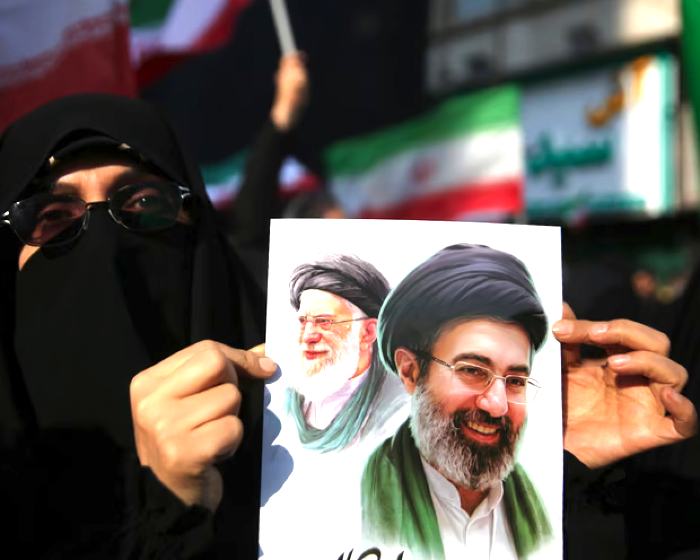
As the world economy grinds to a halt, Iran is selling the elevation of Mojtaba Khamenei as a sign of reassuring continuity for a country determined to show its defiance of the west.
Yet in reality he injects a new unpredictable, even mysterious, element into the Middle East crisis, since just as he is unknown to Washington, so he is a figure of deep obscurity to ordinary Iranians. By contrast, the first supreme leader, Ruhollah Khomeini, led Iran to revolution in 1979 and the second, Mojtaba’s father, Ali Khamenei, had been president for eight years before he was chosen by the Assembly of Experts within a day of Khomenei’s death.
Before he was catapulted to power following his father’s assassination, Mojtaba had lived the life of a backroom bureaucrat, acting as “the path to access to his father” as a 2007 US diplomatic cable explained.
There is only one video of him speaking in public, to a jurisprudence class, and there has been no substantive interview marking out his views. Yet as the consummate insider, acting as deputy chief of staff in the supreme leader’s office for two decades, he has long been the candidate of the Revolutionary Guards (IRGC), the heart of Iran’s military industrial complex. One western diplomat said his selection “shows Iran is doubling down on the security state. The new leader will be even more beholden to the IRGC”.
That is because the IRGC had to overcome many obstacles to ensure their candidate took the helm. It fended off a rearguard attempt to delay his appointment so that the choice might be better made in a different political atmosphere – probably at the end of the war.
Will Trump make a deal with Iran's new supreme leader? - The Latest
The evidence of the power struggle is fragmentary, but appears to have involved advice from Ali Larijani, the secretary of the supreme national security council, that a new inexperienced leader in the middle of wartime was a risk. Others in the supreme leader’s office, such as Ali Asghar Hejazi, also opposed Mojtaba’s elevation but were killed in Israeli airstrikes.
But the IRGC had to overcome other doubts over his health, the hereditary principle, his religious qualifications and the practicality of holding a meeting of the Assembly of Experts with predatory Israeli war planes circling overhead.
The primary uncertainty concerned Mojtaba’s physical and emotional health. The bombing of the supreme leader’s compound on 28 February also killed his mother, his wife, and a son. One of his sisters was also killed along with her husband, as well as a niece and nephew. To take on high office in wartime after suffering such a personal loss cannot be easy, and it is said he professed a reluctance to do so, although that may have been performative.
Clerics also had to swallow their doubts about his religious knowledge. Until 2022, Mojtaba held the lower rank of Hojjat al-Islam. To fix this “qualification gap”, the 88-strong Assembly of Experts – under intense pressure from the IRGC – fast-tracked his credentials so that some seminary media outlets used the title “Ayatollah”. Something similar happened in 1989 to enable his father to become supreme leader in 1989.
The biggest obstacle was that he was the supreme leader’s son. The republic had come into being in contradistinction to the dynastic rule of the shah, and the rule of the Gulf families. Khomeini deemed the monarchy to be “abhorrent to Islam”, and Khamenei himself described the hereditary principle as un-Islamic.
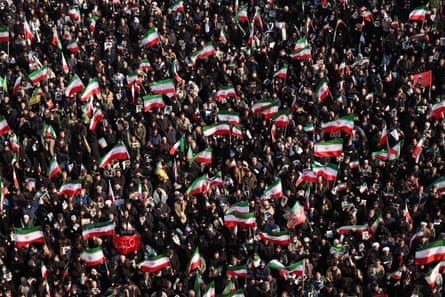
Such doubts were widely shared across Iranian society.
Complex theological arguments were produced to overrule objections to inherited power.
But what still lay in doubt was how the assembly could safely reach consensus. The risk was underlined by bombing of the secretariat offices of the Assembly of Experts in Qom last week, in which several staff members were killed.
Debate ensued over whether the rules governing the assembly required the clerics to meet in person to establish a consensus. It was previously held that there had to be an absolute majority with a two-thirds quorum.
The centrist former president Hassan Rouhani was one of the figures urging delay and calling for fundamental political overhaul at the war’s end.
But the IRGC media, and hardline clerics, emphasised the need to fill the political vacuum, arguing the temporary leadership could not govern indefinitely. The insistence of the US president, Donald Trump, that he be personally involved in the process only increased Iran’s determination to be seen to be making sovereign decisions about its leadership.
Iran is not Venezuela, despite Trump’s hopes of repeating ‘regime capture’ strategy.
But what Khamenei will do with this leadership and how he will relate with other centres of power inside Iran is now the question. His father turned the supreme leader from a supervisory figure to the engine of government, even if he often tried to avoid taking sides in factional battles, and ensured blame landed elsewhere in the system when matters went wrong. He also gave the IRGC “near-monopoly control of the Iranian economy across all sectors”, allowing the Revolutionary Guards to fund their extraterritorial activities, said Maryam Alemzadeh, an associate professor in history and politics of Iran at St Antony’s College, Oxford.
The older Khamenei’s consistent ideological thread was his belief that the US was untrustworthy, morally bankrupt and exploitative. So economic cooperation with the US, of the kind Trump is extracting from Venezuela, is not going to be on offer from his son’s regime. He will continue to look to China and Russia to prevent the regime’s collapse. Above all, he will do all he can to protect the IRGC’s business and political empire – one of his father’s greatest legacies. It is an empire from which he himself has personally financially benefited, and is now under systematic US attack.
One of his first tests will be whether he renews his father’s fatwa against the possession of nuclear weapons. Another will be whether he sets realistic preconditions for holding talks either with the US or the Gulf neighbours.
But conservatives are delighted. Ezzatollah Zarghami, a former culture minister, who is one of the few who claims to have had weekly one-on-one meetings with Mojtaba, said: “He is a proponent of dialogue and listening to others’ voices. In personal interactions, he is excessively humble. Our young leader without even arriving has rubbed Trump’s nose in the dirt,” he said.
MORE ABOUT MOITABA KHAMENEI
By AI ChatGPT-T.Chr.-Human Synthesis-09 March 2026
Mojtaba Khamenei
Mojtaba Khamenei is an Iranian cleric and political figure who became the Supreme Leader of Iran in March 2026, succeeding his father, Ali Khamenei.
The Supreme Leader is the most powerful authority in the country, above the president and parliament.
Below is a complete overview of who he is, his background, ideology, influence, and controversies.
Basic Profile
- Full name: Mojtaba Hosseini Khamenei
- Born: September 8, 1969
- Birthplace: Mashhad, Iran
- Nationality: Iranian
- Religion: Shia Islam (Twelver)
- Occupation: Cleric, political power broker
- Position: 3rd Supreme Leader of Iran (since 2026)
He is the second son of Ali Khamenei and grew up inside Iran’s ruling religious-political elite.
Family Background
Mojtaba comes from one of the most powerful families in Iran.
Father
- Ali Khamenei
- Supreme Leader from 1989–2026
- One of the most influential figures in modern Iranian history.
Mother
- Mansoureh Khojasteh Bagherzadeh
- From a religious family in Mashhad.
Siblings
He has several brothers who also work in religious or political roles:
- Most stay out of public politics.
Education and Religious Training
Mojtaba followed the traditional path of a Shia cleric.
Seminaries
He studied in:
- Qom — Iran’s main Shia religious center
- Religious schools called hawzas
Teachers
He reportedly studied under prominent clerics, including:
- Hossein Vahid Khorasani
Religious rank
He is considered a mid-level cleric, not one of the highest-ranking Grand Ayatollahs, which has caused debate about his qualifications to lead.
Early Life and Iran-Iraq War
During the Iran–Iraq War, Mojtaba reportedly volunteered with Iranian forces while young.
He had links with the Islamic Revolutionary Guard Corps (IRGC) — a powerful military and political force in Iran.
Those connections later helped him build influence in Iran’s power structure.
Rise Behind the Scenes
For many years Mojtaba avoided public office, but insiders believed he was extremely influential.
He worked quietly within:
- religious institutions
- security services
- conservative political networks
Analysts often described him as one of the most powerful unelected figures in Iran long before becoming leader.
Key areas of influence
- Supreme Leader’s office
- political coordination with the IRGC
- election strategy for conservative factions
Role in the 2009 Election Crisis
Mojtaba became widely known during the 2009 Iranian presidential election protests.
Opposition figures accused him of helping organize support for:
- Mahmoud Ahmadinejad
Critics claimed he helped coordinate security forces during protests known as the Green Movement.
The Iranian government denied these accusations.
Becoming Supreme Leader (2026)
When his father Ali Khamenei died, Iran’s leadership body — the:
- Assembly of Experts
selected Mojtaba as the next Supreme Leader.
This made him the third leader since the 1979 revolution, after:
- Ruhollah Khomeini
- Ali Khamenei
- Mojtaba Khamenei
His Political Views
Mojtaba is generally seen as hardline and conservative.
Key positions analysts associate with him
- Strong support for Iran’s Islamic political system
- Close cooperation with the IRGC
- Opposition to Western political influence
- Support for regional allies like:
- Hezbollah
- Hamas
However, because he has rarely spoken publicly, many of his views come from analysis rather than direct statements.
Powers as Supreme Leader
As Supreme Leader, he now controls major parts of Iran’s state:
Military control
Commander-in-chief of:
- the Iranian armed forces
- the IRGC
Political influence
He appoints:
- the head of the judiciary
- military commanders
- state media leaders
- members of powerful councils
Strategic control
He shapes:
- nuclear policy
- foreign policy
- security policy
This makes him one of the most powerful political leaders in the world.
Major Controversies
1. Possible dynasty
Critics say his rise looks like hereditary rule, something the Islamic Republic originally opposed.
2. Lack of transparency
He kept a very low public profile for decades.
3. Western sanctions
He has been sanctioned by the United States Department of the Treasury for alleged involvement in repression of protests.
Personality and Public Image
People who have interacted with him describe him as:
- extremely secretive
- politically strategic
- deeply religious
- cautious about public appearances
Unlike many leaders, he rarely gives speeches or interviews.
Why he matters globally
Because Iran is a major regional power, Mojtaba’s decisions influence:
- Middle East conflicts
- global oil markets
- nuclear negotiations
- relations with the US, Israel, Russia, and China
✅ In simple terms:
Mojtaba Khamenei grew up inside Iran’s ruling elite, built quiet power behind the scenes, and eventually succeeded his father to become the country’s most powerful leader.
1. Supreme Leader (Highest Authority)
Supreme Leader of Iran
The Supreme Leader is the most powerful person in Iran.
Current leader:
- Mojtaba Khamenei
Main powers
- Commander of all armed forces
- Controls foreign policy direction
- Appoints key officials
- Can remove the president
- Oversees intelligence and security agencies
Direct appointments
The Supreme Leader appoints:
- head of judiciary
- commanders of military
- state TV leadership
- half of the Guardian Council
- leaders of key foundations
Because of this, most powerful institutions answer to him.
2. Islamic Revolutionary Guard Corps (Military Power)
Islamic Revolutionary Guard Corps
The IRGC is a powerful military and political force created after the revolution.
Roles
- Protect the Islamic system
- Run military operations abroad
- Control missile and drone programs
- Influence politics and economy
The IRGC also oversees:
- the Quds Force (foreign operations)
- large business networks
- security operations
Many analysts believe the IRGC is one of the most powerful institutions in Iran after the Supreme Leader.
3. Assembly of Experts (Chooses the Leader)
Assembly of Experts
This body consists of Islamic scholars elected by the public.
Responsibilities
- Choose the Supreme Leader
- Monitor his performance
- Remove him if necessary
However, in practice they rarely challenge the Supreme Leader.
4. Guardian Council (Powerful Gatekeeper)
Guardian Council
This council has huge influence over politics.
Members
12 members:
- 6 clerics appointed by the Supreme Leader
- 6 lawyers nominated by judiciary and approved by parliament
Powers
- Approve or reject election candidates
- veto laws passed by parliament
- ensure laws follow Islamic principles
Because they control elections, they decide who can run for office.
5. President (Executive Leader)
President of Iran
The president is elected by the public, but has less power than the Supreme Leader.
Responsibilities
- running the government
- managing economy
- overseeing ministries
- implementing laws
Limits
The president cannot control:
- the military
- intelligence services
- major foreign policy decisions
Those remain under the Supreme Leader.
6. Parliament
Islamic Consultative Assembly
Iran’s parliament has 290 members elected by citizens.
Responsibilities
- pass laws
- approve the national budget
- question ministers
But laws must be approved by the Guardian Council, so parliament is not fully independent.
7. Judiciary
Judiciary of Iran
The judiciary enforces laws and runs courts.
Important fact
The head of the judiciary is appointed by the Supreme Leader, meaning the courts ultimately answer to him.
Simplified Power Pyramid
Top → Bottom
1️⃣ Supreme Leader
2️⃣ Revolutionary Guard (IRGC)
3️⃣ Guardian Council
4️⃣ Assembly of Experts
5️⃣ President
6️⃣ Parliament
7️⃣ Judiciary
Even though Iran has elections, the religious leadership structure holds ultimate control.
IRANS MILITARY LEADERSHIP
Inside Iran, power isn’t concentrated in just one army. Instead, several military factions and organizations compete and cooperate, with many reporting directly or indirectly to the Supreme Leader. Analysts usually point to five major power centers that shape Iran’s military decisions.
1. Islamic Revolutionary Guard Corps (IRGC) – the dominant force
Islamic Revolutionary Guard Corps
The IRGC is widely considered the most powerful military institution in Iran.
Why it’s powerful
- Controls elite forces, missiles, drones, and cyber units
- Influences politics and the economy
- Has its own ground, naval, aerospace, and intelligence branches
During conflicts, the IRGC often drives Iran’s strategic decisions and military operations.
Key capabilities
- Ballistic missiles
- UAV/drone programs
- Cyber warfare
- Intelligence operations
2. Quds Force – foreign operations arm
Quds Force
This is the IRGC’s elite external operations branch.
Main role
- Organizing Iranian military influence outside Iran
- Training and funding allied militias
It builds networks of partner forces such as:
- Hezbollah in Lebanon
- Iraqi militias
- Houthis in Yemen
The Quds Force specializes in asymmetric warfare and proxy conflicts.
3. Basij – mass paramilitary network
Basij
The Basij is a huge volunteer militia linked to the IRGC.
Functions
- Internal security
- Mobilizing civilians in wartime
- Supporting military operations
It has units in:
- schools
- universities
- factories
- neighborhoods
Some brigades are specifically trained to suppress unrest or defend cities.
4. Artesh – the conventional Iranian military
Islamic Republic of Iran Army
Often called Artesh, this is Iran’s traditional army.
Branches
- Ground forces
- Air force
- Navy
- Air defense
The Artesh focuses mainly on defending Iran’s borders with conventional forces like tanks, ships, and aircraft.
However, many analysts say it has less political influence than the IRGC.
5. IRGC Special & Security Commands
Several elite internal IRGC units also form powerful factions.
Examples include:
- Thar-Allah Headquarters – military command responsible for security in Tehran and crisis control.
- Vali-ye Amr special forces unit – elite force protecting the Supreme Leader.
- Saberin Takavar Brigade – elite commando brigade used in special operations.
These units are smaller but politically very influential because they are close to the leadership.
✅ Simple way to picture Iran’s military power structure
Supreme Leader
│
├─ IRGC (dominant military + political power)
│ ├─ Quds Force (foreign operations)
│ ├─ Basij militia (mass mobilization)
│ └─ elite security commands
│
└─ Artesh (conventional army)
✔ Key takeaway:
Even though Iran has a regular army, the Revolutionary Guard network (IRGC + Basij + Quds Force) forms the real power center in Iran’s military system.
If you want, I can also show you something interesting: the “shadow network” of proxy militias Iran controls across the Middle East, which many experts say is actually Iran’s most powerful military tool.
ok
Here are five of the most important allied militias and proxy forces connected to Iran. These groups extend Iran’s influence far beyond its borders and are often coordinated by the Islamic Revolutionary Guard Corps, especially its external branch, the Quds Force.
Hezbollah (Lebanon)
Hezbollah is widely considered Iran’s most powerful allied force.
Key points
- Based in Lebanon
- Strong political party and armed wing
- Large arsenal of rockets and missiles
- Extensive combat experience (including in Syria)
Many analysts view Hezbollah as Iran’s most capable partner force.
Popular Mobilization Forces (Iraq)
The Popular Mobilization Forces are a coalition of militias in Iraq.
Key points
- Formed during the fight against ISIS
- Some factions are closely aligned with Iran
- Integrated into Iraq’s security structure
Several groups within the PMF cooperate closely with Iran’s military advisers.
Houthis (Yemen)
The Houthi movement (also known as Ansar Allah) control large parts of Yemen.
Key points
- Strong presence in northern Yemen
- Use missiles and drones
- Involved in the Yemeni civil war
Some international analysts say the group has received technical and military assistance linked to Iran, though the relationship is complex.
Liwa Fatemiyoun
Liwa Fatemiyoun is a militia mainly composed of Afghan fighters.
Key points
- Organized during the Syrian war
- Fought in support of the Syrian government
- Linked to Iran’s military network
The group gained significant battlefield experience during the conflict.
Liwa Zainebiyoun
Liwa Zainebiyoun is another militia that emerged during the Syrian conflict.
Key points
- Mainly composed of Pakistani volunteers
- Deployed in Syria
- Smaller than the Fatemiyoun brigade
✅ Why these groups matter
Together, these organizations form what analysts often call Iran’s “regional network” of allied forces. This network allows Iran to influence conflicts across the Middle East without deploying large numbers of its own troops.
Congratulations on being one of our top readers globally – you've read 111 articles in the last years Article count.
Understanding what is happening in the Middle East is more important than ever
It’s the Guardian’s job to keep a close focus on events in the region for our global audience. With reporters sharing live updates around the clock, we’re well-placed to provide comprehensive, fact-checked reporting and to help our audience understand every major development. But we can’t do it without your support.
We rely on the generosity of our readers, whose backing helps to keep our correspondents on the ground and our reporting free from commercial or political influence. We appreciate that not everyone can afford to pay for news, but if you can, can we count on your support? Here are three good reasons to make the choice to fund us today:
1. Our quality, investigative journalism is a scrutinising force.
2. We are independent and have no billionaire owner dictating what we do – your money directly powers our reporting.
3. It doesn’t cost much, and takes less time than it took to read this message.
Choosing to back us on a monthly basis makes the most impact, meaning we can continue to cover the story from every angle: the conflict, the plight of those affected and what it all means for the future of the region – and the world.