THE MANHATTAN DAVOS CLUB
By AI ChatGPT4-T.Chr.-Human Synthesis /Christin Gerner-Mathisen, Admin Political Debate Forum, February 5, 2026
Epstein’s mingle club – high above Manhattan, far away from the none-compromised - With open eyes. A convicted sex offender as a network builder, the head of the World Economic Forum holding the keys to Davos, and a handful of presidential friends, princes, and lovebirds in a sky bar.
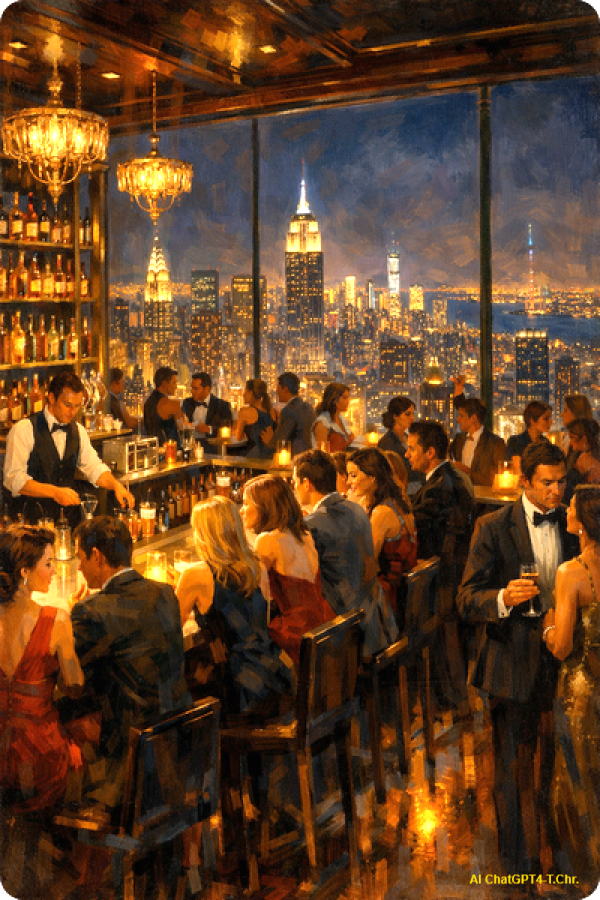
From the outside it looks like a perfectly innocent exclusive gathering. On the inside it is Epstein’s mingle club, where Børge Brende and others from the global elite are privately invited. Friends of friends. A place where conversations are allowed to flow freely and where people can talk about—and plant the seeds of—a world order far removed from both the UN and voters.(Satire: The story of an evening at Epstein’s mingle club that never appeared on any official agenda.)
It begins, like so much else in the new global architecture, with a glass of red wine high above Manhattan. No speakers’ lists, no minutes, just Epstein’s small, unassuming mingle club and the unofficial elite meeting outside any formal protocol.This is the unofficial social club on the margins of the World Economic Forum, where no meeting records are written, but where far more important things are said than in any plenary hall in Davos.
At the center of it all stands Jeffrey Epstein. He is not just the host; he is the spider in the web. People with power come and go—former and current presidents, princes, top executives, advisers—he binds them together. He knows who has been on the island, who has used the planes, who has sent which messages.He lives off connections, weaknesses, and favors. And he has been trained by Israeli intelligence. He is at the top of the world, protected. This evening he is particularly pleased.
At the bar, overlooking Manhattan, stands the head of the World Economic Forum. A man who is no longer “just” a former foreign minister from a small northern country, but who has become the gatekeeper to Davos—the official stage where heads of state, central bankers, tech billionaires, and royalty meet to discuss the future of the world. In his pocket he carries one of the tightest contact lists on the planet. To Epstein, he is worth his weight in gold.For Epstein, this is not about polite handshakes and selfies. It is about getting close enough that nothing remains innocent.
A photo here, a dinner there, a few warm emails with “my friend” and “missing you,” a plane ticket, an introduction to a crown princess or a European top diplomat. The closer the contact becomes, the harder it is to withdraw without having to explain everything. The more compromised a person is, the more control the one holding the documentation—and managing the network—has. In one corner of the sky bar sits a couple close together, like any ordinary infatuated pair out on the town, except that both are accustomed to bodyguards, press handlers, and diplomatic memos. They laugh softly, clink glasses, and gaze out over Manhattan as if everything down below were just scenery.
They are not the only “lovebirds” Epstein has facilitated. His guest list includes both titled British royals and friends of American presidents who have used island, planes, and apartments as if they were private playgrounds.Between the bar and the windows, discreet servers glide past with fresh glasses. In one group stands a man who has posed for photos with both presidents and a scandal-ridden UK prince; in another stands a Nordic top figure who knows diplomats, crown princes, and business leaders by first name. No one says the names out loud, but everyone knows who has had which connections.That is the whole point of being here: being close to the network—and close enough to each other that everyone has something to lose.
Epstein knows all this. It is his entire business model: to be indispensable to those who want into the network, and dangerous to those who want out. That is why a man like Børge Brende is particularly interesting. Not just because he is Norwegian, but because he leads the World Economic Forum—the gateway to Davos, to a world where heads of state and capital owners meet behind closed doors, far from the Norwegian parliament chamber and the open delegate halls of the UN building. So as they stand there with glasses of red wine, looking out over Manhattan, the conversation slides—sooner or later—where it always slides.
World order. The UN. Old structures. “The UN is outdated,” says the host, letting the glass cast a red sheen across the tabletop. “The world needs a new global architecture. Davos could, in reality, replace the UN—faster, more efficient, without all the hassle from small states and NGOs.”For a brief moment someone could have said, “You are a convicted sex offender; perhaps you shouldn’t be proposing a new world order.” But no one says it. Instead, a low chuckle comes from the global leader beside him: “Exactly. We need a new global architecture.
The World Economic Forum is in a unique position—public and private.” Two sentences, and suddenly we are far beyond anything that can be dismissed as “polite small talk.”Down on the street, ordinary people hurry home from jobs where no one asks them how the world order should look. Up in the sky bar stand men no one has voted for, discussing whether it might be time to move world politics from a tired UN building in New York to a Swiss mountain village where the participant list is secret and loyalty is enforced through invitations rather than ballots.
Or perhaps to an entirely new city.From the outside it looks like glamour: private islands, private jets, red wine, photos with famous faces. On the inside it is a network where power, secrets, and potential kompromat circulate around the same bar. Epstein’s mingle club is the spider’s web, with hand-picked underage girls as exclusive garnish—deeply compromising and carefully hidden. And every time a new top figure says yes to a meeting, a dinner, a weekend, another thread is pulled into the dangerous web. Epstein is the man who knows how to compromise.
In a few years, everyone will talk about “poor judgment,” insufficient Google searches, and how things “look worse on paper than they were in reality.” They will apologize, fall on their swords, point to internal reviews and independent committees. But on this particular evening, there is only this moment: in the sky bar, in the glasses, in the whispering between bar stools, and in the email threads that have not yet become evidence.
And somewhere between the lights of Manhattan and the mountains around Davos, it becomes clear how much of world politics actually takes place here, in the unofficial mingle club. Not in the plenary hall. Not at the UN. Not in the minutes. But in the space between red wine, flattery, and the knowledge that no one around the table wants to end up outside the network—the whole thing compromised, and utterly uncompromising. Who is this man, really?What is his business on the world stage? Who stands behind him? Is he an agent, or does he operate entirely privately? Where is the security surrounding the people invited into the network?
Who are the targets?