TRUMP SAYS US ‘ARMADA’ HEADING TO MIDDLE EAST AS IRAN DEATH TOLL PASSES 5,000
By Guardian- Patrick Wintour Diplomatic editor - Fri 23 Jan 2026 13.07 GMT
US president says ‘we have a lot of ships’ going in that direction and that Washington is watching Iran closely. Donald Trump has said a US “armada” is heading towards the Middle East and that the US is monitoring Iran closely, as activists put the death toll from Tehran’s bloody crackdown on protesters at 5,002.
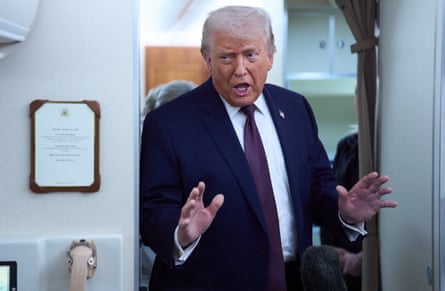
Speaking on Air Force One as he returned from the World Economic Forum in Davos overnight, he said: “We have a lot of ships going that direction, just in case. I’d rather not see anything happen, but we’re watching them very closely … we have an armada ... heading in that direction, and maybe we won’t have to use it.”
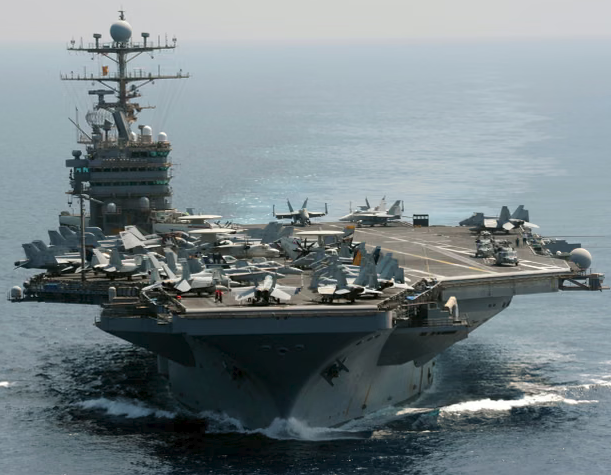
The aircraft carrier USS Abraham Lincoln and several guided-missile destroyers are due to arrive in the Middle East in the coming days. Additional air defence systems are being deployed, most likely around US and Israeli airbases. The UK said it would send RAF Eurofighter Typhoon jets from 12 Squadron to Qatar, at Doha’s request.
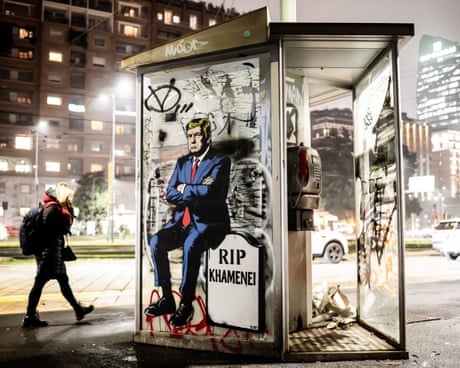
The US president pulled back from attacking Iran two weeks ago, despite promising “help is on its way”, largely because he felt he had been given no military option that would prove decisive in securing regime change in Tehran. He was also urged to hold back by the Gulf states.
In an update on Friday, the US-based Human Rights Activists News Agency (HRANA) said the death toll from the Iranian crackdown on protesters had reached to 5,002 – comprising 4,716 demonstrators, 203 government-affiliated people, 43 children and 40 civilians not taking part in the protests.
The agency’s numbers have been accurate in previous unrest in Iran and rely on a network of activists there to verify deaths. HRANA said at least 26,541 people had been arrested.
The UN Human Rights Council is meeting in Geneva to discuss the crackdown on the protests, which started on 28 December when traders took to the streets in Tehran in response to a sudden dip in the value of the rial. Protests spread and demands expanded to include calls for an end to the country’s government, creating the most serious and deadliest unrest in the country since the 1979 revolution.
Ali Abdollahi Aliabadi, who heads Iran’s Khatam-al Anbiya Central Headquarters, which coordinates the army and the Revolutionary Guards, warned the US on Thursday that any military strike on Iran would turn all US bases in the region into “legitimate targets”.
The protest movement has largely petered out in the face of the crackdown, which was accompanied by an unprecedented internet blackout, though chants of “death to the dictator” are taking place at bitter and often well-attended funerals.
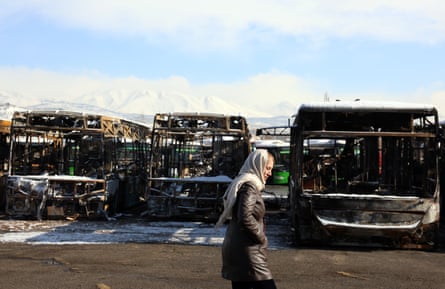
Videos are still trickling out from inside Iran showing how security forces were given licence to shoot to kill protesters, especially from 5-8 January.
One of the main reformist newspapers, Ham-Mihan, has been shut down for printing two stories: one on the pursuit of protesters in a hospital and the other detailing the severity and brutality of the suppression more widely.
Many leading reformists have not been able to express their views on the crackdown, and the few that have been allowed to address wider audiences seem to be blaming both sides for a collapse in social solidarity brought on by a crash in the exchange rate. The extent to which these problems are caused by sanctions or internal inefficiency is debated.
In his longest reflection to date on the violence, the Iranian president, Masoud Pezeshkian, a reformist elected 18 months ago, claimed “the civil and just protest of the people was turned into a bloody and violent battle due to a conspiracy by those who wish Iran ill will”.
Scott Bessant, the US treasury secretary, took credit while in Davos for the protests, saying US sanctions had led to the unrest and that maximum economic sanctions “worked because in December, their economy collapsed”.
He added: “We saw a major bank go under. The central bank has started to print money. There is a dollar shortage. They are not able to get imports, and this is why the people took to the streets. This is economic statecraft, no shots fired, and things are moving in a very positive way here.”
Trump has repeatedly left open the option of new military action against Iran after Washington backed and joined Israel’s 12-day war in June aimed at degrading Iranian nuclear and ballistic missile programmes. But the prospect of immediate American action seemed to have receded in recent days, with both sides insisting on giving diplomacy a chance.
Now is not the time to look away
It’s the Guardian’s job to keep a close focus on events in the Middle East for our global audience.
With reporters sharing live updates around the clock, including from inside Gaza, we’re well-placed to provide comprehensive, fact-checked reporting to show the world what is happening in the region. But we can’t do it without your support.
We rely on the generosity of our readers, whose support helps to keep our correspondents on the ground and our reporting free from commercial or political influence.
We appreciate that not everyone can afford to pay for news, but if you can, can we count on your support? Here are three good reasons to make the choice to fund us today:
1. Our quality, investigative journalism is a scrutinising force.
2. We are independent and have no billionaire owner dictating what we do – your money directly powers our reporting.
3. It doesn’t cost much, and takes less time than it took to read this message.