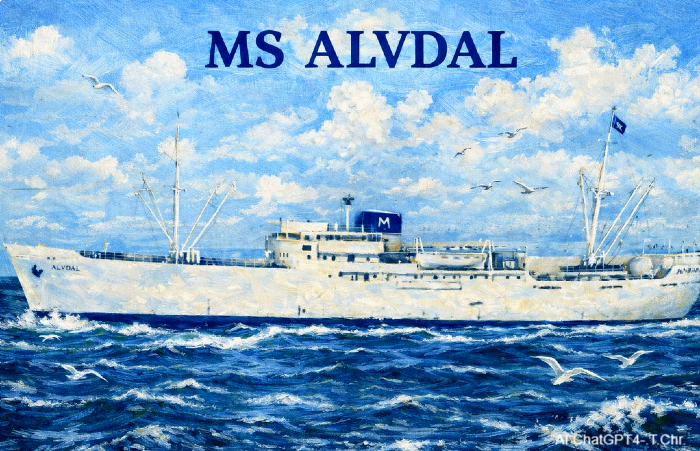
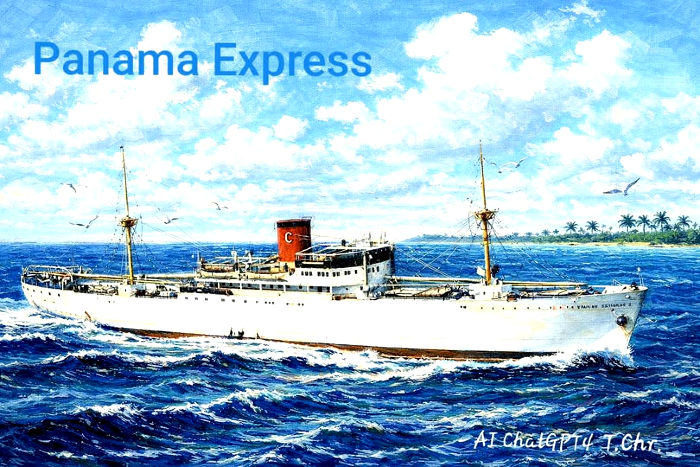
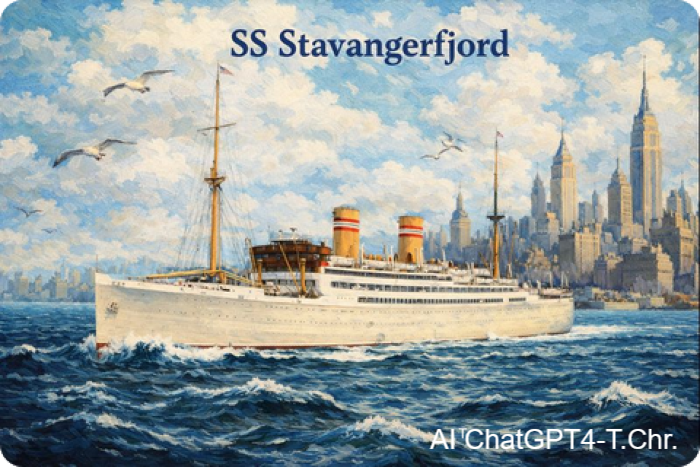
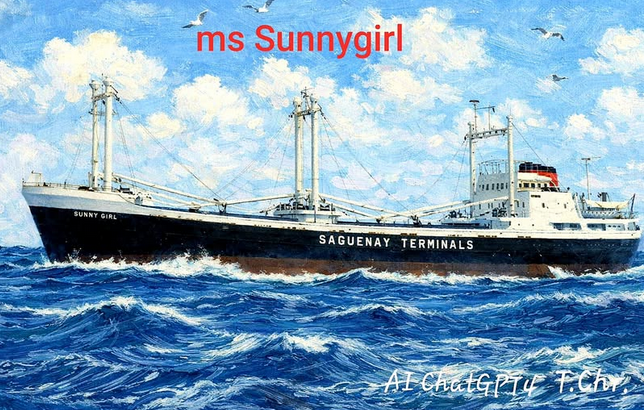
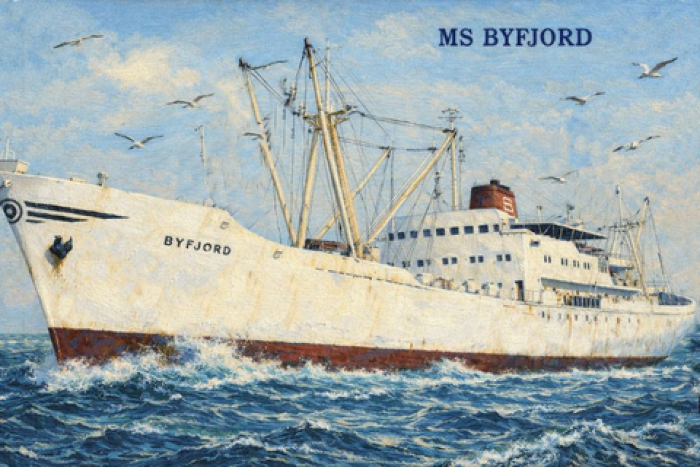
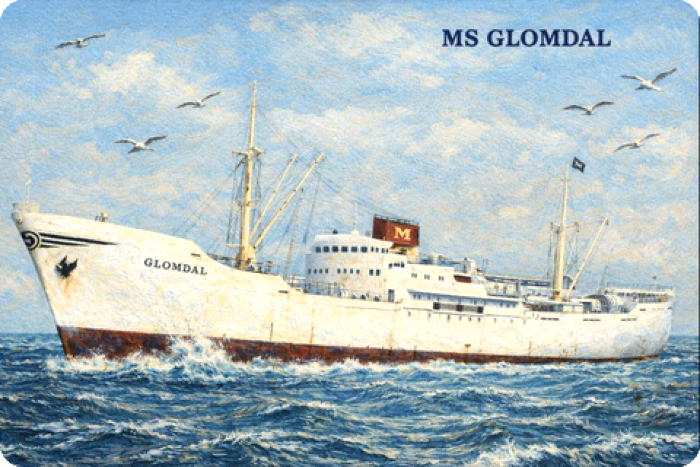
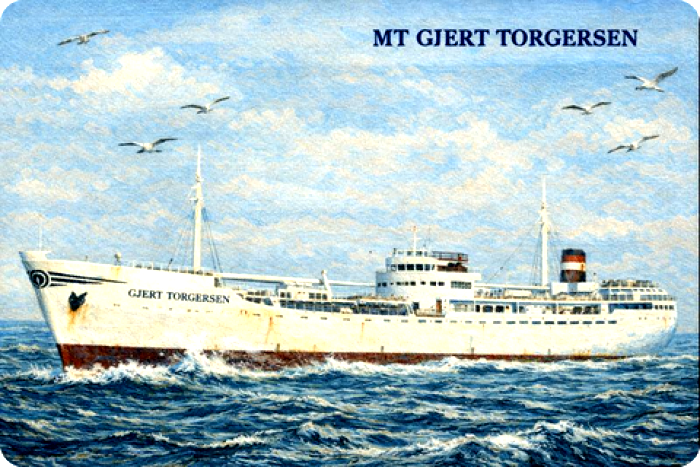
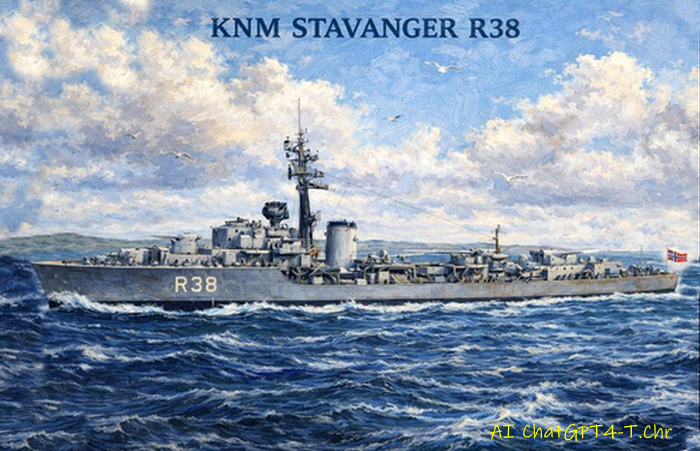
MY NORWEGIAN SHIPS 1949-1958

By Tore Christiansen - Human Synthesis - 24 January 2026. (Landkrabbe i Brasil)
MERCHANT SHIP ERA - LONGER PERIODS AWAY FROM HOME
When sail loosened its grip on the oceans, the sea did not fall silent. It changed its voice. The Merchant Fleet rose not in romance, but in resolve. Steel hulls replaced timber, engines throbbed where wind once whispered, and schedules mattered as much as stars ever had.
The oceans became highways of trade, and ships no longer wandered—they arrived. Cargo moved not by chance and season, but by plan, contract, and relentless continuity.
The modern world quietly stepped aboard.
These ships were not built for glory. They were built to carry the world. Grain, oil, iron ore, cars, containers stacked like cities—everything that made life ashore possible crossed the seas in their holds. The Merchant Fleet became civilization’s bloodstream, unseen but essential, moving day and night through fog, storms, and narrow straits, keeping nations fed, fueled, and functioning.
Life aboard remained demanding, though different from the age of sail. Crews were smaller, watches quieter, work more technical. Engines needed constant care, gauges replaced rigging, and the deep, steady pulse of machinery became the ship’s heartbeat. There were still storms—no engine ever conquered the sea—but steel met water with a different confidence, and experience still mattered more than manuals.
For young sailors stepping aboard for the first time, the excitement was no less real. Often barely out of school, they learned fast under the guidance of seasoned seafarers who had crossed every ocean and seen every port worth seeing—and many best forgotten. Old hands taught not just procedures, but judgment: how to read weather, respect machinery, handle fatigue, and look after one another when land lay weeks away. The sea remained a hard teacher, and mentorship was survival.
Calm days brought familiar comforts. Coffee cups rattled gently in the mess, stories surfaced during night watches, and laughter carried down steel corridors. Music still appeared—perhaps from a radio now instead of an accordion—but the need for human connection never vanished. On deck, with nothing but horizon in every direction, the same quiet reflection found sailors as it always had.
Ports came and went faster now. Cargo operations were efficient, time ashore brief. Still, tradition lingered. Crews went ashore when they could, careful not to lose one another in unfamiliar cities. The older sailors kept watch, making sure the young ones returned safely—because no matter the century, a ship does not sail without her people.
The Merchant Fleet took over the seas not with ceremony, but with necessity. It carried no flags of conquest, sang no shanties of empire, and claimed no heroics. Yet without it, the modern world would grind to a halt within weeks. It is the quiet power behind everyday life—the reason shelves are stocked, lights stay on, and cities breathe.
And though the romance of canvas faded, the deeper truth remained unchanged: the sea still demands respect, sailors still rely on one another, and every voyage still requires trust—in steel, in skill, and in the people who stand watch while the rest of the world sleeps.
The age of sail may have ended, but the age of seafarers did not. It simply put on work boots, learned new languages of machinery and logistics, and kept going—steady, unseen, and absolutely indispensable.
Now a philosophical end to the life and end to the sailors sea career, both good and not so good.
Every sailor, no matter how many oceans he has crossed, eventually sails his last voyage.
For some, the end comes gently. The body grows slower, joints complain, and the night watches feel longer than they once did. A final discharge paper is signed, a last gangway walked, and the sea is left behind with gratitude rather than regret. These sailors carry the ocean with them for the rest of their lives—in their posture, their patience, their quiet ability to endure. They sleep better during storms on land, smile at the smell of fuel or salt, and never truly stop listening for the low thrum of engines or the slap of water against steel.
Others leave less cleanly. Careers end through injury, exhaustion, or one mistake too many. Some are pushed ashore by changing regulations, shrinking crews, or ships that no longer need their kind of experience. A few carry heavier cargo home: broken routines, lost relationships, ports remembered better than faces. The sea gives much, but it does not protect against loneliness, and it never promised fairness.
What all sailors share is this: the sea shaped them more than they shaped the sea.
Years at sea teach restraint. You learn that control is partial, plans are fragile, and arrogance is punished quickly. You learn to trust others not because you like them, but because survival depends on it. You learn that boredom can be as dangerous as fear, and that small rituals—coffee at dawn, a shared meal, a joke on watch—are what keep people whole.
Leaving the sea creates a strange silence. On land, everything feels too solid, too certain. The horizon stops moving. Time no longer stretches and compresses the way it did between ports. Some former sailors spend years adjusting, searching for the edge that once defined their days. Others never quite do—and that, too, is part of the cost.
Yet there is dignity in the end of a sea career, even when it is imperfect. To have served at sea is to have accepted uncertainty as a way of life. It means you stood watch while others slept, carried the weight of responsibility far from help, and kept the world moving without applause.
The sea does not give farewells. It does not mark retirements or mourn departures. It simply continues. But sailors know better. They understand that a career at sea is not something you leave behind—it is something that settles into you, shaping how you walk, how you think, how you endure quiet moments.
And when an old sailor finally looks out over calm water—whether from a harbor wall, a ferry rail, or a memory—the understanding is complete:
The sea was never a job.
It was a chapter.
A demanding one.
A costly one.
But for those who lived it, an irreplaceable one.
The wartime sailor did not choose the sea for trade or travel. He was sent there by necessity, by history pressing hard on the present. Yet once aboard, the sea treated him no differently than it treated any other sailor. Wind still tore at the superstructure, waves still smashed green water across decks, and the horizon remained just as wide and indifferent. What changed was intent—and the cost of failure.
In war, the sailor lived with a sharper edge of time. Every watch carried the quiet question of whether dawn would come normally or in fire. The ship was no longer only a workplace or a home; it was a target. Engines ran not for efficiency, but for survival. Blackout curtains stayed drawn, lights dimmed, and silence became a form of discipline. Even laughter learned to keep its voice low.
Danger was constant and impersonal. Mines did not care about rank. Torpedoes did not distinguish between young and old, brave or frightened. Storms and enemies sometimes arrived together, testing men beyond any training manual. Pain came suddenly—burns, fractures, loss—and grief often had no time to settle. There was work to do, stations to man, damage to control. The sea allowed no pause for mourning.
And yet, amid this, something familiar endured.
Old sailors still watched over the young. Teenagers—some barely trained, many barely grown—were folded into crews by men who understood fear and responsibility. They were taught how to move on deck under fire, how to obey without freezing, how to breathe when the ship shuddered from impact. In rare moments ashore, or between operations, they were protected in quieter ways too—guided, restrained, brought back aboard before bravado became tragedy.
There were calm moments even in war. Long stretches of routine watches, endless horizons, the hum of engines at steady revolutions. Sailors leaned on rails and thought of home, of ordinary days that now felt impossibly distant. Songs were still sung, though more softly. Jokes still passed, darker perhaps, sharper at the edges. These were not distractions—they were survival.
Glory existed, but it was never as clean as stories made it. It came not from destruction, but from endurance. From holding a flooding compartment long enough. From staying at a gun when instinct screamed to run. From bringing a damaged ship—and her people—home. Medals might follow, but the real recognition lived only among those who were there.
When the war ended, the return was not simple.
Some sailors stepped ashore and resumed life with quiet pride, carrying memories they shared only with one another. Others found the land strangely foreign, its certainty unsettling after years of living with daily risk. A few carried wounds that never healed—visible or not—and learned that peace can be as difficult to navigate as war.
The wartime sailor’s career often ended earlier than planned. Youth burned fast under pressure. Some never grew old enough to look back. Those who did understood something few others could: that courage is not the absence of fear, but the decision to function despite it.
In the end, the wartime sailor shares the same final truth as all sailors.
The sea does not remember ranks, victories, or flags.
It remembers only that you were there.
That you stood watch.
That you endured.
And whether the voyage ended in triumph, survival, or quiet return, the sea closed behind them the same way it always does—without ceremony, without judgment—leaving the meaning of it all to those who lived it.
To the Second World War Sailors
During the Second World War, hundreds of Norwegian merchant ships, alongside those of many other nations, sailed straight into the most dangerous waters on Earth. They were not warships. They carried no glory-seeking missions. Yet they became a lifeline for the Allied forces, hauling food, fuel, ammunition, vehicles, and raw materials across the Atlantic while the outcome of the war still hung in the balance.
These voyages were acts of sustained courage. The Atlantic was a hunting ground. German U-boats stalked the sea lanes relentlessly, and merchant ships—slow, lightly defended, and heavily laden—were prime targets. Sailors crossed the ocean knowing that a single torpedo, often unseen and unheard until impact, could end everything in seconds. There were no front lines, no pauses, no safe crossings—only long nights, cold seas, and constant vigilance.
Norwegian merchant seamen paid a particularly high price. After the occupation of Norway, many ships sailed under exile, their crews unable to return home, unsure if their families were safe, yet continuing to sail because stopping was not an option. They endured sinking, fire, freezing water, long periods adrift, and the quiet terror of waiting for the next attack. Survival was often a matter of chance rather than skill.
And yet—without them, the war could not have been won.
Factories cannot fight without raw materials. Armies cannot advance without food, fuel, and ammunition. Britain could not have survived, let alone fought back, without the steady, sacrificial flow of merchant shipping. The merchant sailors did not just support the war—they made victory possible.
Tragically, when peace came, recognition did not arrive with it. Many merchant seamen returned home to silence. Their service was undervalued, their trauma poorly understood, and compensation slow, inadequate, or absent. While uniforms were honored and medals pinned, these sailors—who faced death daily without the status of combatants—were often forgotten by the very nations they had kept alive.
But history knows better. And so do we.
Their courage was not loud, but it was constant. Their heroism was not theatrical, but it was relentless. They stood watch while the world slept, sailed into fire without orders to retreat, and carried the weight of the war in their holds and in their minds.
They were not “just” merchant sailors.
They were the arteries of resistance.
They were the unseen front line.
LONG LIVE THE MERCHANT SAILORS OF WWII.
Their service mattered.
Their suffering mattered.
And their memory endures.