POMMERN-A FOUR MASTED STEEL BARQUE - 1903

By AI ChatGOT4-T.Chr.-Human Synthesis-22 January 2026
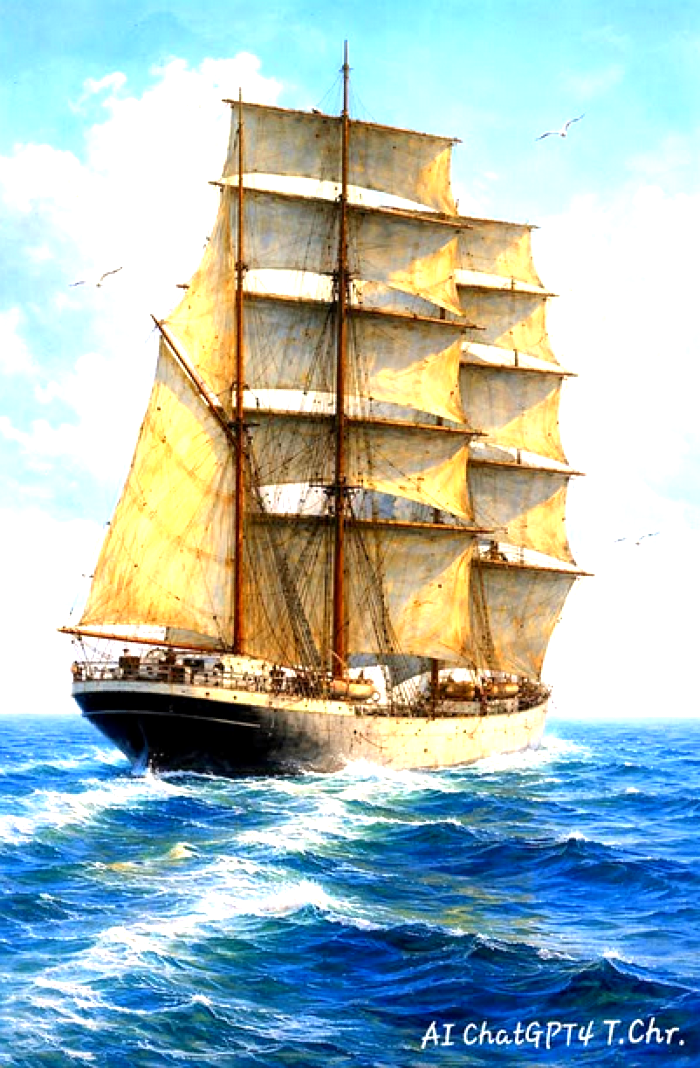
Pommern is a four-masted steel barque — a large sailing cargo ship — built in 1903. She’s now preserved as a museum ship in Mariehamn, Åland Islands (Finland).
History
- Original Name: Mneme (1903–1908).
- Renamed: Pommern (from 1908). The name is German for “Pomerania.”
- Built: 1903 by J. Reid & Co shipyard in Glasgow, Scotland.
- Early Ownership: Launched for German owners (F. Laeisz) and became part of the famous Flying P-Liners — a well-regarded fleet of fast sailing ships.
- After WWI: She was handed over to Greece as part of war reparations.
- 1923 Onward: Bought by Finnish shipowner Gustaf Erikson of Mariehamn, Åland, and used mainly in the grain trade from Australia to Europe.
- Final Commercial Voyage: 1939, before WWII.
- Museum Ship: Donated to the town of Mariehamn after WWII and has been preserved for public visits since the early 1950s.
Pommern earned a reputation as a “lucky ship”, surviving both world wars without major harm and losing very few crew at sea. She also won the Great Grain Races in 1930 and 1937 — informal competitions between sailing ships carrying grain from Australia to Europe.
Technical Specifications
- Type: Four-masted barque (a sailing vessel with square sails on all but the aft mast).
- Construction: Riveted steel hull.
- Length: ~95 m (312 ft).
- Beam (width): ~13 m (43 ft).
- Draft (depth below water): ~7.5 m (25 ft).
- Gross Register Tonnage: ~2,376 GRT.
- Cargo Capacity: ~4,050 t.
- Crew: Typically around 26.
- Rigging: So-called “bald-headed barque” — meaning she doesn’t carry the very topmost sails (“royals”), and her topsails/topgallants are split into upper and lower sections to make them easier for the crew to handle.
Sail Area: ~3,240 m² (total).
Service & Voyages
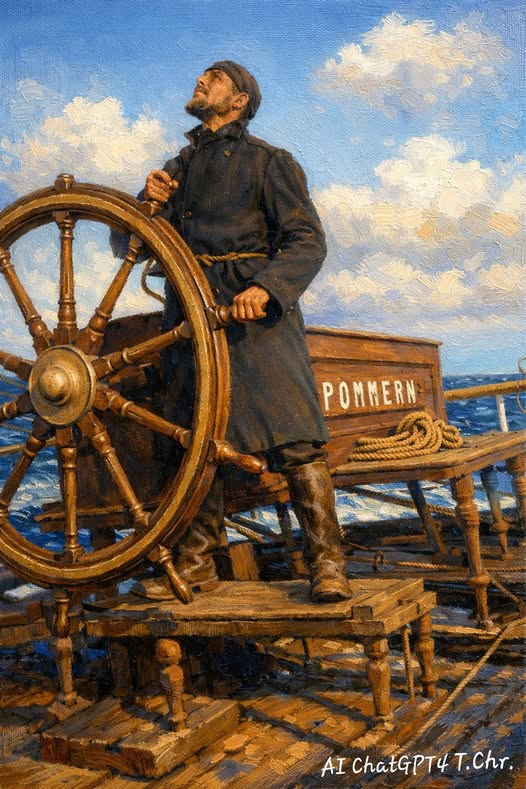
During her working life, Pommern carried a variety of cargoes, including:
- Grain from Australia to Europe, especially England and Ireland.
- Timber from Scandinavia.
- Saltpetre (nitrate) from Chile.
She participated in long, challenging ocean voyages and was part of the grain trade well into the 1930s.
Today as a Museum Ship
Pommern is permanently moored next to the Åland Maritime Museum in Mariehamn’s western harbour. Visitors can go aboard in the warmer months (May–September) and explore multiple decks, including:
- Weather deck,
- Cargo holds,
- Crew quarters,
- Exhibitions on life at sea.
An exhibition called “Pommern – 100 days under sail” recreates the experience of a long voyage, with audio guides and displays bringing the ship’s history to life.