NORWEGIAN INDEPENDENCE ASSURANCE-SYLVI LISTHAUG
By AI ChatGPT4-T.Chr. -Human Synthesis- 13 January 2026
Here’s a research-based overview of Sylvi Listhaug’s real expressed views and political intentions for Norway, grounded in her recent public statements and policy positions — including the extracts you shared (on crime, immigration, deportations) and her documented priorities as leader of the Progress Party (Fremskrittspartiet, FrP).
Who Sylvi Listhaug Is
Sylvi Listhaug is the leader of Norway’s Progress Party (FrP) and a member of the Storting representing Møre og Romsdal. She has held several ministerial posts in past governments, including Immigration & Integration, Justice, and Agriculture. She positions herself as outspoken and direct, emphasizing law and order, strict immigration control, and lower taxes.
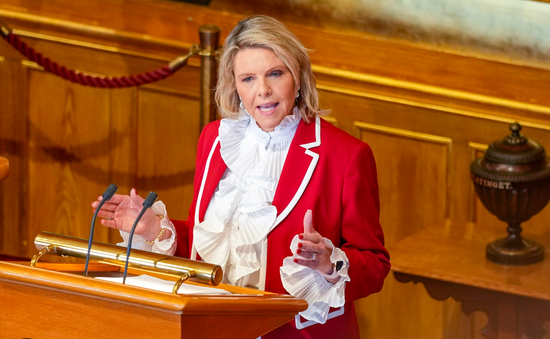
Her “hjertesaker” (core issues) include elder care, stricter immigration policy with stronger integration, lower taxes, and opposing perceived bureaucratic waste — particularly in climate policy and public spending outside core services.
Core Beliefs and Political Vision
1. Law, Order & Safety First
Listhaug repeatedly frames current crime trends as a national crisis that threatens public safety and trust in society, often contrasting Norway with Sweden. She asserts that:
- Criminality has risen significantly and that immigration and weak integration are major contributing factors.
- The current government has reduced police presence while crime increases.
- Stronger punitive measures and enhanced policing are urgently needed.
- She calls for policies that give crime real consequences, not “forgiving” approaches that focus excessively on offenders.
2. Strict Immigration & Deportation Reform
Listhaug advances a very restrictive immigration agenda, clear from recent speeches and policy papers:
- She calls for dramatically curbing immigration and stopping or severely limiting refugee and family migration flows.
- She wants asylum centers in third countries and more limited access to welfare for newcomers.
- Families should face stricter controls on family reunification and citizenship pathways.
- Deportation reforms are central: she advocates laws ensuring that criminal foreigners are deported effectively (your quoted policy).
Listhaug’s narrative is that immigration must be strictly regulated to protect Norway’s welfare state, resources, and social cohesion — and that failure to do so weakens safety and service standards.
3. Reducing Public Spending, Lower Taxes
She frames current government priorities as wasteful and misaligned with the public’s needs:
- Sees government spending on areas like climate subsidies or foreign assistance as misplaced.
- Wants lower taxes and reduced bureaucracy, arguing that people should keep more of their own money.
- Calls for cutting public waisting to reinvest in core services like health, elder care, and security.
This economic worldview is typical of FrP: less state intervention and more market and individual freedom, with a strong emphasis on economic efficiency.
4. Focus on Integration Outcomes
Despite her mostly restrictive immigration rhetoric, Listhaug also stresses the need for real integration of those already in Norway before accepting more:
- She argues that effective integration (into job markets and Norwegian values) should be prioritized over higher intake.
- Successful integration is seen as essential to reducing crime and social fragmentation.
While this can be interpreted differently depending on perspective, it’s central to her narrative on public safety and social policy.
Political Strategy and Ambition
FrP Leading in Polls
Recent polls continue to show FrP as a top party in Norway with strong momentum. Part of Listhaug’s strategy is to consolidate support by focusing on “core frustrations” — crime, cost of living, immigration, policing, and welfare access — that she argues other parties have neglected.
Coalition Positioning
While Listhaug has not explicitly declared a personal bid for prime minister, she has pushed the narrative that the largest party in a future non-socialist coalition should claim the PM role. Observers see this as both strategy and a sign of ambition within right-of-center politics.
How Her Views Reflect Her Political Style
Listhaug’s political messaging is urgent, combative, and framed around perceived crises — from crime to immigration and welfare. Her leadership style is sometimes polarizing: she openly critiques other leaders and the media, appealing to voters frustrated with the status quo. This rhetoric has helped FrP gain traction even among populations (e.g., some immigrant communities) that historically were not FrP supporters.
Summary — Her REAL Expressed Goals for Norway
| Policy Area | Listhaug’s Stated Position |
|---|---|
| Crime & Justice | Tighten enforcement, expand police, harsher penalties, accountability over rehabilitation narratives. |
| Immigration |
| Significantly reduce intake, strict controls on asylum & reunification, asylcenters abroad. |
| Deportations |
| Legislative reform to ensure criminal foreigners are deported. |
| Integration |
| Focus on integration outcomes before expanding immigration intake. |
| Economy & Welfare |
| Cut waste, lower taxes, prioritize health care, elder care, and essential services. |
Interpretation of Her Motives
Listhaug presents her agenda as necessary to protect Norwegian society, welfare, and identity. She believes current policies have failed on safety, integration, and economic prioritization. To her, strong leadership means confronting tough issues head-on rather than avoiding politically sensitive discussions on immigration or public order.
Whether one sees this as pragmatic governance, ideological conviction, or electoral strategy depends on political perspective — but these positions form the backbone of her public expressed views and intended policy direction as a national leader.
Does she strongly support independancy of Norway?
Yes — Sylvi Listhaug does strongly support Norwegian political independence and national sovereignty, especially when it comes to Norway’s ability to make its own laws and control its own borders and security policy. Her positions show a clear pattern of emphasizing autonomy from supranational bodies and defending national decision-making. Here’s how that looks in practice:
1. Opposes EU Membership
Listhaug and the Progress Party (FrP) firmly reject the idea of Norway joining the European Union. She has repeatedly stated that FrP will not participate in a government that plans for Norwegian EU membership, and she insists that an EU membership debate is unnecessary and divisive right now. This reflects a strong preference for national sovereignty over deeper integration with European institutions.
📌 Key point: She frames Norwegian independence as incompatible with EU membership, holding that Norway should not cede decision-making powers to Brussels.
2. Prioritizes National Decision-Making in Foreign Policy
Listhaug emphasizes that Norway should chart its own foreign policy course, rather than aligning too closely with supranational blocs like the EU. She argues that national sovereignty should matter most, and that Norway’s security and defense cooperation is best maintained through NATO and partnerships, not EU structures.
This stance again underscores her belief in maintaining political and military independence rather than integrating into wider European systems.
3. EØS Skepticism (but Not Total Rejection)
While Listhaug and FrP are committed to rejecting full EU membership, there are nuanced debates within political discourse about the European Economic Area (EEA) agreement (which ties Norway to the EU’s internal market without full membership). Critics have raised concerns that Listhaug’s pushback against EU influence could affect how the EEA works in the future, but the core stance remains: Norway should not be governed by EU regulations or directives that undermine national control.
So, her independence position doesn’t necessarily mean exiting all European arrangements — but it does mean resisting any binding political authority from the EU.
4. National Control Over Policy Matters
Listhaug’s public rhetoric consistently criticizes any government actions she sees as favoring external influence over domestic control. For example:
- She has criticized the Norwegian government for being too deferential to EU policies.
- She insists that decisions about immigration, economy, welfare, security, and legal standards must stay firmly in Norwegian hands.
This reflects a broader theme in her politics: Norwegian institutions should decide Norway’s policies, not supranational entities.
Summary: Listhaug’s Position on Norwegian Independence
| Issue | Listhaug’s Stance |
|---|---|
| EU membership | Firm no — would not support joining or debating membership now. |
| Norwegian sovereignty |
| Strongly defended — prioritizes national decision-making. |
| EU influence on policy |
| Critical — wants less external influence on Norwegian laws. |
| Defense cooperation |
| Preferences for NATO and bilateral/multilateral ties without EU command structures. |
In Short
Yes — Listhaug strongly supports the independence of Norway as a sovereign nation. She consistently argues against ceding political authority to external organizations (especially the EU), believes in national control over key policy areas, and frames much of her foreign policy around protecting Norway’s self-determination and decision-making autonomy.