THE MAASAI ARE NOT MERELY A TRIBE IN AFRICA
By AI ChatGPT4-T.Chr.-Human Synthesis-08 January 2026
The Maasai are not merely a tribe; we are a civilisation shaped by land, memory, and restraint. Our pride is quiet but unshakable, carried in our posture, our discipline, and our continuity across generations.
Identity, for the Maasai, is not proclaimed loudly—it is lived daily, embodied in how we walk, speak, herd, and wait. Time moves differently for a people who measure life not by accumulation, but by balance.
Maasai oral history teaches that Naiteru Kop, Enkai the Great Mother, created the first Maasai and entrusted him with a cow, saying:
“Take care of the cow, and the cow will take care of you.”
This was not a grant of possession but a moral instruction. The cow became sustenance, economy, ritual, and ethical teacher. Through cattle, the Maasai learned moderation, patience, and reciprocity. To overtake was to invite loss; to preserve was to ensure continuity. Wealth, therefore, was never divorced from responsibility.
Our relationship with land is one of custodianship, not conquest. The Maasai did not carve borders into the earth; we listened to it. We moved with the seasons, reading grass, wind, water, and animal behavior as living texts. This mobility was not primitiveness but an advanced ecological intelligence—one that allowed wildlife, pasture, and people to coexist without exhaustion. Land was not owned; it was entrusted, as life itself is entrusted.
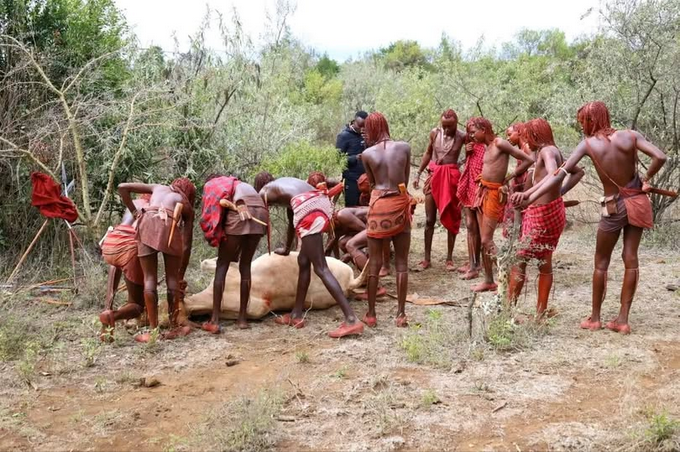
Lion hunting, often misunderstood, was never an act of domination. It was a rite of passage governed by discipline, necessity, and restraint. Female lions were never hunted, for the Maasai hold profound reverence for the source of life. Courage was not measured by killing, but by judgment—by knowing when not to kill. To destroy life recklessly was to dishonor Naiteru Kop and disturb the delicate balance that sustains all beings.
The Maasai stand tall because we know who we are. Our ancestors walk with us through age-sets, stories, ceremonies, and the red soil beneath our feet. Memory is not something we look back on; it is something we inhabit. Pride, for the Maasai, is memory made visible—in posture, in restraint, in the refusal to forget who we are in order to survive.
Philosophical Overview
At its core, Maasai philosophy rests on a simple but demanding truth: to live well is to live in balance. Power without restraint leads to emptiness; progress without memory leads to loss. The Maasai worldview reminds the modern world that civilization is not measured by speed, domination, or extraction, but by continuity—by the ability to move forward without severing one’s roots.
In a world increasingly detached from land, ancestry, and responsibility, the Maasai way offers a quiet correction. It teaches that identity is not invented anew each generation, but carried, refined, and protected. That true strength lies not in taking more, but in knowing enough. And that the future does not belong to those who conquer the earth, but to those who learn, humbly, how to belong to it.
Rooted in Naiteru Kop, land, cattle, courage, and ancestral duty, the Maasai face the future not as a rupture from the past, but as its continuation—grounded enough to endure, wise enough to remain themselves.
Source of original article Hon Nkarura Ole Kishovian