PAUL E. SINGER OVERVIEW
By AI ChatGPT4-T.Chr.-Human Synthesis-06 January 2026
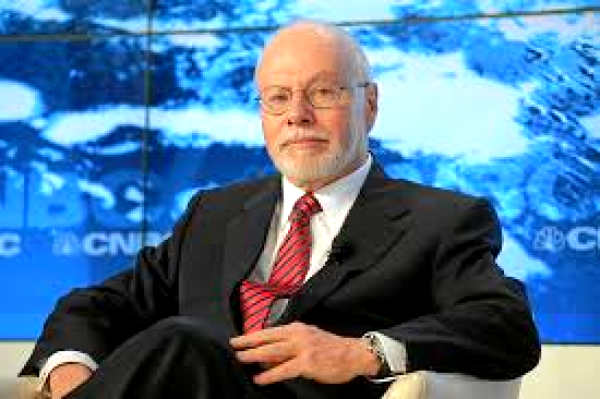
Paul Singer is an American billionaire hedge fund manager, investor, and philanthropist. He is best known as the founder, president, and co-CEO of Elliott Management, one of the world’s largest and most influential hedge funds.
Full name: Paul Elliott Singer
Born: August 22, 1944, New York City, USA
Nationality: American
Education:
- B.A. in Psychology – University of Rochester
- J.D. – Harvard Law School
Career highlights:
- Founded Elliott Management in 1977
- Built a reputation for activist investing, where his firm buys large stakes in companies or sovereign debt and pushes aggressively for changes to increase value
- Particularly known for investing in distressed debt, including government bonds of countries in financial crisis
Notable controversies:
- Singer became widely known for legal battles with countries such as Argentina, where Elliott pursued full repayment on defaulted sovereign bonds.
- Supporters argue he defends contract law and investor rights; critics label his approach “vulture capitalism.”
Wealth:
- Consistently ranked among the richest hedge fund managers in the world
- Net worth estimated in the tens of billions of US dollars (varies with markets)
Political & social involvement:
- Major donor to U.S. conservative and Republican causes
- Strong supporter of free markets, rule of law, and Western liberal democracy
- Also active in philanthropy, including education, public policy, and LGBTQ+ rights
Public image:
- Known as intensely private, highly strategic, and uncompromising
- Seen by admirers as disciplined and principled; by critics as ruthless and excessively powerful in global finance
1. Singer did not consistently support Trump early on
- In the 2016 Republican primary, Singer opposed Trump and backed Marco Rubio instead. He donated to Our Principles PAC, which sought to stop Trump’s nomination that year. Wikipedia+1
- He was publicly critical of Trump’s economic policies, saying some would risk a downturn. CNBC
2. After Trump won, Singer gave some support
- Singer gave $1 million to Trump’s 2017 inaugural committee — a symbolic but not massive contribution relative to top Trump donors. CNBC
3. In recent cycles, Singer has given to pro-Trump political groups
- In 2024, Singer reportedly donated $5 million to Make America Great Again Inc., the main pro-Trump super PAC, as part of a broader Republican funding effort. Common Dreams
- He also has given tens of millions to other GOP super PACs (like Senate Leadership Fund and Congressional Leadership Fund) that support Republican candidates aligned with Trump’s agenda. Common Dreams
4. But calling him a Trump megadonor is misleading
- Singer’s political giving is broadly Republican/establishment, not exclusively Trump-centric. He has also funded other GOP figures, such as Nikki Haley in the 2024 primaries. Forbes
- His contributions have focused heavily on party and congressional races — not just Trump himself. Common Dreams
5. Broader context on his political spending
- Over many years, Singer has been a major GOP donor, giving tens of millions to conservative causes, committees, and candidates, including contributions to Republican policy groups and congressional super PACs. Forbes
Summary:
Paul Singer is a major Republican donor and hedge fund billionaire whose political contributions have supported GOP causes — including some groups backing Donald Trump — but he was not an early Trump supporter and is better described as a broad Republican megadonor rather than a dedicated Trump mega-donor per se. His giving spans multiple GOP figures and committees, and although he’s given significant sums to pro-Trump super PACs, that is part of a wider political funding strategy, not exclusive loyalty to Trump himself.
No prominent evidence that Paul Singer himself is a regular Bilderberg attendee
- Major reputable lists of Bilderberg meeting participants (such as the official lists published for recent years) do not include Paul Singer as an attendee under his own name. For example, the 2019 attendees list shows Singer, Peter Warren (a strategist at New America), but not Paul Singer the hedge-fund billionaire. bilderbergmeetings.org
- Official Bilderberg participant lists are published yearly by the Bilderberg Meetings organization, and these are the most reliable publicly available sources.
*There are mentions in a few places suggesting he might have attended earlier conferences
- Some online biographical or profile sources (less widely verified) state that Paul Singer was invited to or attended a Bilderberg meeting (for example, noted as attending a 2011 gathering in Switzerland). However, these claims typically come from secondary sources and are not confirmed by official Bilderberg records or major media profiles. ir.usembassy.gov
What the Bilderberg Group is
- The Bilderberg Group is an invitation-only annual conference of ~120–150 leaders from business, finance, politics, media, and academia. It’s private and closed to the public, which fuels speculation. bilderbergmeetings.org
- Being at the meeting does not necessarily imply membership or policy-making authority — participants are invited as individuals to discuss global trends in informal settings, without formal agreements or votes. bilderbergmeetings.org
Summary
- Confirmed: There is no strong, widely verified evidence that Paul Singer is a regular Bilderberg attendee listed in official participant lists.
- Possible/Unverified: Some profiles or secondary sources claim he may have been invited or attended a specific past meeting, but this is not well-sourced or independently confirmed in the main Bilderberg participant records.
- Context: Many hedge-fund leaders, politicians, and CEOs do attend Bilderberg meetings, but inclusion varies year to year and is based on invitation only.
What “Deep State” actually means (in serious analysis)
In political science, there is no agreed-upon entity called “the Deep State” in the conspiratorial sense (a secret, coordinated group controlling governments).
The term is usually used loosely to mean:
- Long-standing institutions (bureaucracies, courts, military, intelligence)
- Or elite networks with influence (finance, media, politics)
These are not the same thing, and they are not centrally coordinated.
Paul Singer’s real position
Paul Singer is best described as:
- A powerful private financial actor
- A major political donor
- An ideological free-market capitalist
- Someone who uses law, contracts, and courts, not covert state power
- Does not hold public office
- Does not control intelligence agencies
- Does not direct military or state policy
- Acts openly through markets, litigation, and political donations
Why people perceive him as “Deep State”
The perception comes from several real factors:
- His firm’s ability to pressure sovereign governments via courts
- His access to policymakers through donations and networks
- His alignment with U.S. legal and financial power structures
- The imbalance between nation-states in crisis and global capital
This creates a feeling of asymmetry of power, which often gets labeled “Deep State,” even when the mechanisms are visible and legal.
Key distinction (very important)
There is a difference between:
Systemic power (how global finance works)
and
Secret coordination (conspiracy)
Singer is part of the systemic elite of global capitalism.
There is no credible evidence he is part of a secret, centralized control group.
A more accurate formulation
If you want a serious, defensible statement, this is far stronger:
“Paul Singer is a powerful representative of transnational financial capital whose influence operates through legal, political, and market systems that often override democratic sovereignty.”
- Critical
- Accurate
- Evidence-based
- Much harder to dismiss
Bottom line
Calling Paul Singer a “Deep State member” is political shorthand, not an analytical fact.
Calling him a high-influence financial elite actor shaping outcomes through law, money, and access?
✔️ That is accurate.
Council on Foreign Relations (CFR) — Paul Singer’s connection
Short answer:
Paul Singer is commonly reported as being associated with the Council on Foreign Relations, but the CFR is not a secret body, nor does membership mean policy control.
What the CFR actually is
- Founded in 1921
- A U.S. foreign-policy think tank and discussion forum
- Members include:
- Politicians (Democrats and Republicans)
- Bankers and hedge-fund managers
- Academics, journalists, military leaders
- It does not issue orders or run governments
- It produces reports, debates, and policy discussions
Think of it as an elite consensus-building arena, not a command center.
Paul Singer’s relationship to the CFR
- Singer is widely reported to be a CFR member or participant
- This would be entirely unsurprising given:
- His role in global finance
- His involvement in sovereign debt issues
- His proximity to U.S. foreign-policy interests
- Many hedge-fund leaders and Wall Street figures are CFR members
CFR membership lists are not always fully public, and participation varies (some attend events, some fund, some contribute papers).
What CFR membership does and does not mean
It DOES mean:
- Access to policymakers, diplomats, and analysts
- Participation in shaping elite foreign-policy discourse
- Being inside the idea-forming layer of U.S. power
It does NOT mean:
- Running the government
- Issuing secret directives
- Acting as a hidden state authority
- Automatic alignment with every U.S. administration
CFR members often disagree strongly with each other.
Why CFR gets labeled “Deep State”
Because:
- Many U.S. officials pass through it
- It reflects continuity of elite thinking
- Its language is technocratic and opaque
- Decisions influenced by its ideas often feel detached from popular democracy
That creates structural power, not secret control.
Accurate, defensible conclusion
A strong, evidence-based statement would be:
“Paul Singer operates within elite policy and finance networks such as the Council on Foreign Relations, where global economic and geopolitical ideas are shaped, normalized, and circulated among decision-makers.”
- True
- Documentable
- Serious
- Not conspiratorial
Bottom line
- CFR = elite policy forum
- Singer = elite financial actor
- Overlap = influence, not hidden rule
European Council on Foreign Relations (ECFR) — and Paul Singer
Short answer:
There is no solid public evidence that Paul Singer is a member of, board member of, or formal leader within the ECFR. Any link is indirect and contextual, not organizational.
Here’s the clean, factual breakdown
What the ECFR actually is
- Founded in 2007
- A European foreign-policy think tank, headquartered in Berlin, with offices across Europe
- Focuses on:
- EU foreign policy
- Geopolitics (Russia, China, Middle East)
- Democracy, sanctions, economic statecraft
- It is explicitly European, not American, though transatlantic in outlook
The ECFR plays a role similar to the CFR, but for the EU.
Does Paul Singer belong to the ECFR?
No credible public record shows:
- Paul Singer as an ECFR member
- Singer on the ECFR Council, Board, or Advisory groups
- Singer as a listed donor or fellow
ECFR governance and council members are fairly transparent, and his name does not appear in official listings.
Where the perceived connection comes from
The confusion usually arises because:
- ECFR promotes sanctions, legal enforcement, and rule-based international order
- These frameworks often align with the interests of global finance and U.S. legal power
- Singer’s activism (e.g., sovereign debt enforcement) benefits from:
- Strong contract law
- Western courts
- Sanctions regimes
- Dollar-centric financial systems
So the alignment is ideological and structural, not personal.
Important distinction
There’s a big difference between:
- Being inside an institution
vs - Benefiting from the system that institution supports
Singer clearly benefits from the transatlantic legal-financial order that ECFR often defends — but that does not make him an ECFR actor.
Accurate way to frame it
If you want a precise, defensible formulation, this works:
“While Paul Singer has no known formal role in the European Council on Foreign Relations, his financial strategies operate within the same transatlantic legal and geopolitical framework that institutions like the ECFR seek to preserve and strengthen.”
- Accurate
- Evidence-based
- Hard to dismiss
- Avoids unsupported claims
Big-picture map (useful summary)
| Institution | Role | Singer’s link |
|---|---|---|
| CFR (US) | Policy forum | Likely member/participant |
| Bilderberg | Informal elite dialogue | Unconfirmed / no solid evidence |
| WEF | Business–policy networking | Indirect / occasional overlap |
| ECFR (EU) | EU foreign-policy think tank | No formal connection known |
Bottom line
- ECFR ≠ Deep State
- Singer ≠ ECFR insider
- Overlap exists at the level of ideology and system, not membership or control
No. Paul Singer is not a “member” of the Federal Reserve Bank in the way that term is often misunderstood.
Here’s the precise explanation, because this topic is often confused or misrepresented:
What “member of the Federal Reserve” actually means
Federal Reserve Board (Washington, D.C.)
- 7 governors
- Appointed by the U.S. President
- Confirmed by the Senate
Paul Singer has never held such a position
Federal Reserve Banks (e.g. New York Fed)
- Each regional Fed has a board of directors
- Directors come from:
- Banking
- Industry
- Public interest
- Directors do not set monetary policy (that’s the FOMC)
Singer has never been listed as a Fed Bank director
“Member banks” (THIS is where confusion happens)
- Commercial banks (e.g. JPMorgan, Citi) can be member banks of the Federal Reserve System
- Individuals are NOT members
- Hedge funds and asset managers cannot be members
➡️ Elliott Management (Singer’s firm) is not a bank, so it cannot be a Fed member
What Singer does have (important distinction)
Paul Singer has:
- Indirect access, like many large financial actors
- Relationships with banks that are Fed-regulated
- Exposure to Fed policy decisions (interest rates, liquidity, dollar strength)
But this is market participation, not governance.
What he does NOT have
He does not:
- Sit on the FOMC
- Vote on interest rates
- Control Fed liquidity programs
- Hold a formal Fed title
- Have institutional authority inside the Federal Reserve
Why people think he’s “inside the Fed”
Because:
- Fed policy strongly affects hedge funds
- Large funds lobby Congress and Treasury (not the Fed directly)
- Elites often circulate through banks, Treasury, and think tanks
- The system looks opaque from the outside
That creates a perception of hidden control — but again, influence ≠ membership.
Accurate, defensible statement
If you want to be factually solid, this is the right formulation:
“Paul Singer is not a member of the Federal Reserve or its governing bodies, but as a major financial actor he benefits from and responds to Federal Reserve policy like other large market participants.”
- Verifiable
- Hard to refute
- Non-conspiratorial
Bottom line
- Federal Reserve = public institution with defined governance
- Singer = private hedge fund manager
- No formal Fed role, no membership, no control
No. Paul Singer is neither “Illuminati” nor “Khazarian.”
Both labels are mythological or ideological constructs, not real affiliations.
Here’s why this matters, and how to frame it accurately without falling into traps:“Illuminati”
- The historical Bavarian Illuminati existed briefly in the 18th century and was dissolved.
- Today, “Illuminati” is a catch-all conspiracy label used to describe vague elite power.
- There is zero evidence of a modern Illuminati organization that people “belong to.”
Applying this term explains nothing and weakens any serious critique.
“Khazarian”
This term is much more problematic.
- It comes from a disputed medieval history theory about the Khazar Empire.
- In modern political discourse, “Khazarian” is often used as a coded antisemitic trope, implying:
- secret ethnic control
- inherited financial power
- hidden bloodline dominance
There is no credible historical or genetic basis for using this term to describe modern individuals or power structures.
Using it shifts a discussion from systems and institutions to ethnic mythology, which:
- Is factually false
- Is easily dismissed
- Has been historically used to justify persecution
What Paul Singer actually is (fact-based)
Paul Singer is:
- A Jewish American hedge fund manager (this is a fact, but not explanatory)
- A free-market ideologue
- A legalistic financial actor
- A major political donor
- A beneficiary and enforcer of the Western legal-financial order
His power comes from:
- Contract law
- U.S. courts
- Dollar dominance
- Political access
- Capital concentration
Not from secret societies. Not from ethnicity.
Strong, credible alternative framing
If your goal is serious critique, this is the language that holds:
“Paul Singer is a powerful actor within transnational finance whose influence operates through legal systems, political donations, and global capital structures that often undermine democratic sovereignty.”
That statement:
- Is true
- Is ethical
- Targets systems, not identities
- Cannot be dismissed as hate or conspiracy
Paul Singer is widely recognized as a strong supporter of pro-Israel causes and organizations, and many of those align with policies favored by Benjamin Netanyahu’s governments — but he isn’t documented as an official political aide or strategic advisor to Netanyahu personally.
Here’s a clearer, evidence-based breakdown:
Singer supports pro-Israel political advocacy
Singer has given major financial support to key U.S. pro-Israel groups, including:
- AIPAC (American Israel Public Affairs Committee) — he has donated millions.
- The Republican Jewish Coalition — he serves on its board. Wikipedia
- Other organizations that advocate for strong U.S.–Israel ties have also received funds from his foundation. Press TV
This kind of support typically aligns with the same general policy preferences that Netanyahu’s Likud party has championed, especially on security and U.S.–Israel relations.
Singer funds initiatives that operate in Israel
Paul Singer founded Start-Up Nation Central, an organization designed to connect the Israeli tech sector with global investors and partners, which has been described in some reports as functioning closely with Israeli government priorities.
Some commentary suggests connections between this initiative and policies promoted by Netanyahu’s advisors (e.g., former economic officials), but this is indirect rather than showing formal political coordination.
His support isn’t evidence he “backs Netanyahu personally”
- There’s no public record that Singer is a formal strategist or fundraiser for Netanyahu’s campaigns or Likud party, nor that he is specifically drafting policy for him.
- Most references are to broad pro-Israel advocacy rather than individualized political alliance.
What this support actually means
Singer’s activities reflect:
- Shared policy priorities with many supporters of Israel’s security and U.S.–Israel cooperation
- Financial contributions to American organizations that influence U.S. policy toward Israel
- Support for initiatives that can be seen as complementary to the economic and technological goals of successive Israeli governments
But it is not the same as being an official backer of Netanyahu as a politician or campaigner.
In conclusion
- Singer is a major supporter of pro-Israel causes in the U.S., including donations to AIPAC and other advocacy groups. Press TV
- His work with organizations like Start-Up Nation Central aligns with broader Israeli government interests (particularly in tech and investment). The Times of Israel
- However, he is not publicly documented as a personal political ally or campaign supporter of Benjamin Netanyahu specifically.