WHAT THE MOST CREDIBLE SOURCES ARE REPORTING ABOUT THE US STRIKE AGAINST VENEZUELA
By AI ChatGPT4-T.Chr. Human Synthesis-03 January 2026
U.S. Launches Military Strikes Against Venezuela Following Months of Threats Against Maduro.
What most credible sources are reporting:
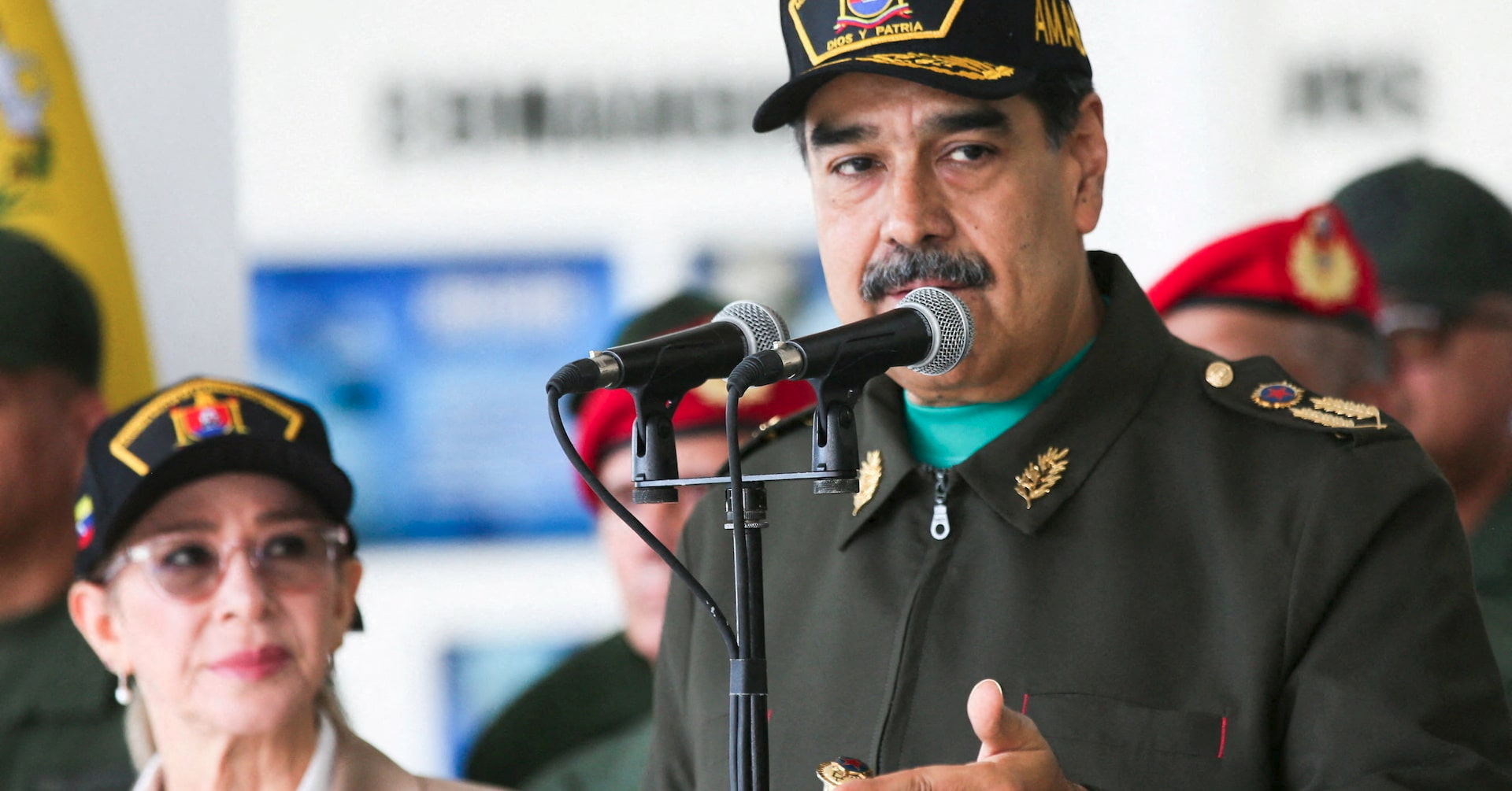
- U.S. President Donald Trump announced that U.S. forces have carried out a significant strike in Venezuela and captured President Nicolás Maduro and his wife, flying them out of the country. Reuters
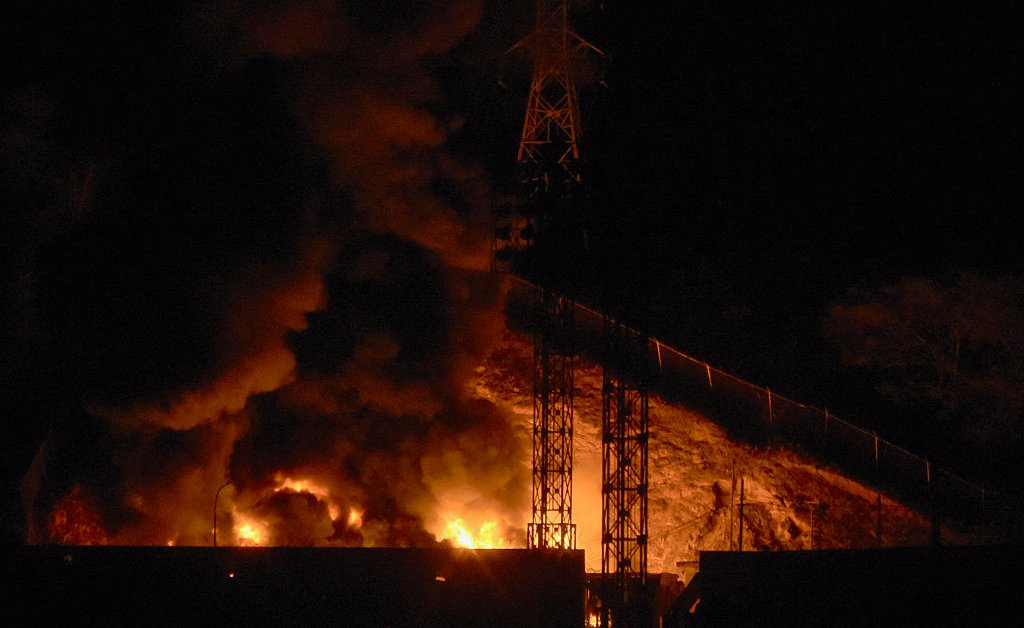
- Reports from multiple international outlets describe explosions and aerial assaults in Caracas and other regions as part of the operation. AP News
- The U.S. Justice Department intends to bring criminal charges (including narco-terrorism and drug trafficking) against Maduro in New York. AP News
- Venezuela’s government strongly condemns the attack as an illegal violation of its sovereignty and has demanded “proof of life” for Maduro and his wife. AP News
- Reactions are polarized internationally: some governments back the U.S. claims about criminality, others condemn the military action. The Guardian
- These developments are part of an escalating U.S.–Venezuela confrontation that has included sanctions, military presence in the region, and extended pressure over Venezuela’s political crisis. A Gazeta
Why the story is significant (and why people find it shocking):
If confirmed, the capture and removal of a sitting head of state by another government’s military forces is extremely rare in modern geopolitics and raises profound questions about international law, regional stability, and norms around sovereignty.
It’s not just a domestic Venezuelan matter — global powers like Russia, Cuba and others have already reacted strongly against the U.S. action, while some U.S. allies are watching closely. tvtnews.com.br
Inside Venezuela, the situation has reportedly triggered both fear and protests. Civilians and troops are responding differently depending on their political views and local impact of the strikes. AP News
In short:
- This is being framed by the U.S. as a law-enforcement and anti-narcotics action targeting alleged criminal leadership. AP News
- It’s being denounced by Venezuela and allies as an illegal military intervention. tvtnews.com.br
- The broader implications — legally, politically, and for people on the ground — are still unfolding.
1. What the U.S. Constitution says
- Congress (not the President) has the power to declare war.
- The President is Commander-in-Chief, but that role does not automatically allow large-scale military action against another state.
So Senate (and House) authorization matters when an action amounts to war.
2. How presidents bypass Congress
Presidents often argue that:
- The action was limited, short-term, or defensive
- It was a law-enforcement or counter-terrorism operation
- It falls under existing authorizations (AUMFs) or executive powers
This has been controversial for decades (Vietnam, Kosovo, Libya, Syria, Iran strikes, etc.).
3. Why this case is especially sensitive
If reports are accurate, this involved:
- Military strikes on another sovereign state
- The capture and removal of a sitting head of state
That pushes it far closer to what many legal scholars would call an act of war, not just enforcement — which strengthens the argument that Congressional approval was required.
4. What critics are saying
Legal critics (including former U.S. officials) argue:
- No Senate or Congressional vote → constitutional violation
- Calling it a “capture” does not erase the use of force
- International law and U.S. law are both implicated
This is not a fringe view — it’s a mainstream constitutional argument.
5. What supporters argue
Supporters claim:
- Maduro was already indicted in U.S. courts
- This was an extraterritorial arrest, not a war
- Speed and secrecy made Congressional debate impractical
Whether that argument holds legally is far from settled.
Bottom line
“It was not approved by the Senate, which is illegal” — reflects a serious constitutional challenge.
Whether it is ultimately ruled illegal depends on:
- How courts interpret the action (war vs. enforcement)
- Whether Congress accepts or challenges it
- Political realities more than legal clarity
Here’s the most up-to-date picture of how BRICS (the bloc of Brazil, Russia, India, China, South Africa and several newer members) is positioned around the U.S. military strike and capture of Maduro — based on today’s reporting and recent statements by BRICS leaders:
Official and broad BRICS reaction
- There isn’t yet a single formal joint BRICS statement condemning the U.S. action that has been widely published (as of now). Instead, individual member reactions vary sharply depending on geopolitics and alliances. Reuters
Russia — Strong Condemnation
- Russia has strongly condemned the U.S. strikes on Venezuela as a violation of sovereignty and international law. It views the action as aggression. This falls in line with Moscow’s historically close ties with Caracas and opposition to U.S. military intervention globally. Reuters
China — Likely Critical (but cautious)
- China typically calls for respect for sovereignty and peaceful resolution of disputes in multilateral forums like BRICS (based on past messaging). While an official BRICS statement isn’t out as of yet, Beijing is expected not to endorse U.S. military intervention, and will emphasize diplomatic solutions and stability. Reuters
India — More Balanced or Neutral
- India’s public foreign policy tends to avoid direct confrontation with the U.S. and prefers diplomatic language. New Delhi is unlikely to issue a harsh condemnation but also won’t support unilateral military actions against a sovereign state. Reuters
South Africa — Leaning Toward Diplomacy
- South Africa usually supports multilateralism and peaceful conflict resolution, and is expected to call for restraint and adherence to international law rather than military intervention. Reuters
Brazil under Lula — Strong criticism of U.S. military presence and push for diplomacy
President Lula has been openly critical of U.S. military deployments near Latin America even before today’s events, urging BRICS countries to defend multilateralism and opposing what he sees as sources of regional tension. At a BRICS summit last year, he accused the U.S. military presence in the Caribbean of increasing regional strain and called for cooperation among BRICS to address external risks together. Brasil de Fato
He has also repeatedly emphasized that regional political problems should be solved through dialogue and diplomacy, and even offered earlier to mediate between the U.S. and Venezuela to avert conflict. A News
Venezuela and BRICS expansion context
- Venezuela has previously signaled its desire to join BRICS, and Lula had said he would support that if all members agree (though Brazil’s position has been more cautious than Russia and China on expansion). CNN Brasil+1
So what the BRICS position looks like in summary
- Russia & some external voices: Condemn U.S. strikes as aggression. Reuters
- China: Likely critical of unilateral military action, stressing peace and sovereignty. Reuters
- India & South Africa: Likely diplomatic/neutral, calling for law and negotiations. Reuters
- Brazil (Lula): Publicly condemning rising U.S. militarization, urging diplomacy and restraint; earlier offered to mediate to avoid conflict. Brasil de Fato+1
Key takeaway
There isn’t a single unified BRICS statement yet on the attack and capture, but current signals show that:
- The bloc is deeply wary of unilateral military interventions.
- Brazil and other members are calling for peaceful, diplomatic solutions.
- Russia is vocally anti-U.S. action, while China and others emphasize respect for sovereignty and international law.
- Brazil’s stance reflects Lula’s long-term push for multilateralism — even as he feels constrained by the legal and political shock of the U.S. operation today.
Possible next angles—just to know what’s on the table:
- What Lula can realistically do now (diplomacy vs. constraints inside Brazil)
- Whether BRICS can act at all in crises like this—or if it’s structurally incapable
- International law fallout: ICC, UN Security Council, and veto dynamics
- Latin America’s fault lines (Brazil–Colombia–Mexico vs. U.S.-aligned governments)
- Historical parallels (Noriega, Allende, Iraq, Libya—and why this case is different)
Human Synthesis - Editors Comments.
SUN JUST TORE ITSELF OPEN AND THE ENTIRE SOLAR SYSTEM IS NOW PAYING ATTENTION.
COINCIDENT ?
The thing is, Trump is just the puppet. Deep State is the culprit and always has been. They have gradually tested us to see how much we will accept. We've done nothing so far, except complaining, and they now realize they have free hands.
******
SUN JUST TORE ITSELF OPEN AND THE ENTIRE SOLAR SYSTEM IS NOW PAYING ATTENTION.
A colossal coronal hole has emerged on the Sun’s surface, stretching an unbelievable 35 times the size of Earth.
From afar it looks like a dark wound carved into the Sun’s blazing atmosphere — a temporary gateway where magnetic fields unravel and high-speed solar winds escape into space at millions of kilometers per hour. For scientists, this is both thrilling and unnerving. For Earth, it’s a reminder of how small we truly are under the Sun’s influence.
Tear in the star that keeps us alive.
Window into the Sun’s hidden machinery.
Force powerful enough to shake planets.
Coronal holes are regions where the Sun’s magnetic field opens outward, releasing charged particles that race toward the Solar System. When aimed at Earth, they can intensify auroras, disrupt satellites, interfere with radio signals, and stress power grids. This one is unusually massive — large enough to reshape space weather for days, maybe weeks. Researchers are tracking the solar wind streams now, analyzing their speed, density, and direction.
While there is no immediate danger to life on Earth, the scale of this hole is a stark reminder of the Sun’s untamed power. Even in its quieter phases, our star can unleash forces capable of rewriting the sky and testing our technology.
The Sun just opened a doorway and its energy is on the move.
Where to ??