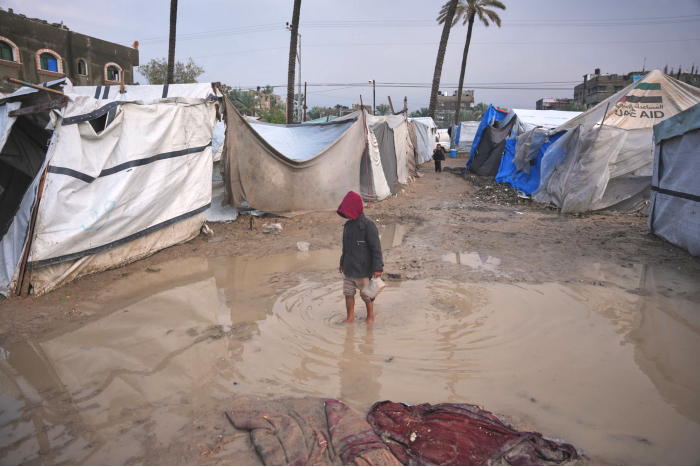
Families washed out of tents as flood waters course through Gaza
By Guardian - Julian Borger in Jerusalem - Fri 12 Dec 2025 15.26 GMT -
Gaza has been hit by heavy rains and low temperatures, deepening the misery of most of its 2.2 million population who are living in tents after two years of Israeli bombardment. Thousands of homeless people have been washed out of their makeshift shelters and forced to seek emergency refuge.
Floods have submerged a tent city in Deir al-Balah. According to UN figures, at least 465 households (2,731 people) living in 260 tents were affected on Wednesday. Aid workers said the number of families washed out of their tents continued to rise as the week went on. Despite the declaration of a ceasefire in October, Israeli forces carry out sporadic strikes and impose restrictions on aid supplies, severely limiting the availability of equipment urgently needed to protect people from the flood waters and the cold. Israel denies limiting aid, blaming the aid organisations for inefficiency in its distributionPhotograph: Moiz Salhi/Anadolu/Getty
As the tent cities along the southern beaches were washed away, thousands of Palestinians moved north to Gaza City, where they sought shelter among the shells of buildings left by Israeli bombing. The UN reported that their plight was made worse by the absence of gas or electricity supplies and extremely limited availability of firewoodPhotograph: Abdalhkem Abu Riash/Anadolu/Getty
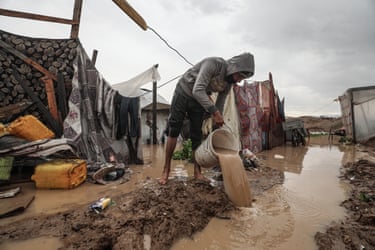
In the worst-affected areas like Deir al-Balah, aid workers try to clear gullies and manholes to keep the flood waters under control. Many families have sought shelter in designated emergency shelters, but even in these areas, tents and improvised classrooms have been floodedPhotograph: Moiz Salhi/Anadolu/Getty
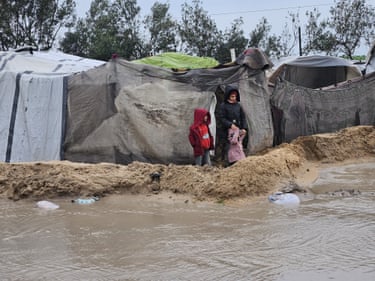
One of the worst affected areas is the al-Mawasi beach west of Khan Younis in southern Gaza, presented by Israeli forces as a ‘humanitarian zone’. Rivers of flood water coursed through the camp and on Friday the UN confirmed the death of an 18-month old baby from exposure. Twelve people were reported to have been killed by the stormPhotograph: Hani Alshaer/Anadolu/Getty
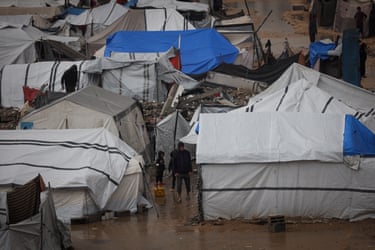
The UN and partner aid organisations have set up a rapid-response system for flood alerts to distribute tents, tarpaulins, warm cloths, blankets and toiletries. But they report that the need for winter supplies such as tents, tarpaulins, warm clothing, blankets and other non-food items remains extremely highPhotograph: Abdalhkem Abu Riash/Anadolu/Getty
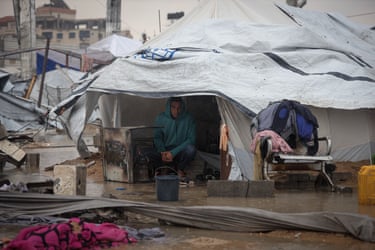
According to the International Organisation for Migration, nearly 795,000 displaced people are at heightened risk as they are sheltering in low-lying areas strewn where drainage is inadequate and there is a high risk of disease because the flood waters are mixing with sewagePhotograph: Abdalhkem Abu Riash/Anadolu/Getty
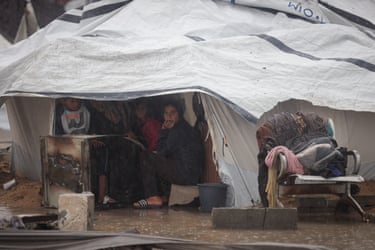
The UN says there are still severe restrictions on what can be brought into Gaza, two months after a ceasefire was declared. A joint distribution hub has been set up, the Civil-Military Coordination Centre, involving officers from the US and other nations. But the UN says Israel has the last say on what can be brought in, leading to shortages of materials such as timber and plywood, sandbags and water pumps, essential for mitigating the floodsPhotograph: Abdalhkem Abu Riash/Anadolu/Getty
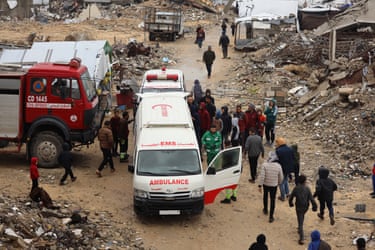
The storms have led to the collapse of several buildings that were still standing after the two-year Israeli bombardment. In Beit Lahia in northern Gaza, a two-storey building collapsed on Friday. Emergency workers recovered a body from the wreckage while the search continued for four other members of the same family, including childrenPhotograph: Khames Alrefi/Anadolu/Getty
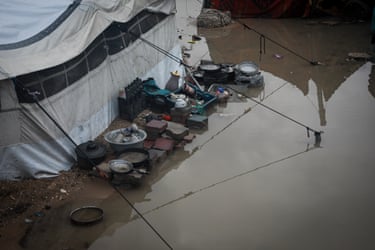
In Gaza City, residents stacked their remaining possessions on whatever raised ground they could find in an effort to stop them being washed awayPhotograph: Abdalhkem Abu Riash/Anadolu/Getty
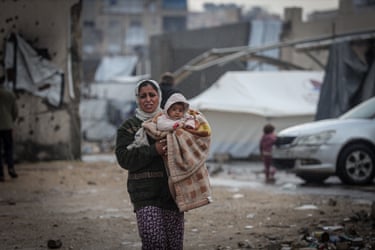
Fears mount for the health of the very young, the old and vulnerable, who are exposed to the elements. Palestinian officials said at least 300,000 tents are urgently needed for the roughly 1.5 million people still displacedPhotograph: Abdalhkem Abu Riash/Anadolu/Getty
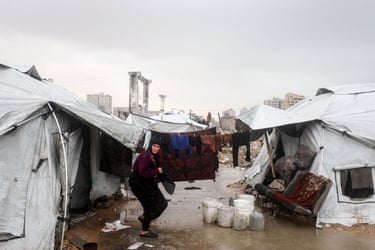
A woman gathers her belongings at one of the designated emergency shelters, set up as a haven for families washed out of their tents. But the shelters have become waterloggedPhotograph: Majdi Fathi/NurPhoto/Shutterstock
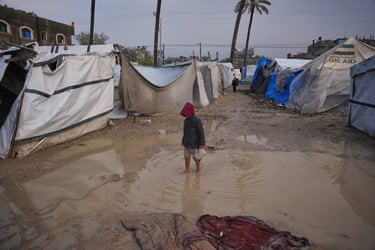
Floods have overwhelmed the rudimentary sewage system in coastal areas like Deir al-Balah. The World Health Organization said more than 4,000 people are living in high-risk areas on the coast, with 1,000 people directly exposed to storm surges from the seaPhotograph: Abdel Kareem Hana/AP
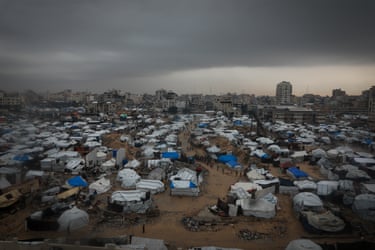
As the storms batter Gaza, fears rise of a spike in deaths from exposure and epidemics from contamination. The WHO representative Rik Peeperkorn said: ‘Thousands of families are sheltering in these low-lying and debris-filled coastal areas with no drainage or protective barriers, with heaps of garbage everywhere along the roads’Photograph: Abdalhkem Abu Riash/Anadolu/GettyExplore more on these topics