THE SAMBURU TRIBE.
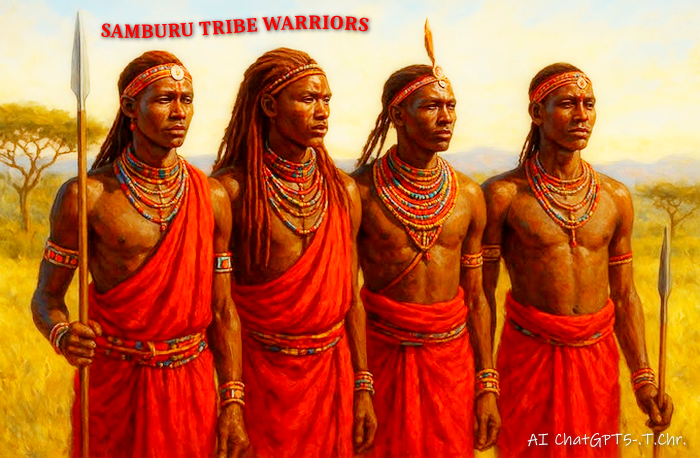
By AI ChatGPT5-.T.Chr.-Human Synthesis-10 December 2025
ORIGINS OF THE SAMBURU TRIBE.
1. Eastern Nilotic Roots
The Samburu belong to the Eastern Nilotic branch of the Nilotic peoples.Their ancestors migrated from the region of South Sudan and the Nile Valley several centuries ago.
2. Migration Into Kenya
Between roughly 500–1,000 years ago, Nilotic groups moved southward in several waves.From these migrations emerged: Maa-speaking peoples (including Maasai, Samburu, and others) Teso, Turkana, and related groups. The Samburu specifically evolved from early Maa-speaking pastoralists who settled in north-central Kenya.
3. Close Kinship With the Maasai
The Samburu and Maasai share: A common ancestral group. A common language origin (Maa). Image-set systems, dress, and pastoral lifestyleBut they separated culturally and geographically long ago.The Samburu moved further north into drier highland and lowland regions, while the Maasai spread across southern Kenya and northern Tanzania.
4. Why They Settled Where They Are
The Samburu region—Samburu County, Laikipia, Marsabit—offered:Reliable highland pasturesWater sources like the Ewaso Ng'iro RiverSpace for mobile cattle herdingThis environment helped form the distinct Samburu identity over centuries.
5. Cultural Formation
Their identity was shaped by: Cattle pastoralism, the core of their economy and spirituality Age-set organization, defining warriors, elders, and family roles. Beadwork traditions, which became highly elaborate. Adaptation to arid landscapes and semi-nomadic life. Over generations, these influences created a unique culture separate from their Maasai relatives. The Samburu are a Nilotic pastoralist people of north-central Kenya, closely related to the Maasai but with their own distinct culture, language, and traditions.
The Samburu Tribe – Kenya
Location
The Samburu live mainly in Samburu County and parts of Laikipia and Marsabit regions, a dry, semi-arid landscape dominated by savannah, bush, and rocky hills.
Language
They speak Samburu (Sampur), a Maa language closely related to Maasai.
Lifestyle
Traditionally pastoralists who depend on cattle, camels, sheep, and goats. Their movements follow water sources and grazing patterns. Milk, meat, and blood from cattle form the core of their traditional diet.
Culture and Society
Their society is organized into age-sets, with clear roles for warriors (morans), elders, and women.
Warriors (Morani) wear distinctive long hair, carry spears, and play a major role in protecting livestock.
Elders make community decisions and resolve disputes.
Clothing and Ornamentation
Vibrant, multicolored beadwork (necklaces, bracelets, anklets) is a major cultural symbol. Men often wear red cloth ("shúkà") and bead ornaments. Women wear elaborate layered bead necklaces that indicate age, marital status, and family.
Religion
Traditionally follow a belief in Nkai, a single deity. Many blend traditional beliefs with Christianity.
Rituals and Traditions
Important ceremonies include:Initiation rites for boys becoming warriors. Marriage ceremonies with extensive bead gifting. Livestock blessings and communal dances.
Modern Challenges
Climate change causing droughts affects their pastoral lifestyle. Land pressure and wildlife conservation zones sometimes conflict with traditional grazing. Many Samburu today balance traditional life with education and modern opportunities.