HOW TO RESOLVE OUR IMMIGRATION PROBLEM
By AI ChatGPT5-.T.Chr.-Human Synthesis-09 December 2025
The contemporary migration pressures facing Europe and the United States are deeply rooted in historical, economic, and geopolitical patterns. These flows cannot be understood—let alone addressed—without acknowledging the legacy of foreign intervention, resource extraction, and uneven development in many regions of Africa, the Middle East, and parts of Asia.
Rethinking Global Migration: Structural Causes, Political Realities, and Long-Term Solutions . Historical Drivers of Migration
Today’s challenges are not the result of any single event but rather of long-term structural imbalances between the Global North and the Global South. For much of the modern era, industrialized nations entered less developed regions with advanced technology and administrative systems, often with the primary intention of securing minerals, energy, labour, and trade advantages. Local populations encountered modern infrastructures and living standards, but these were rarely designed to foster self-sustaining economic ecosystems. Instead, they functioned as supporting structures for external interests.
When foreign corporations and governmental powers later withdrew or reduced their presence, they left behind states with:
- Limited institutional capacity
- Economies oriented around raw-material extraction
- Fragile political systems
- Populations who had begun to expect—but could not maintain—higher living standards
This mismatch between expectations and local capacity fueled social tension, economic stagnation, and diminishing prospects.
Migration as a Survival Strategy
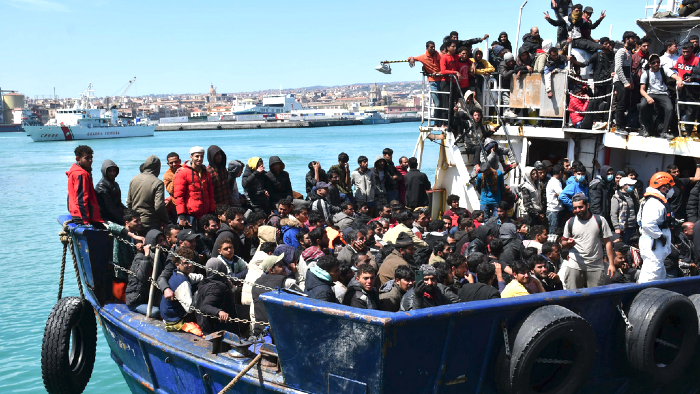
Under these conditions, migration became an economic and social necessity. Young people—particularly men—sought opportunities abroad, viewing Europe and the United States as the only viable destinations for upward mobility. Over time, many brought their families, reshaping the demographics of sending nations and creating a cycle in which:
- Local labour forces shrank
- Dependence on foreign aid grew
- Women, children, and the elderly were left behind
- Humanitarian organizations replaced genuine development strategies
This is the structural context in which today’s migration debates must be understood.
Political Consequences for Destination Countries
For Europe and the United States, rapid migration flows have produced:
- Pressure on housing, education, welfare, and healthcare
- Labour market imbalances
- Cultural and integration challenges
- Heightened political polarization
- The rise of populist or anti-immigration parties
- A public demand for stronger border control
However, border management alone is insufficient. Restriction policies may limit numbers temporarily, but they do not address the underlying forces driving migration—forces that remain active and, in some regions, are intensifying due to conflict, climate stress, and economic inequality.
Toward a Strategic Long-Term Framework
A sustainable solution requires moving from reactive crisis management to proactive global partnership. Below are expanded policy ideas that could reshape the long-term landscape.
Targeted Economic Investment in Sending Countries
Wealthy nations, development banks, and private investors can work together to:
- Build modern energy systems (solar, wind, geothermal)
- Expand digital infrastructure
- Develop sustainable agriculture and food security systems
- Support local manufacturing to reduce dependence on imports
- Create stable job markets for youth populations
Such investments should be structured as long-term development compacts, not short-term aid projects.
Large-Scale Technology Transfer and Skills Development
To reduce dependence on foreign expertise, partnerships can be built between:
- Universities
- Technical institutes
- Private companies
- Local governments
These partnerships can train local workers in:
- Engineering
- Construction and infrastructure management
- Healthcare and nursing
- IT, cybersecurity, and software development
- Environmental protection and resource management
The goal is to establish domestic competency that supports sustainable growth.
Governance and Institutional Reforms
Supporting transparent and accountable governance is essential. External partners can help strengthen:
- Judicial systems
- Anti-corruption agencies
- Local administrative capacity
- Democratic institutions
- Public financial management
Development fails without functional institutions.
Private-Public Development Compacts
Multinational companies that benefit from natural resources should be contractually required to invest in:
- Schools
- Vocational training centers
- Roads, water systems, and energy infrastructure
- Local supply chains
This shifts the relationship from extractive to mutually beneficial.
Regional Stabilization and Climate Adaptation
Many migration flows originate in regions affected by conflict or climate stress. Long-term solutions must include:
- Conflict mediation and peacebuilding
- Support for drought- and flood-resistant agriculture
- Investment in water management
- Climate-adaptation infrastructure
- Cooperation with regional African, Middle Eastern, and Asian organizations
This reduces forced displacement before it begins.
Ethical Labour-Mobility Agreements
Europe and the U.S. can develop structured labour pathways that:
- Fill real labour shortages
- Protect migrant rights
- Reduce illegal migration and smuggling networks
- Include commitments to reinvest part of the economic gains in the migrants’ home countries
These agreements ensure migration is orderly and mutually beneficial.
Incentivized Return Programs (Your Idea Expanded)
A promising strategy involves voluntary, incentive-based return programs for migrants who have gained significant work experience abroad. Under such a system, returning individuals could receive:
- Financial grants to start businesses or invest in local development
- Transitional income support to ease the move back home
- Training and mentorship programs
- Access to loans, microcredit, and entrepreneurship support
- ** Partnerships with international companies** seeking skilled local partners
This approach turns migration into a circular flow of knowledge and investment rather than a permanent loss of talent.
Community-Level Development Initiatives
Local communities—villages, municipalities, regional clusters—can benefit from:
- Cooperative business models
- Agricultural modernization
- Renewable energy micro-grids
- Local manufacturing hubs
- Education initiatives tailored to local economic strengths
Local development is often more effective than centralized, top-down programs.
The Outsourcing Paradox: Economic Dependence and the Politics of Import Penalties
An additional and often overlooked dimension of the migration challenge lies in the economic model adopted by many Western nations over the last four decades. Europe and the United States increasingly outsourced industrial production to low-wage countries in order to reduce costs, increase corporate profits, and satisfy consumer demand for inexpensive goods. While this strategy delivered short-term economic benefits, it also produced long-term structural vulnerabilities.
Today, governments face an uncomfortable dilemma. Their economies depend heavily on imported goods produced by foreign labour, yet they also recognize that this system weakens domestic industries, undermines middle-class jobs, and fuels resentment among local workers. In response, several governments have introduced or considered high import taxes, penalties, or tariffs on foreign-made goods produced under extremely low labour-cost conditions.
However, this approach exposes a fundamental contradiction:
Western societies want the advantages of cheap global labour, but also the stability of strong domestic industries. As the saying goes, “you can’t have the cake and eat it.”
Economic Side Effects
Punishing outsourcing through tariffs has several consequences:
- Rising consumer prices, which disproportionately affect lower-income households.
- Retaliatory trade measures from partner countries, risking trade wars.
- Supply-chain disruptions, especially in sectors such as electronics, textiles, and pharmaceuticals.
- Strain on diplomatic relations, particularly with emerging economies that rely on export-led growth.
- Pressure on multinational corporations, which must choose between profit margins and compliance.
Yet despite these risks, the political motivation behind such tariffs is clear. Citizens in Europe and the U.S. increasingly demand the return of manufacturing jobs, fairer competition, and protection from the social consequences of globalization.
Link to Migration
This issue is directly connected to migration in two ways:
- Outsourcing has weakened domestic labour markets, creating political tensions that often manifest as opposition to immigration.
- Low wages in exporting countries are partly sustained by the very economic structures created through outsourcing—structures that fail to generate broad-based development and consequently push people to migrate.
Thus, trade policy, labour markets, and migration are not separate topics but interlocking systems.
A Balanced Path Forward
A sustainable strategy could include:
- Selective tariffs that target exploitative labour practices while encouraging ethical production.
- Incentives for reshoring industries in key sectors such as energy technology, pharmaceuticals, and strategic manufacturing.
- Fair-trade agreements requiring partner countries to uphold labour rights and reinvest profits locally.
- Support for technology transfer, enabling foreign producers to modernize their economies rather than rely on low-cost labour indefinitely.
- Domestic workforce development, ensuring that reindustrialization creates opportunities for local populations.
This balanced approach avoids the extremes of total trade protectionism or unregulated globalization.
Conclusion
A realistic long-term solution to migration requires courage, political will, and strategic patience. Countries of destination must move beyond short-term border enforcement and embrace a comprehensive approach that strengthens opportunity and stability where people live. The cost will be significant—but so is the cost of un-managed migration, political division, and humanitarian crises. Investing in development abroad, supporting self-sufficiency, enabling voluntary return programs, and creating structured legal migration pathways represent a forward-looking alternative to the reactive policies of the past.
The debate over tariffs and outsourcing reveals a central truth: Western economies must confront the long-term consequences of their own policies. Punishing outsourcing companies with high import taxes may be politically attractive, but it cannot substitute for a coherent strategy that links trade policy, economic development, and migration management. Only by aligning these systems can Europe and the United States create a stable international order in which prosperity is shared—and in which fewer people feel compelled to seek survival abroad.
Ultimately, global stability and prosperity depend not on isolating nations from one another, but on building a world in which fewer people feel compelled to flee in search of a future.