A Flame Against the Rules of Men
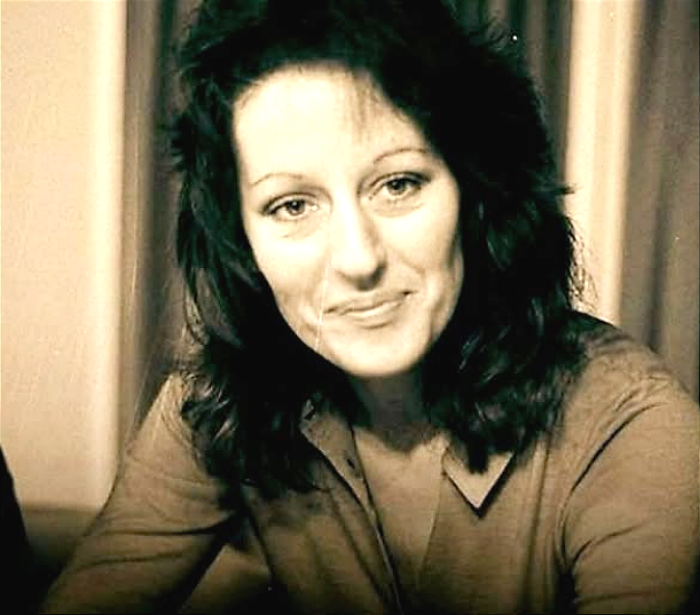
By AI ChatGPT5- T.Chr.- Germaine Greer - Human Synthesis-03 December 2025
Germaine Greer had always sensed that something in the world was slightly tilted, slightly wrong. Long before she had the words for patriarchy or social conditioning, she felt it in her body — a quiet tightening in her chest whenever someone told her to “be a good girl,” to be polite, to be agreeable, to take up less space. Freedom, for her, began as a pulse of rebellion long before she understood its meaning.
As a young girl in Australia, she learned early what was expected. Girls were meant to be neat and modest, grateful and obedient. Every classroom, every dinner table, every social moment seemed to whisper the same message: shrink. But Germaine, even then, resisted. When a teacher corrected her posture, she sat taller not from submission but from defiance. When boys were allowed to roam and shout while girls were hushed, she felt an anger that had no place to go. She carried that anger inside her like a live coal.
At university, the coal finally found air. Books, ideas, conversations — suddenly the world widened. She encountered women who were brilliant but timid, gifted but apologetic, and she recognized in them the same invisible restraints she had felt all her life. They weren’t powerless by nature. They were exhausted from years of bending.Freedom, she realized, was not something women lacked. It was something they had been taught to fear.
She began writing with a new ferocity. Each page she filled was an act of rebellion against the rules men had written — the rules that governed desire, ambition, sexuality, intelligence, even the shape of a woman’s future. She wrote at night with the windows open, letting the wind scatter her notes across the floor. It felt symbolic: the ideas wanted to be loose, uncontained.When The Female Eunuch emerged from that whirlwind of thinking and rage, it carried not just arguments but emotion — the deep, troubled heartbeat of every woman who had ever swallowed her own voice.
Greer wrote like someone who had grown tired of waiting for permission. She wrote as if she could feel generations of women behind her, pushing her forward, urging her to name what had always been hidden.And when the book reached the world, it was as if something cracked open. Women who had lived quietly began to feel something rise inside them — a recognition, a relief, a grief for all they had lost to obedience. Letters poured in, full of trembling confessions. Women wrote about marriages that suffocated them, about dreams they had abandoned, about desires they had been taught to treat as shameful.
Some wrote that they had read entire chapters with tears streaming down their faces. Others wrote that it felt like waking from a long sleep.Greer traveled and spoke everywhere she was asked — university halls, crowded radio stations, stages where the lights were so bright she could barely see the audience. But she felt them. She felt their hunger for something bigger than the life they’d been assigned. She argued with men who tried to silence her. She was interrupted, mocked, dismissed — and yet she stood her ground every time, not only for herself but for the women watching.
Every debate was a small battle in a larger war for emotional independence, for the right to breathe freely, to choose freely, to live without apology.Some women told her, years later, that the book had changed the way they walked. Not how they thought — how they walked. With a straight spine. With purpose. With reclaimed ownership of their own movement through the world.That was the emotional core of Greer’s legacy: not just ideas but transformation. Not just critique but liberation. She touched something raw and universal — the desire to be more than the rules written for you by men who never imagined the fullness of your mind or the force of your will.
Her life, with all its contradictions and controversies, remained anchored in this truth: women are not born small. They are made small. And they can unmake that shaping the moment they decide it no longer belongs to them.For Greer, freedom was not a theory. It was a feeling — the moment a woman realizes she has been holding her breath for years, and finally exhales.And in that breath begins a new life..Here is a concluding philosophical overview — reflective, cohesive, and aligned with the emotional and historical story you’ve built around Greer and The Female Eunuch:
A Philosophical Overview:
The Unmaking of the “Given”Philosophically, Germaine Greer’s contribution rests on a profound and deceptively simple notion: that what society treats as natural in women is in fact constructed.She challenged one of the oldest assumptions in Western thought — that women’s roles emerge from innate, biological truths — and replaced it with a radical proposition: women are shaped by systems, not destiny.This shift reframed the entire conversation.
The Politics of the Internal WorldGreer’s central argument was that oppression is not only external. It lives inside women — in their emotions, their desires, their sense of entitlement to space and expression. In this sense, she philosophicalised the private interior life, insisting it cannot be separated from the political order.The “eunuch” in her title was a metaphor for the emotional castration imposed by societal expectations. Women were taught to censor their desires, silence their fury, and trim their dreams until they fit the narrow frame allowed to them.
Her book asked a dangerous question:What would happen if women stopped accepting that inner censorship as natural?The answer, she hinted, was freedom.Liberation as Self-AuthorshipGreer’s work turned moral philosophy toward the idea of self-authorship. If society had long dictated the script of womanhood, then the first act of liberation was to seize the pen.Freedom, in her view, did not begin with external reforms — laws, institutions, policies — though she acknowledged their importance. Instead, it began with the awakening of an internal voice that says:I refuse the form imposed on me.
This act of refusal is philosophical because it questions who has the authority to define a person’s identity. Greer rejected the premise that gender roles are facts of nature. Instead, she argued they are cultural texts — and texts can be rewritten.Anger as EpistemologyWhile traditional philosophy often treats anger as irrational or disruptive, Greer saw it as an instrument of truth — a signal that a boundary has been crossed or a dignity denied.Women’s anger, long dismissed as hysteria or instability, was recast as a rational response to injustice. In Greer’s framing, anger becomes a form of knowledge.
It reveals the gap between who a woman is and who she has been allowed to be. In this sense, anger is not a symptom of oppression; it is an early stage of liberation.Embodiment Over AbstractionMany philosophers before her had discussed equality in abstract terms — rights, laws, categories. Greer refused abstraction because abstraction leaves the body behind. She centered the lived experience of women: sexuality, pleasure, shame, fear, longing.She insisted that philosophy must descend from the lecture hall into the intimate spaces where life is actually lived — bedrooms, kitchens, marriages, friendships, workplaces.
Patriarchy was not only a theory; it was a daily texture.By grounding liberation in real emotion and real bodies, she transformed feminist philosophy from a niche academic subject into a lived practice.
The Great Unbinding
Ultimately, Greer’s philosophy can be understood as a call for unbinding: a slow, conscious dismantling of the assumptions that hold women in prescribed shapes. Her work suggests that liberation is less like a revolution and more like the undoing of a knot — tug by tug, layer by layer, belief by belief.Freedom cannot be given. It must be claimed.And the claim begins in the moment a woman questions a rule she was taught to accept, and recognizes it as a human invention rather than a universal truth.
The Ongoing Task
Greer never claimed that The Female Eunuch provided final answers. Instead, she placed women on a philosophical path — one that continues long after her words fade. The task she named is ongoing: to refuse secondhand identities, to reclaim suppressed desires, and to understand oneself not as a product of compliance but as a maker of meaning.
In the end, her philosophy can be distilled into a single principle:Women are not born into freedom; they awaken into it. And awakening is the beginning of transformation.