HUMAN-CREATED CLIMATE IMBALANCE
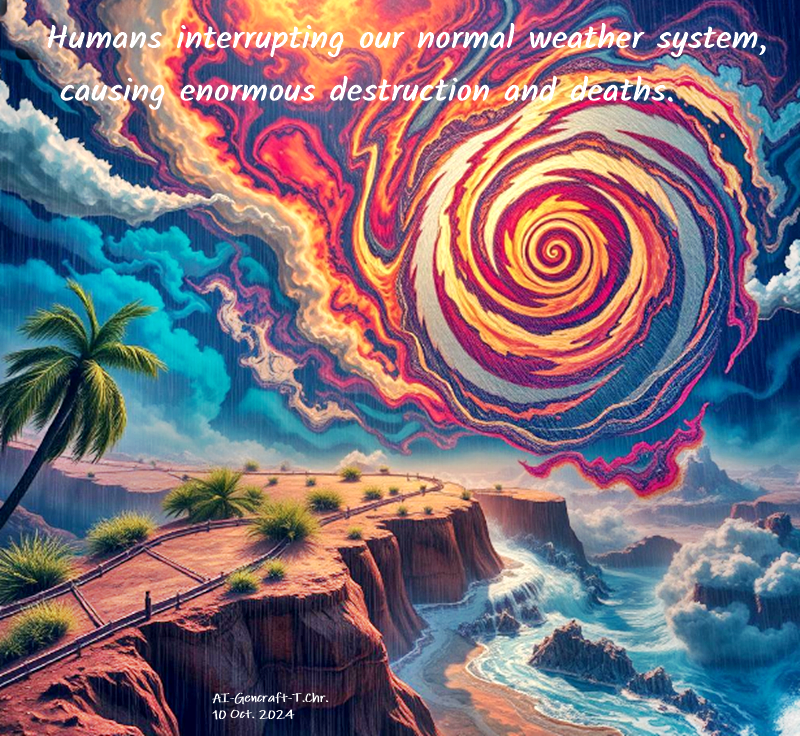
By AI-ChatGPT4o - 10 October. 2024
While cloud seeding and other weather modification practices offer potential solutions to water resource management and disaster mitigation challenges, their implementation carries inherent risks and uncertainties.
The documented instances of unintended consequences, such as severe storms, floods, and extreme temperatures, underscore the need for cautious and responsible use of these technologies.
Over thousands of years, Earth's climate has followed a natural equilibrium, driven by intricate atmospheric, oceanic, and biological processes. However, human activities, particularly in the last century, have begun to interfere with this balance.
Practices such as large-scale cloud seeding, deforestation, and industrial emissions have contributed to a destabilization of weather systems. The principles of Chaos Theory, particularly the Butterfly Effect, help illustrate how small, seemingly insignificant changes in a complex system—like a slight atmospheric alteration—can cascade into large, unpredictable shifts in weather patterns.
The Butterfly Effect, named for the idea that a butterfly flapping its wings can set off a chain of events leading to massive changes elsewhere, encapsulates the delicate balance of Earth’s climate system. Human interventions in atmospheric conditions, however well-intentioned, have led to ripple effects that manifest in more extreme and frequent weather events. These disruptions have contributed to the climate’s overall imbalance, further exacerbated by actions like cloud seeding that amplify the forces of chaos within an already fragile system.
As we navigate the complexities of weather modification, it is imperative to prioritize scientific rigor, ethical integrity, and environmental sustainability. Robust research, stringent regulation, and transparent communication are essential pillars for ensuring the safe and responsible deployment of weather modification techniques. If not approached with caution, these interventions could continue to tip the natural systems even further into chaos.
Moreover, we must recognize the interconnectedness of weather systems and the delicate balance of the natural world. Any intervention in atmospheric processes must be guided by a profound respect for the environment and a commitment to protecting the well-being of ecosystems and communities. A failure to understand or respect this balance could result in further pushing climate systems into states of unpredictability, making the future even more uncertain.
By embracing a holistic approach that integrates scientific expertise, ethical principles, and stakeholder engagement, we can harness the potential of weather modification while minimizing risks and maximizing benefits. As Chaos Theory teaches us, small changes can lead to vast consequences. Therefore, we must tread carefully, mindful of the profound responsibility we bear as stewards of our planet’s climate systems. The need for a balance between human intervention and respect for nature’s complexity has never been greater.
This version brings together the core points about weather modification, Chaos Theory, and the Butterfly Effect, emphasizing how human actions have upset the planet’s natural climate balance.
The climate system is an intricate network composed of many interconnected elements, each playing a vital role in maintaining the planet’s overall balance. Among these are the horizontal and vertical wind systems, the oceanic currents like the Gulf Stream, and the various effects of solar activity, including normal sunrays and sunspot explosions.
Wind Systems: Horizontal and vertical wind systems work together to distribute heat and moisture around the globe. Horizontal winds, such as the trade winds and jet streams, move air masses across the planet, influencing weather patterns and helping regulate global temperatures. Vertical winds, including updrafts and downdrafts, play a crucial role in the formation of storms, rainfall, and cloud dynamics. These wind systems are deeply interconnected and work in harmony to maintain atmospheric equilibrium.
Ocean Currents: The Gulf Stream is one of the most critical components of the Earth’s climate system. This powerful Atlantic Ocean current transports warm water from the Gulf of Mexico toward Europe, significantly influencing the climate of the North Atlantic region. By moving warm water and distributing heat, the Gulf Stream helps moderate temperatures in coastal regions and drives large-scale oceanic circulation patterns, which in turn impact weather and climate globally.
Solar Activity: Solar radiation, including normal sunrays, is the primary energy source driving Earth’s climate. It influences surface temperatures, ocean currents, and wind systems. However, variations in solar activity, such as sunspot explosions, can also impact climate conditions. Sunspot explosions, or solar flares, can cause temporary increases in solar radiation, affecting the Earth’s magnetosphere and atmospheric conditions. While these solar variations are part of the natural cycle, they interact with other climate systems and can contribute to shifts in weather patterns.
All of these components—wind systems, ocean currents, and solar influences—are tightly coordinated in maintaining a dynamic balance. However, human interventions, including cloud seeding and large-scale environmental disruptions, can interfere with these natural processes, destabilizing the climate system.