The Hermetic Order of the Golden Dawn
By ChatGPT4o-Tome-Human Synthesis-07 July 2024
The Hermetic Order of the Golden Dawn was a significant secret society that emerged in the late 19th century, rooted in the Western esoteric tradition and combining elements of Freemasonry, Rosicrucianism, and various mystical and occult traditions.
The Golden Dawn was established in London in 1887 by three Freemasons: William Wynn Westcott, Samuel Liddell MacGregor Mathers, and William Robert Woodman. It had a hierarchical structure similar to the Freemasons, with degrees and initiations.
The Amen-Ra Temple, a prominent branch of the Golden Dawn, was founded in Edinburgh in 1893 by John William Brodie-Innes, who had rapidly advanced within the Order.
The Golden Dawn's teachings were based on Hermeticism, a philosophical system derived from the writings attributed to Hermes Trismegistus, a mythical figure believed to be a synthesis of the Greek god Hermes and the Egyptian god Thoth. The Order also incorporated elements of Egyptian and Greek mythology, astrology, tarot, alchemy, and various other mystical traditions.
The Golden Dawn attracted many notable figures, including poets W.B. Yeats and Arthur Machen, the creator of Dracula, Bram Stoker, and occultists such as Aleister Crowley and Dion Fortune.
The rituals and practices of the Golden Dawn were shrouded in secrecy and involved elaborate ceremonies, often with members dressed in pseudo-Egyptian robes. These rites were designed to impart esoteric knowledge and facilitate spiritual and personal transformation.
Unlike many similar organizations of the time, the Golden Dawn was progressive in its inclusion of women, allowing them to participate fully and even attain high-ranking positions within the Order.
The Golden Dawn was part of a broader Victorian fascination with the supernatural and the occult, which included the popularity of séances, spiritualism, and the publication of Gothic literature.
The Golden Dawn's legacy persists in modern occult and esoteric practices, and it remains a subject of fascination for historians and enthusiasts of mysticism and the supernatural.
The Hermetic Order of the Golden Dawn did not engage in intrusive or harmful acts on living people as part of their practices. Their activities primarily focused on esoteric knowledge, spiritual development, and ceremonial magic. The rituals and ceremonies conducted by the Golden Dawn were intended to impart mystical wisdom, achieve spiritual enlightenment, and develop personal and psychic abilities.
The rituals involved symbolic actions, recitations, meditations, and the use of various esoteric tools such as tarot cards, alchemical symbols, and astrological charts. Members would often wear specific robes and follow elaborate ceremonial protocols. The emphasis was on personal transformation and the exploration of mystical and spiritual realms rather than physical or intrusive acts.
While the secrecy and mystique surrounding the Golden Dawn may have led to various speculations and rumors, there is no credible historical evidence to suggest that the Order engaged in any harmful or invasive practices on individuals. Their focus remained within the realm of the spiritual, philosophical, and symbolic.
The rituals of the Hermetic Order of the Golden Dawn were somewhat akin to those of the Freemasons in their structure and symbolic nature. Both organizations used elaborate ceremonies, symbolic regalia, and initiatory rites designed to convey esoteric knowledge and foster a sense of brotherhood among members. However, the content and focus of their rituals differed significantly.
Freemasons:
Structure: Freemasonry is organized into degrees, with each degree having specific rituals and teachings. The three primary degrees are Entered Apprentice, Fellowcraft, and Master Mason.
Symbolism: Freemasonry uses a rich array of symbols, often drawn from stonemasonry, such as the square and compass, the trowel, and the level. These symbols are used to convey moral and ethical lessons.
Themes: The rituals often focus on moral philosophy, self-improvement, and the building of character, using allegorical stories often drawn from the building of King Solomon’s Temple.
Regalia: Members wear aprons and other regalia specific to their rank and office within the organization.
Purpose: The aim is personal development, ethical living, and charity, with a strong emphasis on secrecy and fraternity.
Hermetic Order of the Golden Dawn:
The Golden Dawn was also organized into degrees, but it had more of an emphasis on esoteric knowledge and magical practices. The degrees ranged from Neophyte to Adept, each with its own specific rituals and teachings.
Symbolism: The Golden Dawn employed a wide range of symbols drawn from various mystical traditions, including Hermeticism, Kabbalah, alchemy, astrology, and Egyptian mythology. Symbols were used to represent spiritual concepts and powers.
Themes: The rituals were designed to initiate members into the mysteries of the universe, teach them magical and mystical techniques, and facilitate personal and spiritual transformation.
Regalia: Members often wore robes and carried tools like wands, swords, and chalices, each imbued with symbolic meaning.
Purpose: The aim was to achieve spiritual enlightenment, personal transformation, and mastery of esoteric knowledge, with a strong focus on magical practices and the development of psychic abilities.
While both organizations emphasized secrecy and used complex rituals, the Golden Dawn was more focused on mystical and magical practices, whereas Freemasonry centered on moral and ethical teachings through allegory and symbolism.
Aleister Crowley,Occultist Who Horrified England in Early 1900
By Allthatsinteresting - Katie Serena/John Kuroski-August 31,2023
English mystic, novelist, mountaineer, and magician Aleister Crowley rejected his upper-class Christian upbringing and explored the darkest corners of occultism.
He was an occultist, ceremonial magician, drug fiend, sex addict, mountaineer, poet, and a “traitor to the British people.” He drew crowds of followers and hoards of critics. He was branded as evil and egotistical, a raging genius, and a messiah of anti-Christianity. It’s safe to say that few people in modern history generated as much controversy, shock, and scandal as Aleister Crowley.
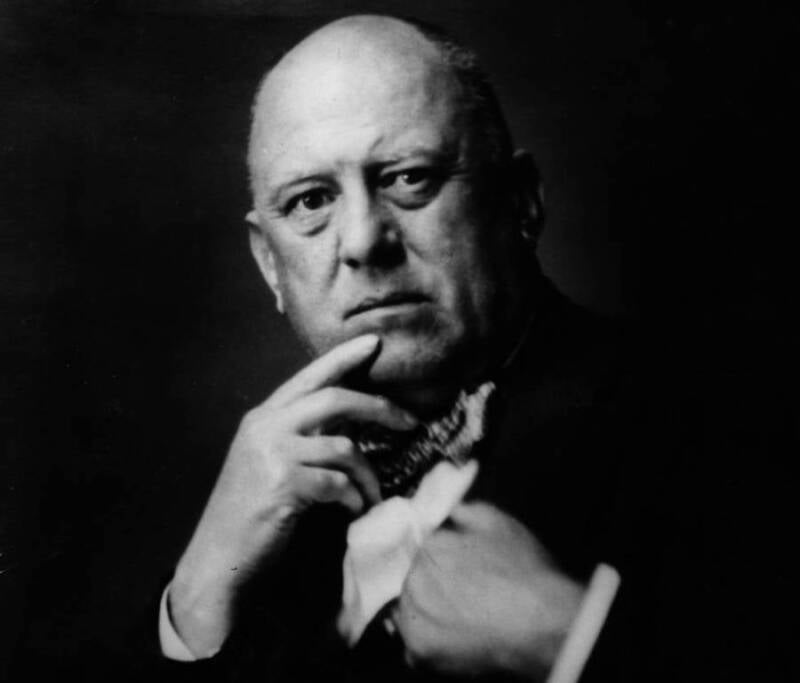
Stringer/Getty ImagesKnown as the Great Beast 666, Aleister Crowley was one of the most controversial figures in modern British history.
The tabloids called him the “Wickedest Man In The World,” and a “Master Of Darkness.”
But how do you begin to describe a man who was banned from Mussolini’s Italy for acts of extreme depravity, and who also rubbed elbows with the most respected writers of the 20th century while penning textbooks on tantric sex magic? Let’s take a closer look at the complicated life of Aleister Crowley.
Aleister Crowley’s Not-So-Humble Beginnings

Wikimedia Commons. Aleister Crowley’s birthplace in Royal Leamington Spa, Warwickshire, England. He came from a wealthy family.
To understand Aleister Crowley, or to come as close to understanding him as he would allow, one must start with his upbringing.
Born Edward Alexander Crowley in 1875, he quickly found himself amongst some of Britain’s most devout Christians, the very opposite of the type of people he would attract later in his life. His father was an evangelist, and at first, Crowley found himself entirely devoted to the religion, out of respect for his father.
But after his father’s death when Crowley was just 11 years old, he began firmly eschewing all sense of Christianity. He would point out inconsistencies in the teachings of the Bible during study groups in school, and would outright defy Christian morals by smoking, masturbating, and having sex with prostitutes. For his behavior, his mother referred to him as “the Beast,” a title which he reveled in.
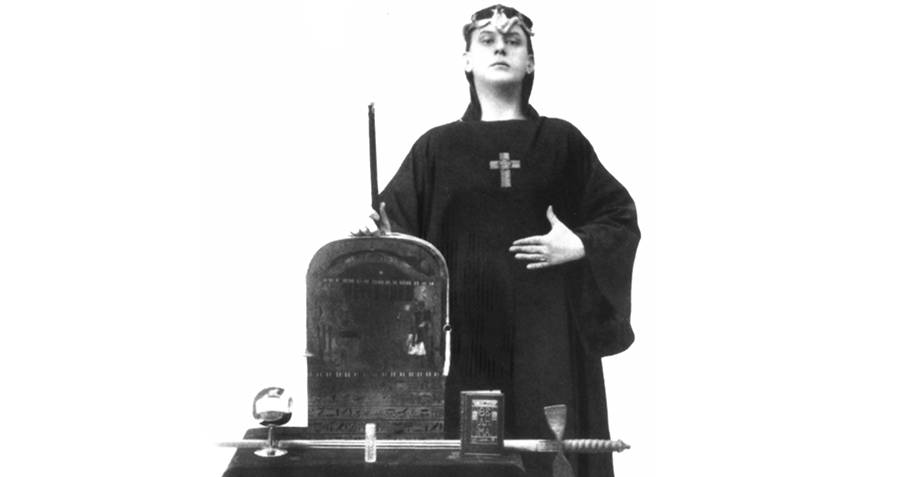
Wikimedia Commons. Aleister Crowley in traditional occult ceremony dress.
Crowley adopted the name Aleister in 1895 when he was 20 years old. His reasons for discarding his old name, outlined in his autobiography, seem to foreshadow every choice he would make in his adult life, as they depict a man with high ambitions, firm ideals, and a complete disregard for personal connection:
“For many years I had loathed being called Alick, partly because of the unpleasant sound and sight of the word, partly because it was the name by which my mother called me. Edward did not seem to suit me and the diminutives Ted or Ned were even less appropriate. Alexander was too long and Sandy suggested tow hair and freckles.
I had read in some book or other that the most favorable name for becoming famous was one consisting of a dactyl followed by a spondee, as at the end of a hexameter: like Jeremy Taylor. Aleister Crowley fulfilled these conditions and Aleister is the Gaelic form of Alexander. To adopt it would satisfy my romantic ideals.”
His First Forays Into The Dark Depths Of Occultism
The same year that he changed his name, Crowley enrolled at Cambridge University. His life at Cambridge paints a picture of a lifestyle fit for an Austenian hero — a tortured soul practicing chess, penning poetry and inspired literature, and dreaming up exotic mountain climbing adventures in his spare time.
However, Aleister Crowley was about as far from a Mr. Darcy type as one could be. Under his polished, collegian exterior lay a deeply tumultuous man, harboring secret plans of magical domination, maintaining borderline-sadistic sexual relationships with both men and women, and delving ever deeper into the world of the occult.
Once his time at school was over, Crowley nearly considered a career in diplomatic relations. But after a brief illness that triggered his understanding of morality and “the futility of all human endeavor,” he further narrowed his focus to writing occult literature and publishing several erotic poems.
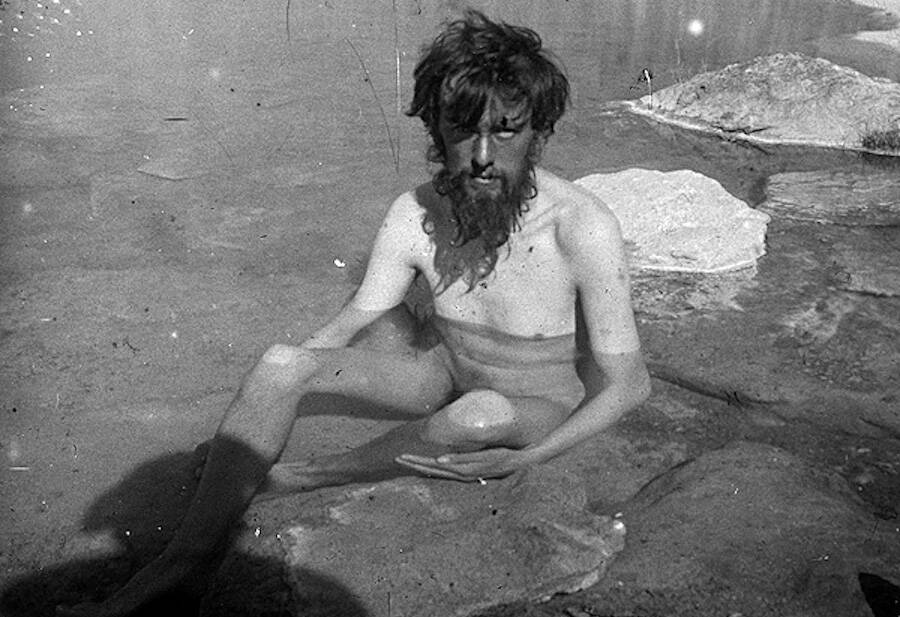
Wikimedia . Crowley during his K-2 expedition.
In 1898, Crowley met a chemist named Julian L. Baker, a member of the Hermetic Order of the Golden Dawn, which he joined. The order was devoted to studying paranormal activity and all matters of the occult.
Eventually, Crowley hired a senior member of the group to be his live-in personal tutor on the subject. Together, Crowley and his tutor experimented with ceremonial magic and the ritualistic use of drugs.
Independently, Crowley continued to explore his bisexuality and seek out prostitutes. But while this life for him was eye-opening and spiritual, higher-level members of the Golden Dawn considered it too libertine and refused to allow him entry into the upper levels.
Having had enough of Europe after his stint with the Golden Dawn, Aleister Crowley traveled to Mexico, bringing to life his past dreams of mountain climbing. From there, he traveled to Japan, Hong Kong, Ceylon, and India.
While in India, Crowley began practicing raja yoga, a Hindu meditation tradition. He later accompanied mountaineers in the first-ever attempt to climb K2 in 1902.
Travels Through Europe And Falling In Love
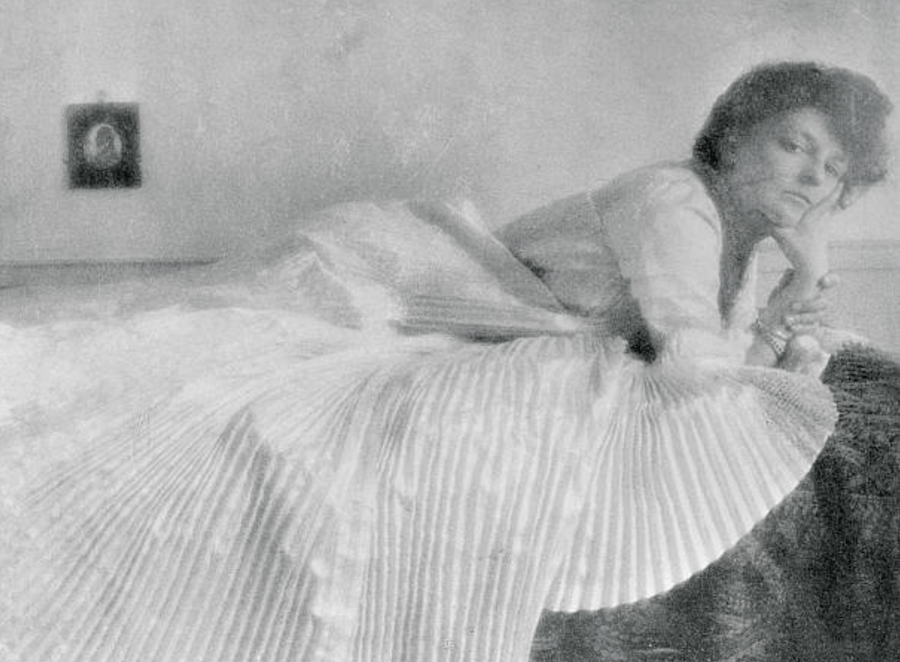
Bettmann/Getty Images. Rose Crowley, Aleister’s first wife.
In November of 1902, Crowley traveled back to Europe, settling in Paris and immersing himself in the art world. Again, his lifestyle painted quite a different picture than the one he was truly living, as he surrounded himself with famed artists like painter Gerald Kelly and sculptor Auguste Rodin.
To the surprise of many, Paris was where Aleister Crowley fell in love.
Gerald Kelly introduced Crowley to his sister Rose during a meeting, after which the two married. At first, the marriage was one “of convenience” to prevent her from entering an arranged marriage.
But before long, the two fell in love for real. Crowley even set aside his profane, dark writings, and penned his wife several love poems.
Despite their initial arrangement, Rose and Aleister Crowley could not be a more perfect pair. Rose accompanied Aleister on his journeys and went along with his schemes, and indeed it was through her that Crowley found the inspiration to begin his own religion.
The Birth Of Thelema, Aleister Crowley’s Infamous New Religion
While Rose was meditating, she informed Aleister that the Egyptian god Horus was waiting for him. In 1904, through his own meditation, he heard the voice of Aiwass, the personal messenger of Horus.
Using the words of the messenger and Horus himself, Crowley transcribed The Book of the Law, the book that would become the basis of his new religion, Thelema.
The main teaching of Thelema was a similar principle to the one that Crowley had lived by his whole life: “Do what thou wilt.”
The teachings were intended to act as a successor to the Hermetic Order of the Golden Dawn and were seen as extremely similar to theirs.
In 1907, Crowley founded the occult order, naming it the A∴A∴. Crowley devoted almost all of his time to building the order, writing its literature, and creating a periodical for its members.
A Tumultuous Personal Life In The Era Of Two World Wars
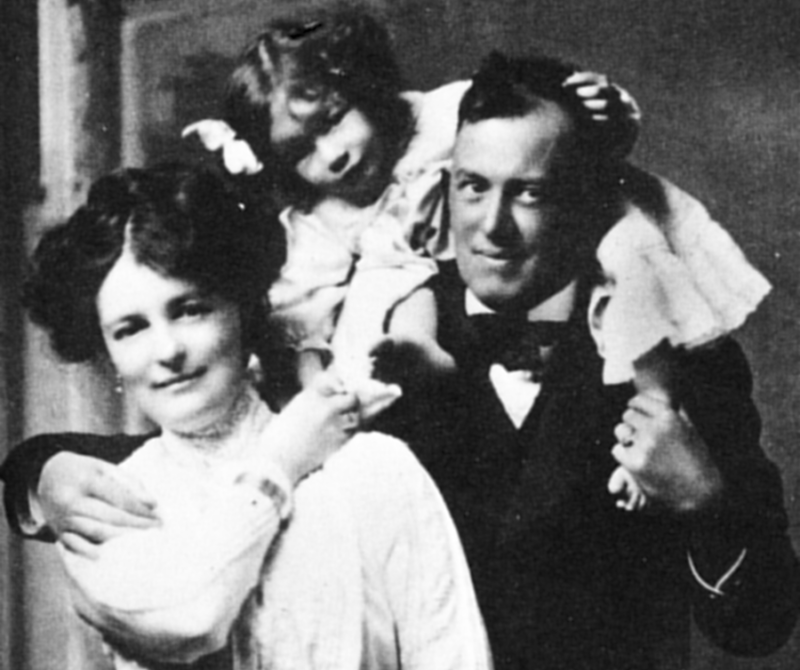
Wikimedia CommonsRose and Aleister Crowley and their second daughter, Lola Zaza Crowley.
While Crowley was consumed by the words of Horus and his desire to feed the masses information about the occult, his wife was descending into her own darkness of full-blown alcoholism.
Meanwhile, their daughter Lilith had died of typhoid in 1906. Despite the illness, Crowley still blamed her death on Rose’s inability to get a grip on the world around her.
Despite her apparent failure to remain sober, Rose and Aleister had another daughter, Lola, who was entrusted solely to Rose’s care upon the pair’s divorce in 1909. Eventually, Rose was committed to an institution in 1911.
The bulk of Aleister Crowley’s life after his divorce was spent floating from city to city, as he had before, picking up several “scarlet women” along the way, one of whom allegedly bore him a son, who he named Aleister Atatürk.
His travels were dogged by rumors that he was working as a British intelligence spy, as several countries he drifted through were coincidentally under investigation by the Brits.
He continued to publish occult manuscripts and engage in sex with prostitutes in the years during World War I.
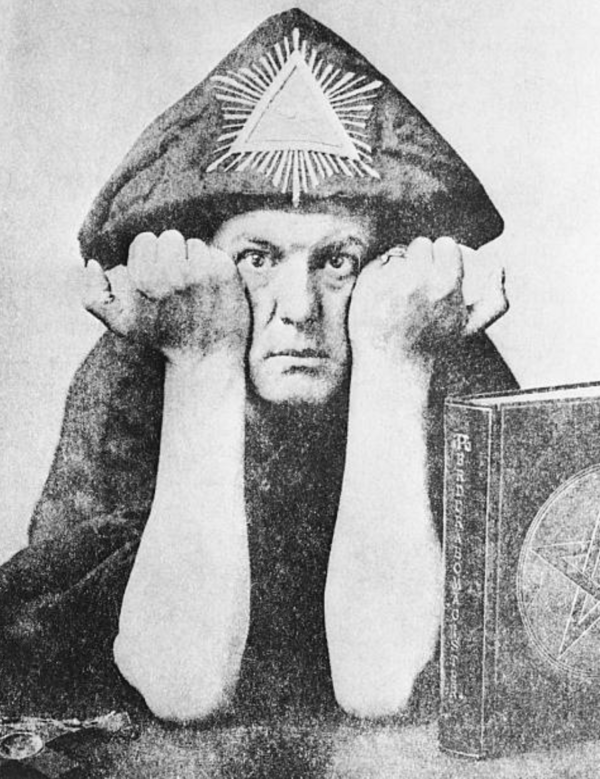
Keystone/Getty ImagesAleister Crowley in 1921.
By 1920, he’d moved to Sicily, where he established the Abbey of Thelema as his headquarters. There, he and his followers experimented with sex, drugs, and a series of bizarre rituals.
But in 1923, an Englishman died under mysterious circumstances after one ritual where he allegedly consumed the blood of a cat. Mussolini’s government was so appalled that they banned Crowley from Italy, forcing the headquarters to close and the group to disperse.
Achile Chatouilleu, The Terrifying Clown Corpse and Other Bodies on Display
But that didn’t mean Crowley was done. He soon found an assistant who helped him transcribe his teachings and publish his books. And by the late 1920s, he got remarried to a Nicaraguan woman named Maria Teresa Sanchez, so that she could join him in Britain.
During World War II, he rubbed elbows with known figures from the intelligence community, such as Ian Fleming and Roald Dahl, though the rumors of Crowley’s involvement in actual intelligence were never confirmed.
However, he did offer his services to the Naval Intelligence Division at one point — and he was turned down.
On Dec. 1, 1947, Aleister Crowley died at age 72, his body giving out to chronic bronchitis. His funeral, dubbed the “Black Mass,” was only attended by a few of his closest friends and associates — despite his words reaching hundreds of thousands of people throughout the years.
It seems that even though he’d gained the infamy he’d always wanted, he was not remembered fondly as a person. However, friends and family assured everyone that he wouldn’t have wanted to be.
The Complicated Legacy Of Aleister Crowley
Though he was gone, the impact of Crowley lived on, not only in occultists – possibly the only people who remember him fondly – but also through writers, artists, philosophers, and musicians.
Crowley’s image stands, amongst others, on the cover of The Beatles’ Sgt. Pepper’s Lonely Hearts Club Band album, and his motto, “Do what thou wilt,” is inscribed on Led Zeppelin’s Led Zeppelin III vinyl. David Bowie referenced him in the lyrics to “Quicksand,” and Ozzy Osbourne paid tribute to him with a whole song titled “Mr. Crowley.”
Today, the legacy of Aleister Crowley is a collage of intrigue.
Those who remember him often lend their ideas of him to his image as a cookie-cutter villain, an image that might not be too far off. His name is whispered with horror amongst devout Christians, with skepticism amongst conspiracy theorists, and with awe amongst the occultists and pagans.
Ultimately, Crowley’s goal was achieved – no matter what they say when they whisper his name, it’s still being whispered today.
A former staff writer at All That's Interesting, Katie Serena has also published work in Salon. EDITOR John Kuroski
John Kuroski is the editorial director of All That's Interesting. He graduated from New York University with a degree in history, earning a place in the Phi Alpha Theta honor society for history students. An editor at All That's Interesting since 2015, his areas of interest include modern history and true crime.